Theopolis Logo

Writing

Explore our collection of theological essays, biblical studies, and reflections on faith and culture.

See all
max-kukurudziak-qbc3zmxw0g8-unsplash
History

Report from Ukraine

We lost Crimea. That is very clear. Putin proved he was not lying when he said he would place women and children ahead of his soldiers to storm Ukrainian military bases. Russian soldiers did exactly that with women (some who volunteered and some who were forced). Russia now occupies all…

by San SanychMarch 28, 2014

screenshot-2023-09-21-at-3-59-23-pm
Church Calendar

God Gone Silent

Sound is an indicator of life and energy. “Sound signals the present use of power, since sound must be in active production to exist at all.” Things don’t have to be alive to make themselves visible, and “a primitive hunter can see, feel, smell, and taste an elephant when the…

by Peter LeithartMarch 26, 2014
web-lead-image_final_dostoevsky
Books

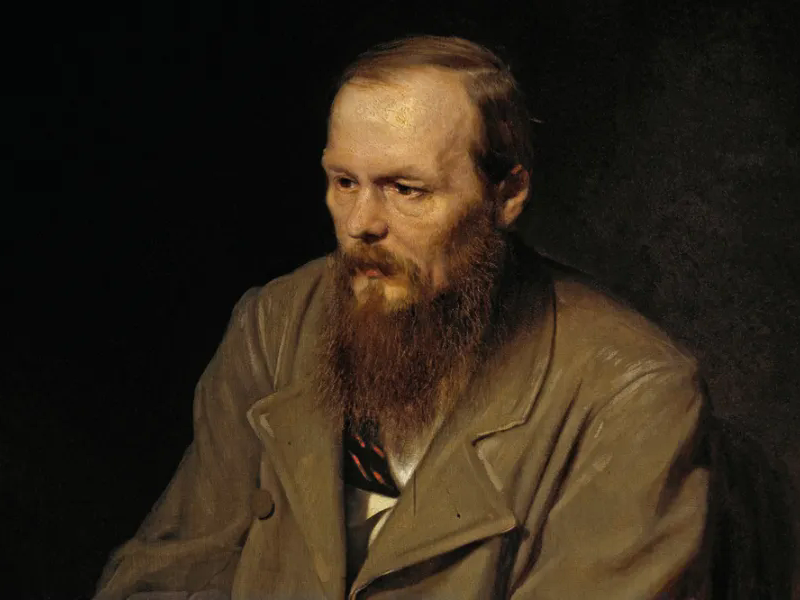
Dostoevsky the Liberal

In the most famous section of his best-known novel, Dostoevsky’s Ivan Karamazov brings forward his case against God. He opens with a horrific litany of outrages against children. Turkish soldiers make a baby laugh and then shoot a pistol into his face. A little girl is beaten, thrashed, kicked by…

by Peter LeithartMarch 24, 2014
kelly-sikkema-ggs0_g6wi-i-unsplash
Epistemology

Subsidiary-Focal Integration and Liturgy

​At the heart of Esther Lightcap Meek's splendid ​Little Manual for Knowing is a concept she picked up from Michael Polanyi, "subsidiary-focal integration." The concept begins from the insight that all our knowing, all our experience, is double. We focus on something, but we are capable of "indwelling" that focal…

by Peter LeithartMarch 19, 2014
engin-akyurt-uz9qpvbol0e-unsplash
Revelation

White Stone

Jesus promises the overcomers of Pergamum "hidden manna" and a "white stone." The hidden manna is often linked with the manna stashed away in the ark of the covenant. The white stone has proved more elusive. Exodus tells us that manna was white (Exodus 16:31) and like bdellium (Numbers 11:7),…

by Peter LeithartMarch 17, 2014
226961fgsdl
Leviticus

A Theology of Festivity

Leviticus 23 begins with a reference to “Yahweh’s appointed times” ( mo’ade-YHWH ). Mo’ed is the common term for the feasts of Israel. A few dimensions to this term. First, it means “appointed time” or “designated time.” It is a time set by Yahweh. Yahweh has claimed certain times as…

by Peter LeithartMarch 12, 2014

Showing page 177 of 309

See all
See all
Theology

Practical preaching

In his history of Protestant theology in the 19th century, Barth lists some of the sermon topics of one Traugott Gunther Roller of Schonfels in Kur-Saxony: Fourth Sunday after Epiphany: The Duties of a Christian Congregation saved from the Grave Risk of Fire. Easter: Reasonable Rules for the Christian Burial…

July 12, 2007
Theology

Whose questions?

Bediako neatly describes the dualism that results when the church attempts to apply the questions and answers of European or American Christianity to Africa without addressing the questions of Africans themselves. He quotes John Taylor’s pointed question: “if Christ were to appear as the answer to the questions that Africans…

July 11, 2007
Theology

Against Theology

Bediako criticizes other African theologians who claim that there is no African theological tradition. There is, he admits, not much if we’re looking for school theology. But focusing on that lack misses the real action - the “grassroots” theology expressed in songs, worship, sermons, personal evangelism, etc. And this is…

July 11, 2007

Christos kurios

One of Afua Kuma’s hymns to Jesus describes Him as an arriving hero: “Children rush to meet Him crowds of young people rush about to make Him welcome. Chief of young women: they have strung a necklace of gold nuggets and beads and hung it around Your neck so we…

July 11, 2007

Jesus of the Deep Forest

In the songs and praises of the illiterate Ghanian Christian, Christina Afua Gyan (or Afua Kuma), Jesus is described as a powerful Protector in a world teeming with dangers. “Should the devil himself become a lion and chase us as his prey, we shall have no fear Lamb of God!…

July 11, 2007
Theology

Good/evil or finite/infinite

What Milbank describes as “postmodern Kantianism” (in Zizek, Nancy, and others) wants to take evil seriously, which means “positively.” They do not think Augustine’s theory adequately accounts for modern evil, complaining that the Augustinian account’s weakness left Europe open to the possibility of radical evil. Milbank suggests on the contrary…

July 11, 2007

Showing page 1657 of 2212

Browse by Category

In Medias Res

Your weekly digest for all things Theopolis.

Donate

Theopolis is nearly 100% donor-supported. Consider joining us on our mission.