Theopolis Logo

Writing

Explore our collection of theological essays, biblical studies, and reflections on faith and culture.

See all
tim-marshall-k2u71wv2ei4-unsplash
Modernity

Protestantism and the Postmodern self

Postmodernism has, we are told, “decentered” the modern self, that unified, sovereign, isolated, godlike “thinking thing” discovered by Rene Descartes. The postmodern self is not single but multiple; not sovereign but controlled by external forces; not isolated but “embedded” in the world and in relation; not godlike, but human, all…

by Peter LeithartMay 6, 2013

kiwihug-l4gw27xzn1i-unsplash
Matthew

Law and History: How to Read the Law of Moses (Part 8)

This is the eighth in a series of studies on Deuteronomy 22:30-23:8. And Jesus went out thence, and withdrew into the parts of Tyre and Sidon. And behold, a Canaanitish woman came out from those borders, and cried, saying, Have mercy on me, O Lord, thou son of David; my…

by Ralph Allan SmithMay 1, 2013
screen-shot-2023-09-20-at-7-04-07-am
Augustine

A Cusan Modernity?

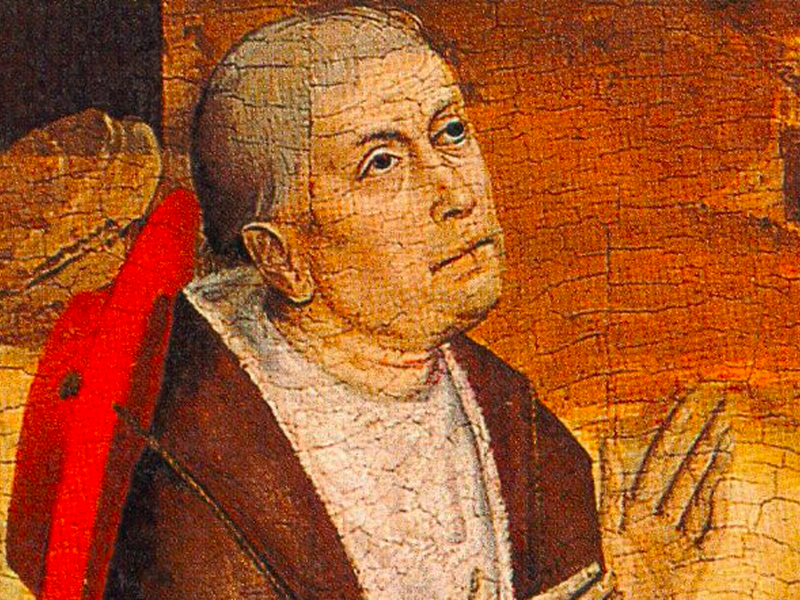
The fifteenth-century German Cardinal Nicholas of Cusa led a busy and wide-ranging life. Educated in liberal arts and law at Heidelberg and Padua, Nicholas was a leading figure in the Conciliarist movement, and later served as a papal legate to both Constantinople and throughout Germany. As Bishop of Brixen, he…

by Peter LeithartApril 29, 2013
screenshot-2023-07-27-at-10-25-35-am
Deuteronomy

Law and History: How to Read the Law of Moses (Part 7)

This is the seventh in a series of studies on Deuteronomy 22:30-23:8. Thou shalt not abhor an Edomite, for he is thy brother; thou shalt not abhor an Egyptian, because thou wast a sojourner in his land. The children of the third generation that are born unto them shall enter…

by Ralph Allan SmithApril 25, 2013
ivan-aleksic-16yxcjsoaek-unsplash
Romans

What Advantage the Jew?

A sermon on Romans 3:1-8. 1 Then what advantage has the Jew? Or what is the value of circumcision? 2 Much in every way. To begin with, the Jews were entrusted with the oracles of God. A lot of people speculate here about what kind of advantage Paul is talking…

by Mark HorneApril 22, 2013
screenshot-2023-07-27-at-10-25-35-am
Deuteronomy

Law and History: How to Read the Law of Moses (Part 6)

This is the sixth in a series of studies on Deuteronomy 22:30-23:8. An Ammonite or a Moabite shall not enter into the assembly of Yahweh; even to the tenth generation shall none belonging to them enter into the assembly of Yahweh forever: because they met you not with bread and…

by Ralph Allan SmithApril 17, 2013

Showing page 195 of 309

See all
See all
Theology

Privatio boni

Milbank makes a couple of interesting points regarding the import of an Augustinian view of evil. 1) Augustine’s view assumes the goodness of matter, in fact the goodness of all being. This, Milbank claims, seems to excuse evil - it’s some lack, a weakness or finitude, that makes for evil.…

July 11, 2007
Theology

Privatio boni and banal evil

In the view of many, the Holocaust belied the Augustinian description of evil as the privation of good. Something much more insidiously positive was at work in the death camps. Hannah Arendt, however, seems to confirm the Augustinian perspective in her treatment of the banality of evil. According to Milbank,…

July 10, 2007
Philosophy

Argue, or obey?

Kant bristles at the demand that he claims to hear “on all sides”: ” Don’t argue !” Officers tell us to obey, tax-officials to pay, clergy to pray in a certain way. But Kant wants to argue. Or does he? Maybe not: “in some affairs which affect the interests of…

July 10, 2007
Philosophy

The duty of enlightenment

Kant’s appeal in “What Is Enlightenment?” is not primarily intellectual but ethical. Enlightenment, Kant says, “is man’s emergence from his self-incurred immaturity.” Immaturity he defines as “the inability to use one’s own understanding without the guidance of another,” and this immaturity is “self-incurred” when the cause is “lack of resolution…

July 10, 2007
American Religion

Americanism

David Gelernter, Americanism: The Fourth Great Western Religion . New York: Doubleday, 2007. 229 pp. Hardback, $24.95. America, G. K. Chesterton said, is a nation with the soul of a church. David Gelernter, the polymathic computer scientist from Yale, suggests that this doesn’t quite go far enough. For many, both…

July 10, 2007

God’s Whimsy

Wiker and Witt suggest that God created pandas as “comic relief” in a blessed fit of “divine whimsy.” The suggestion is troubling even for Christians who defend creation, because, being engineers, they have swallowed the reductive notion that creation must be functional. Wiker and Witt offer this rejoinder: “To spurn…

July 9, 2007

Showing page 1658 of 2212

Browse by Category

In Medias Res

Your weekly digest for all things Theopolis.

Donate

Theopolis is nearly 100% donor-supported. Consider joining us on our mission.