Theopolis Logo

Writing

Explore our collection of theological essays, biblical studies, and reflections on faith and culture.

See all
aaron-burden-h8s0pf2rcqs-unsplash
Luke

The Second Isaiah and His Message

Higher critics have, for a long time, posited a Second Isaiah to account for the structural and tone differences in the book from chapter 40 on. Now, we do believe in a Second Isaiah, but believe that the form critics have generally suffered from a lack of imagination both in…

by Richard BledsoeOctober 5, 1995

whichbooksbelongintheot
Leviticus

Getting the Translation Right

A couple of the most serious mistranslations in our Bibles are found in the book of Leviticus. The main reason these errors have gone unreformed, I believe, is because Leviticus is simply not studied often enough, so the problem has never been fully addressed. The first mistranslation is found right…

by James B. JordanOctober 4, 1995
Biblical Horizons

Prophecy and the Coming Christian Revolution

Thomas Kuhn’s book, The Structure of Scientific Revolutions , is really a parenthesis inside of the larger reality of Christian history. Progress and forward movement inside of science is a footnote to the larger and more general reality of covenant renewals in both Biblical and Christian history. The fundamental mark…

by Richard BledsoeSeptember 5, 1995
luca-tosoni-wneuvexggjg-unsplash
Biblical Horizons

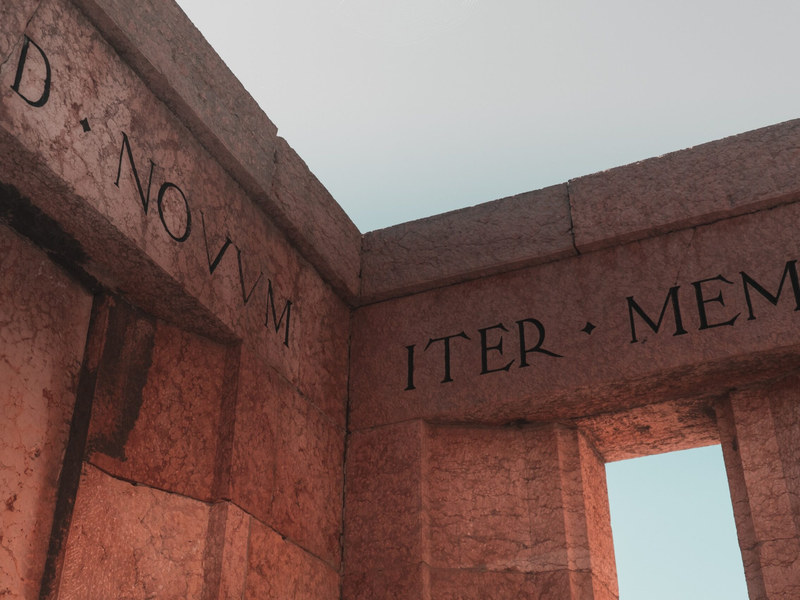
In Defense of Latin

James Jordan, in the June/July 1995 Biblical Horizons, wrote a very helpful essay, "The Great Hangover," the gist of which I entirely agree with. The theme of the essay was that the Church to move forward must shuck off the old husks of Hellenism, Rabbinism, and undo admiration for all…

by Richard BledsoeSeptember 5, 1995
pawan-sharma-vt2efwhbs-e-unsplash
Biblical Horizons

The Triune Office Reconsidered

Traditionally, the three offices in the Presbyterian churches have been teaching elder, ruling elder, and deacon. These have been associated with priest, elder, and Levite respectively. We have seen that the deacon is in fact an apprentice and assistance elder. We have also seen that Levites as well as priests…

by James B. JordanSeptember 4, 1995
jordan-wozniak-xp_agmeea6s-unsplash-2
Biblical Studies

When the Son Is Glorified

John 7:39 interprets Jesus’ offer of living water as an offer of the Spirit to those who believe, "for," John continues, "the Spirit was not yet, because Jesus was not yet glorified." John was not making an ontological statement about the Spirit, as if the Spirit did not exist until…

by Peter LeithartJuly 27, 1995

Showing page 269 of 309

See all
See all
Philosophy

Mirrors, ancient and modern

In her recent book The Mirror of the Self , Shadi Bartsch argues that ancient notions of introspection and self-examination do not employ the image of the mirror in the way we do in post-Cartesian philosophy. In the words of the TLS reviewer, for the ancients “the mirror was the…

June 27, 2007

Enjoyment in God

Wilken summarizes Augustine’s social vision of perfection this way: “This peace for which the city of God yearns is a ‘perfectly ordered and harmonious fellowship in the enjoyment of God,’ a peace of ‘enjoying one another in God.’ Notice that Augustine’s language is social, not individualistic. He does not say,…

June 26, 2007

Ecclesiology of perfection

When Plato thought about politics, he thought about an ideal city (at least in the Republic ). Not Augustine. Augustine recognized that Plato had portrayed “what kind of city ought there to be.” But Augustine was after something different. He presented an actual human society, a city of God in…

June 26, 2007
Theology

Empty minds

Aquinas wrote: “If the teacher determines the question by appeal to authorities only, the student will be convinced that the thing is so, but will have acquired no knowledge or understanding, and he will go away with an empty mind.”

June 26, 2007

Cyril and the Bible

In his wonderful book, The Spirit of Early Christian Thought , Robert Louis Wilken criticizes the Formula of Chalcedon as “formulaic and abstract,” which described Jesus as “one person,” but “seemed to divide Christ into a divine nature that, for example, healed the sick and raised the dead and a…

June 26, 2007
History

No heavenly good

Alcinous, a pagan philosopher of the second century AD claimed that God is “eternal, ineffable, self-sufficient, without need . . . and perfect in every respect.” The only way to know such a God was to ascend from earthly things to higher realities: “First one contemplates the beauty found in…

June 26, 2007

Showing page 1663 of 2212

Browse by Category

In Medias Res

Your weekly digest for all things Theopolis.

Donate

Theopolis is nearly 100% donor-supported. Consider joining us on our mission.