Theopolis Logo

Writing

Explore our collection of theological essays, biblical studies, and reflections on faith and culture.

See all
screen-shot-2020-03-05-at-9-05-54-am
Motherhood

Home is the Place They Leave

Your first born is a novelty. Everything seems special and unique. No one’s child is like yours. Then, over time, you begin to make mistakes. Some strategies don’t work on the additional personalities born into your family, or they simply don’t scale from a practical perspective. With maturity, you realize…

by Mandi GerthMay 17, 2022

screen-shot-2022-05-12-at-12-07-23-pm
John

Unionized Perfection

Could Jesus have sinned? Before answering the question, it's best to run through a couple of qualifiers. First, scripture clearly teaches He did not sin. Second, I realize the seeming futility when discussing hypothetical situations. The question of the peccability of Jesus, or Jesus's capacity to sin, is in reality,…

by Matthew CoreyMay 12, 2022
angola-prison-louisiana-usa
Grace

The Farm

The first time I saw the inside of a prison was in 1999; I was 16. I hadn’t knocked over a fruit stand or been caught stealing hubcaps, I was just an unsuspecting teenager playing piano for a Louisiana gospel group. One Wednesday evening in October, my pastor and leader…

by Brandon MeeksMay 10, 2022
mahdi-soheili-xncgiwy8f2m-unsplash
Biblical Studies

Its Lamp is the Lamb: The Diminishing Rule of the Celestial Bodies

The act of naming carries a lot of weight in the Bible. Naming denotes authority and possession; the namer signifying that he understands the thing named, and therefore possesses the requisite wisdom to rule over it. God set the stage for naming when he named the domains during the first…

by Daniel StanleyMay 3, 2022
dan-cristian-padure-h3kuhyuce9a-unsplash
Pastoral Ministry

The Algebra of Church Growth

This short essay makes an obvious point: Church growth is a matter of the rate of entry into a church relative to the rate of exit from that church. Perhaps church growth literature has long recognized that fact. Yet given the greater focus in church – at least in my…

by James R. RogersApril 26, 2022
bonifatius_donareiche-e1528229924369-1024x583
Boniface Option

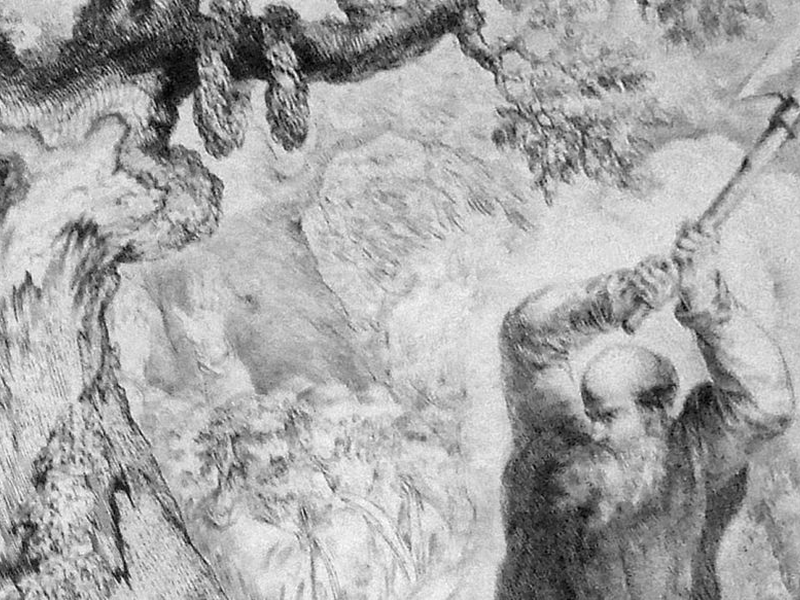
An Arrow Has a Telos: Strategy in the Negative World

If you’ve not yet heard of Aaron Renn’s three worlds framework , here’s the quick version: once upon a time, being a Christian was a net social good in American society. Whatever was going on behind the scenes in elite institutions, the general rank-and-file perception of Christianity was positive. That…

by Tim NicholsApril 19, 2022

Showing page 44 of 309

See all
See all
Philosophy

Mirrors, ancient and modern

In her recent book The Mirror of the Self , Shadi Bartsch argues that ancient notions of introspection and self-examination do not employ the image of the mirror in the way we do in post-Cartesian philosophy. In the words of the TLS reviewer, for the ancients “the mirror was the…

June 27, 2007

Enjoyment in God

Wilken summarizes Augustine’s social vision of perfection this way: “This peace for which the city of God yearns is a ‘perfectly ordered and harmonious fellowship in the enjoyment of God,’ a peace of ‘enjoying one another in God.’ Notice that Augustine’s language is social, not individualistic. He does not say,…

June 26, 2007

Ecclesiology of perfection

When Plato thought about politics, he thought about an ideal city (at least in the Republic ). Not Augustine. Augustine recognized that Plato had portrayed “what kind of city ought there to be.” But Augustine was after something different. He presented an actual human society, a city of God in…

June 26, 2007
Theology

Empty minds

Aquinas wrote: “If the teacher determines the question by appeal to authorities only, the student will be convinced that the thing is so, but will have acquired no knowledge or understanding, and he will go away with an empty mind.”

June 26, 2007

Cyril and the Bible

In his wonderful book, The Spirit of Early Christian Thought , Robert Louis Wilken criticizes the Formula of Chalcedon as “formulaic and abstract,” which described Jesus as “one person,” but “seemed to divide Christ into a divine nature that, for example, healed the sick and raised the dead and a…

June 26, 2007
History

No heavenly good

Alcinous, a pagan philosopher of the second century AD claimed that God is “eternal, ineffable, self-sufficient, without need . . . and perfect in every respect.” The only way to know such a God was to ascend from earthly things to higher realities: “First one contemplates the beauty found in…

June 26, 2007

Showing page 1663 of 2212

Browse by Category

In Medias Res

Your weekly digest for all things Theopolis.

Donate

Theopolis is nearly 100% donor-supported. Consider joining us on our mission.