Theopolis Logo

Writing

Explore our collection of theological essays, biblical studies, and reflections on faith and culture.

See all
andriy-nestruiev-gdbrwwh6doc-unsplash
Biblical Studies

Funerals and Flutes

Matthew 8-9 records three clusters of miracles, interspersed with snatches of Jesus’ teaching about various aspects of discipleship. Just as the Sermon on the Mount displays the authority of Jesus’ Word in teaching, these chapters display the authority of Jesus’ Word over sickness, uncleanness, the creation, demons, and death. In…

by Peter LeithartApril 17, 1992

michal-parzuchowski-w9uljjwg2fa-unsplash
Baptism

Daddy, Why Was I Excommunicated?

Since the early 1980s, several of the conservative Reformed Churches have debated and wrestled with the issue of paedocommunion (infant communion). The PCA and the OPC assigned study committees to examine the question, both of which produced useful reports both in support of and against the position. Though the debate…

by Peter LeithartApril 13, 1992
skyler-gerald-akljfvj5ym4-unsplash
Biblical Chronology

Chronologies and Kings, Part 9: Jehu, Hazael, and Assyria

(This issue of Biblical Chronology concludes a discussion of the Biblical and Assyrian chronologies, begun in previous posts. Click on the category link of "Biblical Chronology" above to see previous issues. Did Shalmaneser Know Jehu? Allis writes: "The Black Obelisk of Shalmaneser contains, in addition to brief accounts of the…

by James B. JordanMarch 23, 1992
denise-jans-dpemksg59la-unsplash
American Culture

Arts and Play, Part 4

Movies Movies as an art form have a powerful impact because they take place in a dark room, on a large screen, with no distractions, and because they entail many of the arts: music, acting, choreography, design and color, etc. A movie can be an overwhelming experience for a young…

by James B. JordanMarch 23, 1992
sincerely-media-bhaswrjttzw-unsplash-2
Leviticus

The Ecology of the Tribute Offering

The Hebrew word translated as "grain offering" or "cereal offering" is minchah . Like the translation of `olah as "burnt offering," the translation of minchah as "grain offering" is somewhat deceiving, since minchah does not refer to grain or cereal. In liturgical contexts outside of Leviticus, in fact, the word…

by Peter LeithartMarch 13, 1992
sincerely-media-bhaswrjttzw-unsplash-2
Ascension

Skinned and Cut

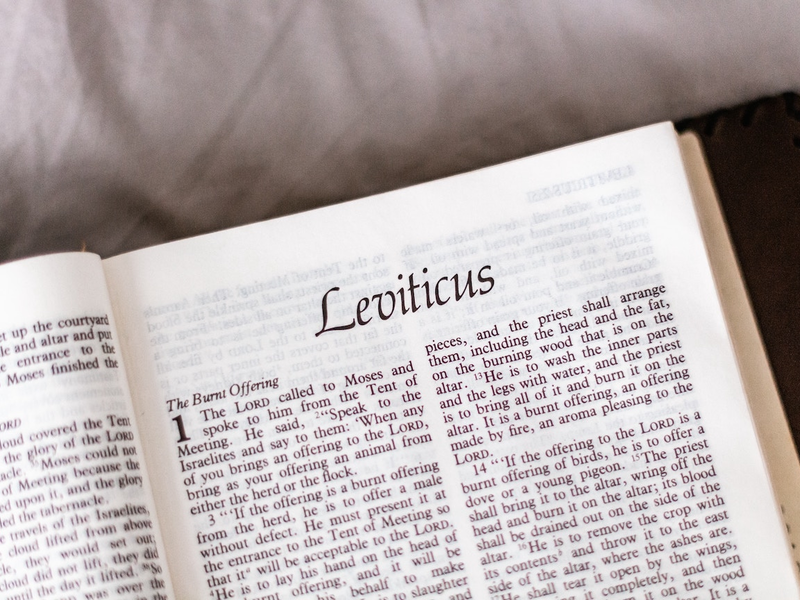
"He shall then skin the burnt offering and cut it into its pieces" (Leviticus 1:6). The normal word ( `olah ) that is translated as "burnt offering" and "whole burnt offering" has nothing to do with either burning or wholeness. It is the noun form of a verb meaning "to…

by Peter LeithartMarch 13, 1992

Showing page 291 of 309

See all
See all

Verdict and Promise

Luther illustrates justification with the image of a mortally sick man and his doctor. The doctor is so certain that he is going to heal the patient that he declares him well already, and tells the patient to consider himself well. The patient trusts the doctor so thoroughly that he…

June 20, 2007

Asking questions

Picking up on my last post . . . So far as I know, no one has challenged my paper on justification exegetically. Perhaps someone has offered a devastating critique, one that shows I’ve misinterpreted every passage I discuss. If such a critique is out there, though, I’ve not seen…

June 20, 2007

My work on justification

The PCA FV Report includes a brief, and fairly accurate, summary of a paper I wrote on justification. This is one of the few things on justification that I’ve published. Since some may read the Report without reading the article, let me summarize what I thought I was doing in…

June 20, 2007

Justification and Judgment

Is it appropriate to use the term “justify” to describe God’s verdict at the final judgment? This has admittedly not been common usage in Reformed theology. “Justify” has normally been reserved for the “already” of God’s verdict rather than the “not yet.” But Paul uses “justify” to refer to the…

June 20, 2007

Jesus the Judge

The Father has put judgment into the hands of the Son (John 5), and God the Father has appointed a day on which the Risen Son will judge all men (Acts 17:31). The judge of all will be a Man, as Paul says in Acts 17. According to the PCA…

June 19, 2007

Trinity and Judgment

Is the denial of judgment according to works implicitly binitarian? If we are judged according to Christ’s imputed righteousness, then at the judgment, Jesus’ works are approved but not ours. the judgment is Father-Son. But where’s the Spirit? If our works are the works of the Spirit in us, then…

June 19, 2007

Showing page 1666 of 2212

Browse by Category

In Medias Res

Your weekly digest for all things Theopolis.

Donate

Theopolis is nearly 100% donor-supported. Consider joining us on our mission.