Theopolis Logo

Writing

Explore our collection of theological essays, biblical studies, and reflections on faith and culture.

See all
night-sky
Astral imagery

The Lady and Her Jewels: An Epiphany Meditation

And a great portent appeared in heaven, a woman clothed with the sun, with the moon under her feet, and on her head a crown of twelve stars; she was with child and she cried out in her pangs of birth, in anguish for delivery (Revelation 12:1-2). Then Joshua spoke…

by Richard BledsoeJanuary 6, 2015
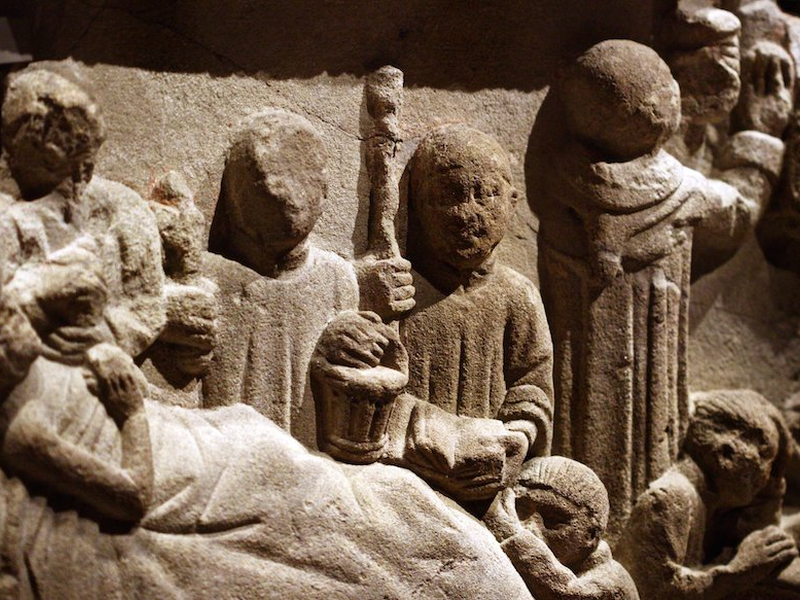
extreme-unction
Anointing

Fattening Our Suffering

In his post asking Ought we Anoint the Dying? Peter Leithart makes an excellent and important point about our suffering as members of Christ. However, he only parenthetically mentions that the verb in question in James 5 is not chrio but aleipho . By assuming that these words are interchangeable,…

by Robert MaddoxDecember 30, 2014
sacre-bleu-r__kixb0i5m-unsplash
James

Death as Frenemy

We spend a lot of time in the church talking about what it means to live like a Christian. But what does it mean to die like a Christian? If we are to follow Christ in life, what does it mean for us to follow him in death as well?…

by Rich LuskDecember 23, 2014
giammarco-zeh-ljawhtg-unsplash
Literature

Was Shakespeare A Christian?

How would one go about answering the question posed by my title? That depends on what the question means. Obviously, different definitions of the question would require different approaches to an answer. Right off hand, I can think of at least three possible — though not necessarily mutually exclusive —…

by Ralph Allan SmithDecember 23, 2014
day-2-ferguson-protests-nationwide
American Culture

Phobophobia

In recent weeks and months, we have seen events that are not the event. The drama around these events is not the events themselves, but the anxiety about the events, and then even the anxiety about the anxiety about the events. That is the real event. The events in Ferguson,…

by Richard BledsoeDecember 22, 2014
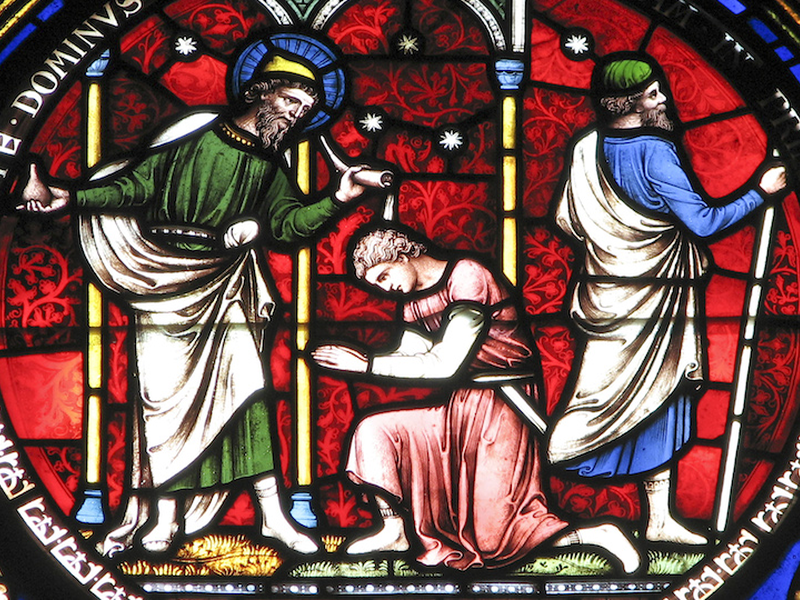
anointing-david
Anointing

Ought We Anoint the Dying?

Anointing the sick, including the dying, is one of the traditional seven sacraments of the Catholic Church. The Reformers denied that the rite qualified as a sacrament. Formally, this was because anointing did not have a direct authorization from Jesus; more theologically, it was not one of the marks that…

by Peter LeithartDecember 18, 2014

Showing page 163 of 309

See all
See all
History

Converted Jerusalem

In his fascinating Rise of Christianity , Rodney Stark cites estimates that there were between 10,000 and 20,000 inhabitants of Jerusalem in the first century. Stark uses this to falsify Luke’s claims that there were 5000 Christians in Jerusalem (Acts 4:4) and “many thousands” of Jews (Acts 21:20): “Had there…

March 30, 2007

Hebraic hermeneutics

One Rhonda Wauhkonen discusses Nicholas of Lyra’s “Hebraic” semiotics and hermeneutics in a 1992 article on Chaucer. She begins by contrasting Augustine’s signum/res distinction to Lyra’s Hebraic viewpoint: “In the Hebrew system as evidenced in Scripture and as adapted by Nicholas, such stratification of signification did not exist, for the…

March 29, 2007

Last and first

Nicholas of Lyra is known for his notion of a “double literal” sense to Scripture. For him, interpretation ad litteram includes both the historical and the doctrinal/christological senses, and he suggests that the ancient Hebrews could well have seen the Messianic sense as the literal sense. He also suggests that…

March 29, 2007

Nicholas of Lyra’s afterlife

In Book 3 of Gargantua and Pantagruel, Rabelais attributes an odd opinion to the 14th-century exegete, Nicholas of Lyra: “Pantagruel, having wholly subdued the land of Dipsody, transported thereunto a colony of Utopians, to the number of 9,876,543,210 men, besides the women and little children, artificers of all trades, and…

March 29, 2007

Thomas on the Parable of the Workers

Steinmetz summarizes Thomas’s remarkably “NTWrightian” commentary on Matthew 20:1-16. While acknowledging an Origenist tradition that sees the hours as moments of an individual life, Thomas is more interested in the Irenaean tradition that interprets the parable in terms of redemptive history: “The hours mentioned in the parable are not stages…

March 29, 2007

Showing page 1699 of 2212

Browse by Category

In Medias Res

Your weekly digest for all things Theopolis.

Donate

Theopolis is nearly 100% donor-supported. Consider joining us on our mission.