Theopolis Logo

Writing

Explore our collection of theological essays, biblical studies, and reflections on faith and culture.

See all
5f72533d0afa437fcaa7e5cf_hero_history
Apologetics

Presumptuous Presuppositions: The Apologetics of Cornelius Van Til

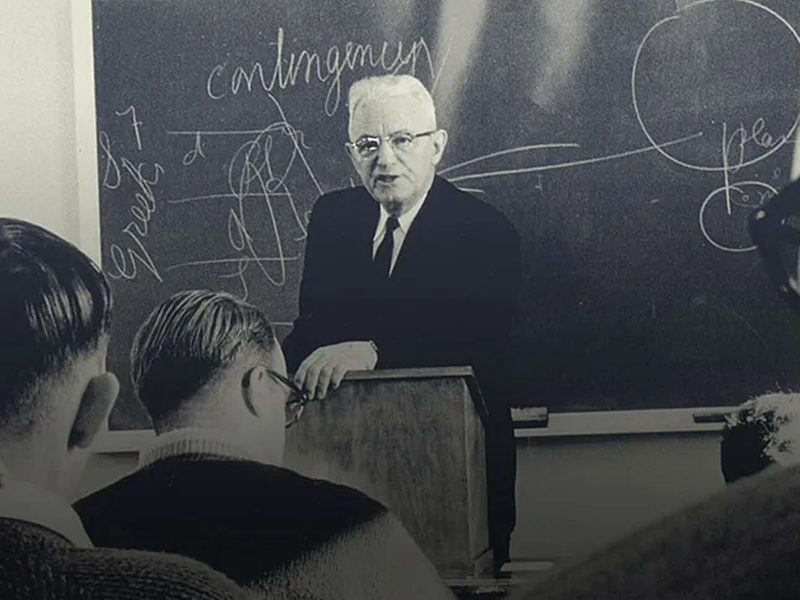
Whether one entirely agrees with him or not, no Christian interested in apologetics–the reasoned defense of the Faith–can afford to be uninterested in Cornelius Van Til, the late professor of Apologetics at Westminster Theological Seminary in Philadelphia. According to John Frame, Van Til “is perhaps the most important thinker since…

by Mark HorneJuly 15, 1997

trnava-university-beeyeib-am8-unsplash
Baptism

Richard Bacon’s “What Mean Ye By This Service? Paedocommunion in Light of the Passover” A Brief Response

Reverend Richard Bacon is the pastor of First Presbyterian Church of Rowlett, Texas. He has written a tract entitled “What Mean Ye By This Service? Paedocommunion in Light of Passover,” printed by Presbyterian Heritage Publications (P.O. Box 180922, Dallas, TX 75218). I am writing this brief response to set forth…

by Mark HorneJuly 6, 1997
aaron-burden-qjdzyt_k8xg-unsplash
Angels

Twelve Fundamental Avenues of Revelation, Part 5

As we move toward a consideration of Dynamic Cosmic Revelation, there is a further aspect of revelation through action that should be discussed here, and that is this: God is particularly revealed to us in times of crisis and distress. When things are going well, we forget God. When distress…

by James B. JordanJuly 3, 1997
jan-kahanek-g3o5ztrk2e4-unsplash
Biblical Chronology

John Sailhamer Weighs In, Part 4

We conclude our analysis of John Sailhamer’s book *Genesis Unbound: A Provocative New Look at the Creation Account* (Multnomah Books, 1996), which argues that Genesis 1:2ff. is not about the creation of the whole world, but about the preparation of the Land of Eden, which is also the Promised Land.…

by James B. JordanJuly 3, 1997
screenshot-2023-09-04-at-10-37-01-am
Biblical Horizons

The Sin of Ham and the Curse of Canaan, Part 2 (An Exposition of Genesis 9:20-27)

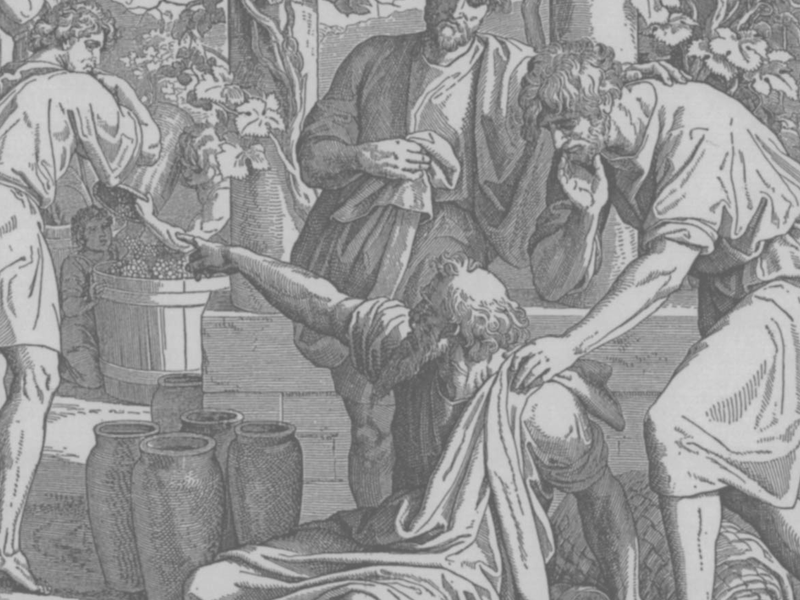
Commentary A. Noah’s God-like Labor: 8:20 And Noah, a master of the ground, was the first, And he planted a vineyard. 21 And he drank from the wine, And became drunk, And lay uncovered inside his tent. It appears to me that there is a balance between "ground" and "tent"…

by James B. JordanJuly 3, 1997
e99a4713
How to Worship

Why Does the Pastor Wear a Robe?

A Defense of the Use of the Ministerial Robe in Public Worship The purpose of this series of articles is to explain our biblical philosophy of worship and how we have sought to implement it here at Providence Reformed Presbyterian Church. We have thought through our worship services. We have…

by Jeff MeyersJune 20, 1997

Showing page 255 of 309

See all
See all
History

Converted Jerusalem

In his fascinating Rise of Christianity , Rodney Stark cites estimates that there were between 10,000 and 20,000 inhabitants of Jerusalem in the first century. Stark uses this to falsify Luke’s claims that there were 5000 Christians in Jerusalem (Acts 4:4) and “many thousands” of Jews (Acts 21:20): “Had there…

March 30, 2007

Hebraic hermeneutics

One Rhonda Wauhkonen discusses Nicholas of Lyra’s “Hebraic” semiotics and hermeneutics in a 1992 article on Chaucer. She begins by contrasting Augustine’s signum/res distinction to Lyra’s Hebraic viewpoint: “In the Hebrew system as evidenced in Scripture and as adapted by Nicholas, such stratification of signification did not exist, for the…

March 29, 2007

Last and first

Nicholas of Lyra is known for his notion of a “double literal” sense to Scripture. For him, interpretation ad litteram includes both the historical and the doctrinal/christological senses, and he suggests that the ancient Hebrews could well have seen the Messianic sense as the literal sense. He also suggests that…

March 29, 2007

Nicholas of Lyra’s afterlife

In Book 3 of Gargantua and Pantagruel, Rabelais attributes an odd opinion to the 14th-century exegete, Nicholas of Lyra: “Pantagruel, having wholly subdued the land of Dipsody, transported thereunto a colony of Utopians, to the number of 9,876,543,210 men, besides the women and little children, artificers of all trades, and…

March 29, 2007

Nicholas of Lyra’s afterlife

In Book 3 of Gargantua and Pantagruel, Rabelais attributes an odd opinion to the 14th-century exegete, Nicholas of Lyra: “Pantagruel, having wholly subdued the land of Dipsody, transported thereunto a colony of Utopians, to the number of 9,876,543,210 men, besides the women and little children, artificers of all trades, and…

March 29, 2007

Thomas on the Parable of the Workers

Steinmetz summarizes Thomas’s remarkably “NTWrightian” commentary on Matthew 20:1-16. While acknowledging an Origenist tradition that sees the hours as moments of an individual life, Thomas is more interested in the Irenaean tradition that interprets the parable in terms of redemptive history: “The hours mentioned in the parable are not stages…

March 29, 2007

Showing page 1699 of 2212

Browse by Category

In Medias Res

Your weekly digest for all things Theopolis.

Donate

Theopolis is nearly 100% donor-supported. Consider joining us on our mission.