Theopolis Logo

Writing

Explore our collection of theological essays, biblical studies, and reflections on faith and culture.

See all
der_anschlag_von_luthers_95_thesen-1024x589
Church Calendar

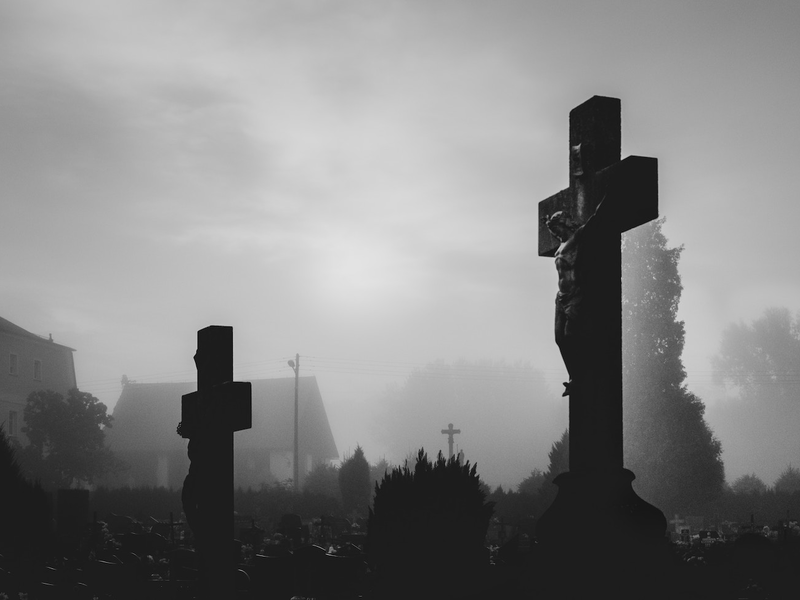
Five Misconceptions of Reformation Day

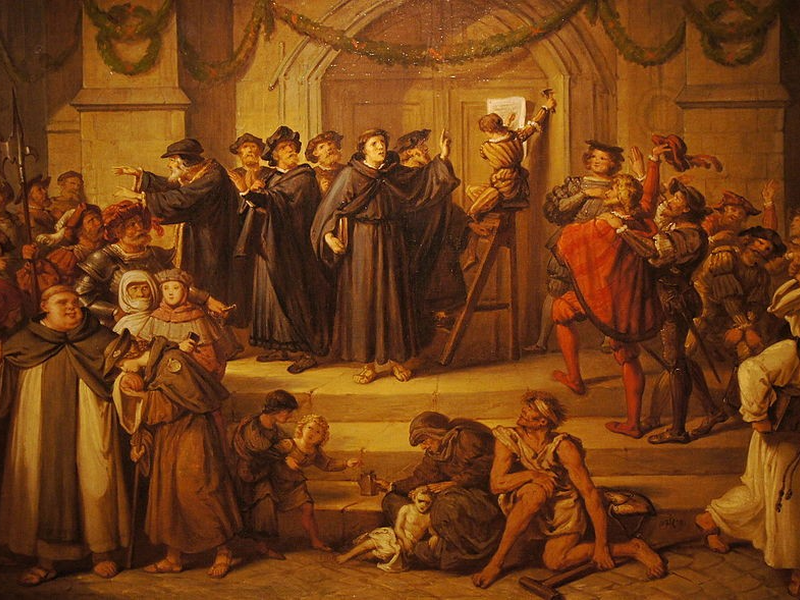
For many people the date October 31 is significant not only for being the Eve of All Saints (All Hallows Eve, Halloween) but as the day in 1517 when Martin Luther nailed his 95 theses to the door of the Castle Church in Wittenburg. These theses were a list of…

by Timothy LeCroyOctober 31, 2017
sacre-bleu-r__kixb0i5m-unsplash
Church Calendar

Concerning Halloween

It has become routine in October for some Christian schools to send out letters warning parents about the evils of Halloween, and it has become equally routine for me to be asked questions about this matter. "Halloween" is simply a contraction for All Hallows’ Eve. The word "hallow" means "saint,"…

by James B. JordanOctober 26, 2017
revelation-john-with-rod
Revelation

Preaching, An Art of Division

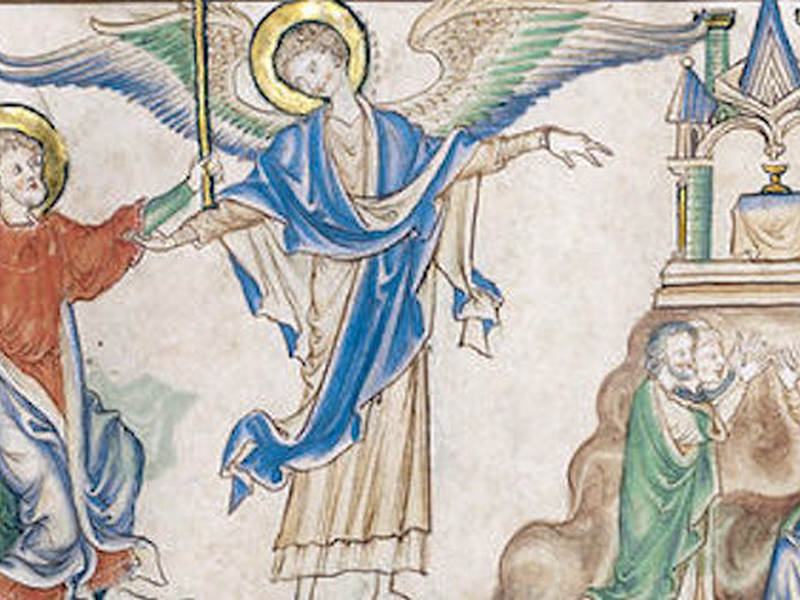
The following is an excerpt from Peter Leithart's forthcoming two-volume commentary on Revelation (T&T Clark). Y ou must prophesy again concerning many peoples and nations and tongues and kings,” a voice tells John (Rev. 10:11). Then someone gives him a “reed like a rod” and instructs him to measure (11:1).…

by Peter LeithartOctober 24, 2017
josiah-death

Back To Egypt

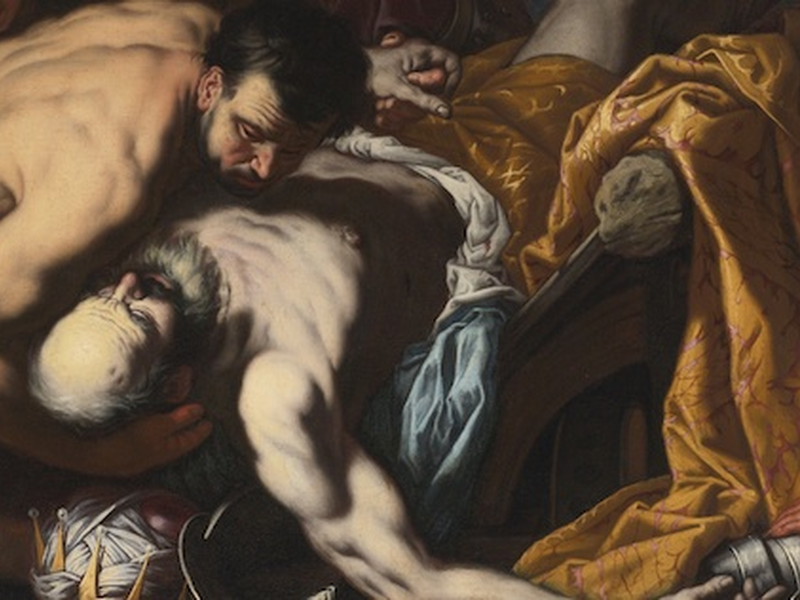
Josiah is an ideal Davidic king in many ways. He not only “did right,” but he “walked in the ways of his father David” and “did not turn aside to the right or to the left” (2 Chronicles 34:2). At the age of 16, he began to seek Yahweh, and…

by Peter LeithartOctober 19, 2017
augustine
Augustine

Augustine and the Music of Time

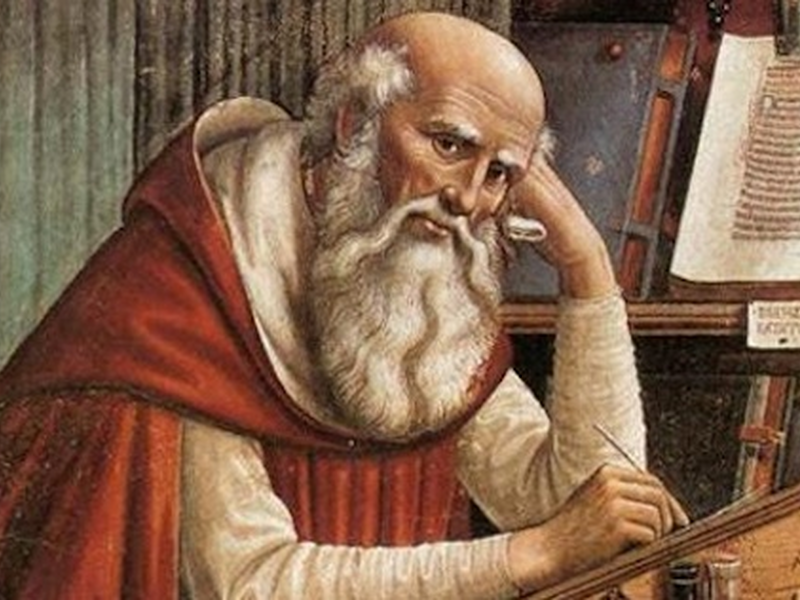
One of the best discussions of Augustine’s views on time comes from Jeremy Begbie’s Theology, Music, and Time (ch. 3). Following Paul Ricoeur, Begbie claims that Augustine’s distentio “is conceived as the three-fold present, and the threefold present as distentio . The distentio consists in the non-coincidence of the mind’s…

by Peter LeithartOctober 17, 2017
img_1043
How to Worship

The Psalter Should be Woven into the Fabric of Worship

This has always been the position of the Christian Church, and from an historical perspective the present situation in evangelicalism is appalling. The early liturgies of the Church, which are still used in Episcopal and Lutheran worship, are laced with psalm phrases. The early hymns, such as the Te Deum…

by James B. JordanOctober 12, 2017

Showing page 104 of 309

See all
See all
History

Hospitality

For us, hospitality usually means entertaining. It means having our friends and neighbors and church members into the home. Sometimes, in our world, it involves jockeying for position and power by showing hospitality to the right kinds of people. That’s how the rich and famous create and sustain the aura…

March 24, 2007

Obscene dancing

The London Times fulminates: “It is quite sufficient to cast one’s eyes on the voluptuous intertwining of the limbs, and close compressure of the bodies, in this dance, to see that it is far indeed removed from the modest reserve which has hitherto been considered distinctive of English females. So…

March 22, 2007

Christ and Horrors

Marilyn McCord Adams ( Christ and Horrors , Cambridge, 2006) proposes to demonstrate the coherence of Christology not by starting with sin and explaining how Christ has dealt with sin, but by starting with “horrors” and asking, What must Christ be and do if He is going to rescue us…

March 22, 2007
History

The Alexandrian West

In her book on medieval Bible scholarship, Beryl Smalley notes that “Alexandrian exegesis penetrated to the Latin middle ages, when knowledge of Greek had declined, by two main channels: indirectly through the Latin Fathers and directly through translations of Origen’s works. Rufinus’ translations of some of his homilies were used…

March 22, 2007

Allegory and empire

Philo thought of allegory as a means for universalizing Jewish history and law, analogous to the way the Roman world had fused all peoples into a single empire. Literalists are “citizens of a petty state,” while allegorists are “on the roll of citizens of a greater country, namely, this whole…

March 21, 2007

Androgynous numbers

Why did God create the world in six days? Philo said that 6 is the perfect number, both the sum and the product of its factors, which happen to be the first three integers (1, 2, 3). But there’s more: “We may say that [6] is in its nature both…

March 21, 2007

Showing page 1703 of 2212

Browse by Category

In Medias Res

Your weekly digest for all things Theopolis.

Donate

Theopolis is nearly 100% donor-supported. Consider joining us on our mission.