Theopolis Logo

Writing

Explore our collection of theological essays, biblical studies, and reflections on faith and culture.

See all
night-sky
Astral imagery

The Lady and Her Jewels: An Epiphany Meditation

And a great portent appeared in heaven, a woman clothed with the sun, with the moon under her feet, and on her head a crown of twelve stars; she was with child and she cried out in her pangs of birth, in anguish for delivery (Revelation 12:1-2). Then Joshua spoke…

by Richard BledsoeJanuary 6, 2015
extreme-unction
Anointing

Fattening Our Suffering

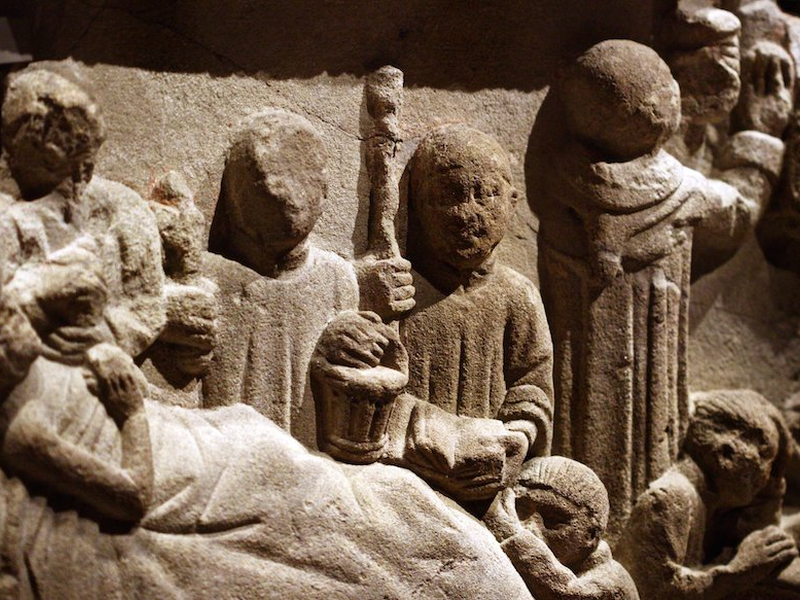
In his post asking Ought we Anoint the Dying? Peter Leithart makes an excellent and important point about our suffering as members of Christ. However, he only parenthetically mentions that the verb in question in James 5 is not chrio but aleipho . By assuming that these words are interchangeable,…

by Robert MaddoxDecember 30, 2014
sacre-bleu-r__kixb0i5m-unsplash
James

Death as Frenemy

We spend a lot of time in the church talking about what it means to live like a Christian. But what does it mean to die like a Christian? If we are to follow Christ in life, what does it mean for us to follow him in death as well?…

by Rich LuskDecember 23, 2014
giammarco-zeh-ljawhtg-unsplash
Literature

Was Shakespeare A Christian?

How would one go about answering the question posed by my title? That depends on what the question means. Obviously, different definitions of the question would require different approaches to an answer. Right off hand, I can think of at least three possible — though not necessarily mutually exclusive —…

by Ralph Allan SmithDecember 23, 2014
day-2-ferguson-protests-nationwide
American Culture

Phobophobia

In recent weeks and months, we have seen events that are not the event. The drama around these events is not the events themselves, but the anxiety about the events, and then even the anxiety about the anxiety about the events. That is the real event. The events in Ferguson,…

by Richard BledsoeDecember 22, 2014
anointing-david
Anointing

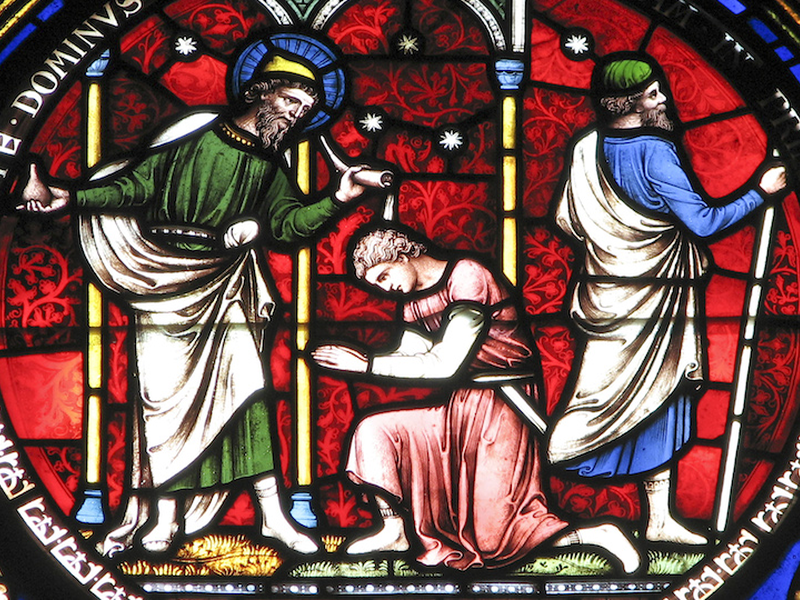
Ought We Anoint the Dying?

Anointing the sick, including the dying, is one of the traditional seven sacraments of the Catholic Church. The Reformers denied that the rite qualified as a sacrament. Formally, this was because anointing did not have a direct authorization from Jesus; more theologically, it was not one of the marks that…

by Peter LeithartDecember 18, 2014

Showing page 163 of 309

See all
See all

By the Spirit

Paul says that one can only say “Jesus is Lord” by the Spirit (1 Corinthians 12:3). He adds later in the same chapter that we are incorporated into the body, the one-and-many body of the visible church, by “one Spirit” (12:13). Surely Paul exaggerates. Anybody can say Jesus is Lord.…

February 22, 2007

Righteousness by faith

ERH sees faith not as a “religious” issue but as one of the driving forces of history. All revolutions begin in faith, and the faith that drives historical change is a faith that is reckoned as justice: “Faith is a belief in things unseen; it goes against hope, it defies…

February 22, 2007
History

American Revolution

Was the American Revolution a Revolution? ERH concludes it was a “half-revolution” rather than a total revolution on the scale of the Russian, French, Puritan, Reformation, and Papal revolutions. Evaluating the revolutionary character of the American Revolution rests partly on the question of what “revolution” meant to the participants. ERH…

February 22, 2007

Liturgical uniformity

To outsiders, the Roman Catholic church appears to have a uniform liturgical tradition, of long standing. Rosenstock-Huessy points out that the uniformity of the Mass is a rather late development. During the 19th century, “the movement of Solesmes united all the churches of the Catholic world by introducing the Roman…

February 22, 2007

Receiving brothers

Within two verses, John accuses Diotrephes of refusing to “receive us” and refusing to “receive the brethren” (3 John 9-10). The first refers to an acknowledgement of authority; receiving “us,” the elder and his co-workers, would mean listening and obeying. The second refers to hospitality; receiving the brothers means welcoming…

February 22, 2007

In manner of God

John commends Gaius not only for receiving traveling brothers but for sending them on their way “in a manner worthy of God” (3 John 6). What does this mean? Stott is certainly right to say that they are to be treated as servants of God. But John’s language is more…

February 22, 2007

Showing page 1713 of 2212

Browse by Category

In Medias Res

Your weekly digest for all things Theopolis.

Donate

Theopolis is nearly 100% donor-supported. Consider joining us on our mission.