Theopolis Logo

Writing

Explore our collection of theological essays, biblical studies, and reflections on faith and culture.

See all
timothy-eberly-djj49s6ud2o-unsplash
Leviticus

Yahweh's War Against Death

Stories, frankly all human stories are practically always about one thing aren’t they? Death. The inevitability of death. . . . “There is no such thing as a natural death. Nothing that happens to man is ever natural, since his presence calls the whole world into question. All men must…

by Brian MarrApril 14, 2014

screenshot-2023-09-21-at-4-52-42-pm
Matthew

Inescapable Blood

Matthew is organized around 5 discourses, which trace out the history of Jesus as a recapitulation of the history of God and Israel in the Old Testament. Jesus first speaks as a new Moses, instructing His disciples on a mountain about a righteousness that surpasses the righteousness of the scribes…

by Peter LeithartApril 10, 2014
screen-shot-2022-05-12-at-12-07-23-pm
Angels

Did Angels Marry People? The Sin of Cultural Intermarriage

The fall of the Sethites in Genesis 6 is the third fall of mankind, or the third degree of Adam’s original fall. Adam sinned in a Garden against his Father by stealing something he was supposed to wait to obtain. (“Every tree shall be food for you” Genesis 1:29.) Cain…

by James B. JordanApril 7, 2014
sixteen-miles-out-al48tflf4e8-unsplash
Angels

Did Angels Marry People? The Sons of God in Genesis 6

The recent fantasy film Noah and a slightly related blog comment by my friend Douglas Wilson have stirred up again the question of whether the “sons of God” in Genesis 6 who married the “daughters of men” were fallen angels or the priestly line of Seth. Doug argues for angels,…

by James B. JordanApril 4, 2014
kiwihug-l4gw27xzn1i-unsplash
Angels

The Angels of Jude

The prophecy of Jude concerns apostasy. An illustration of apostasy and its consequences is found in verse 6, which the New American Standard Bible translates this way: "And angels who did not keep their own domain, but abandoned their proper abode, He has kept in eternal bonds under darkness for…

by James B. JordanApril 3, 2014
screenshot-2023-09-21-at-4-22-42-pm
Matthew

Women at the Cross

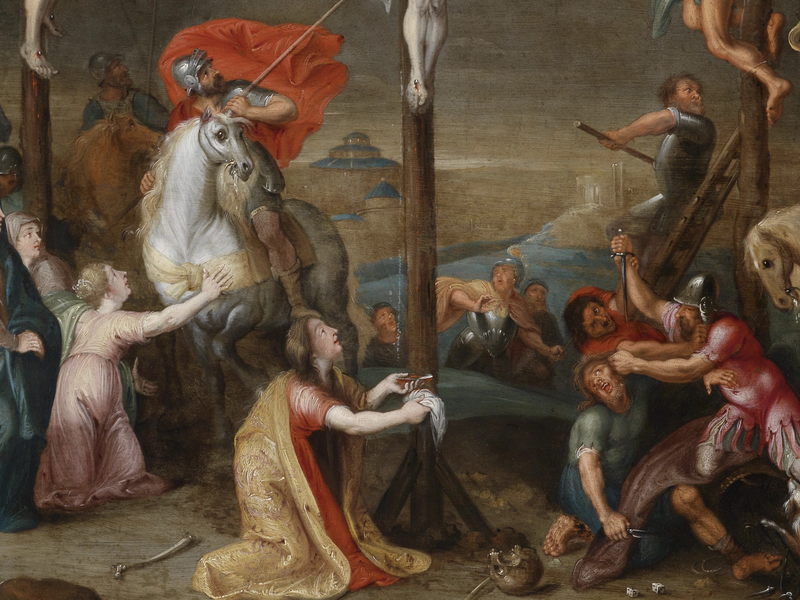
At His death, Jesus is surrounded by a Roman centurion and his cohort of Gentile solders. Matthew doesn't say that any disciples are there. But women are, and so is Joseph of Arimathea, identified as a “disciple” but, as John tells us, a “secret disciple for fear of the Jews,”…

by Peter LeithartMarch 31, 2014

Showing page 176 of 309

See all
See all

Ordination exhortation

1 Timothy 4:13: Do not neglect the spiritual gift within you, which was bestowed upon you through prophetic utterance with the laying on of hands by the presbytery. Prior to the Reformation, the Western church treated ordination as a sacrament. Protestants have never done that. For the seven sacraments of…

January 28, 2007

Exhortation, Fourth Sunday After Epiphany

Many of you received an email this week encouraging you to be at church on time and rebuking those who are habitually tardy. Some got the impression that the elders don’t want you to show up at all if you’re running late. That’s not the point. If you’re unavoidably tardy…

January 28, 2007

Spouse and Kingdom, revisited

In response to my earlier post on “Spouse and Kingdom,” Ken Myers of Mars Hill Audio writes, “it strikes me that the WCF’s dualism in describing the Church reflects the typical Western dualism that was congealing during the 17th century. Invisible and spiritual matters can be described in poetic, imaginative,…

January 26, 2007
Philosophy

Typology and postmodernism

Zizioulas locates the central difference between patristic and postmodern views of “otherness” in the way each conceives the relation of old and new. For postmodernism, “alterity involves negation, rupture, ‘leaving behind’, for patristic thought the ‘new’ relates to the ‘old’ in a positive way.” He demonstrates this by appealing to…

January 26, 2007
Philosophy

Fallen Philosophy

In his 2006 volume, Communion and Otherness , John Zizioulas pretty directly connects Western philosophy with the fall of Adam. Adam claimed to be God and thus “rejected the Other as constitutive of his being.” As a result, Self took “ontological priority over the Other,” with the result that “otherness…

January 26, 2007
Theology

Jews and Gentiles

The extension of rights to the Jews was one of the great achievements of the French Revolution, and Rosenstock-Huessy moves from a discussion of the resulting Jewish enthusiasm for liberalism to a digression dealing with the relation of Jews and Gentiles in history. It is titled “Alpha and Omega,” and…

January 25, 2007

Showing page 1728 of 2212

Browse by Category

In Medias Res

Your weekly digest for all things Theopolis.

Donate

Theopolis is nearly 100% donor-supported. Consider joining us on our mission.