Theopolis Logo

Writing

Explore our collection of theological essays, biblical studies, and reflections on faith and culture.

See all
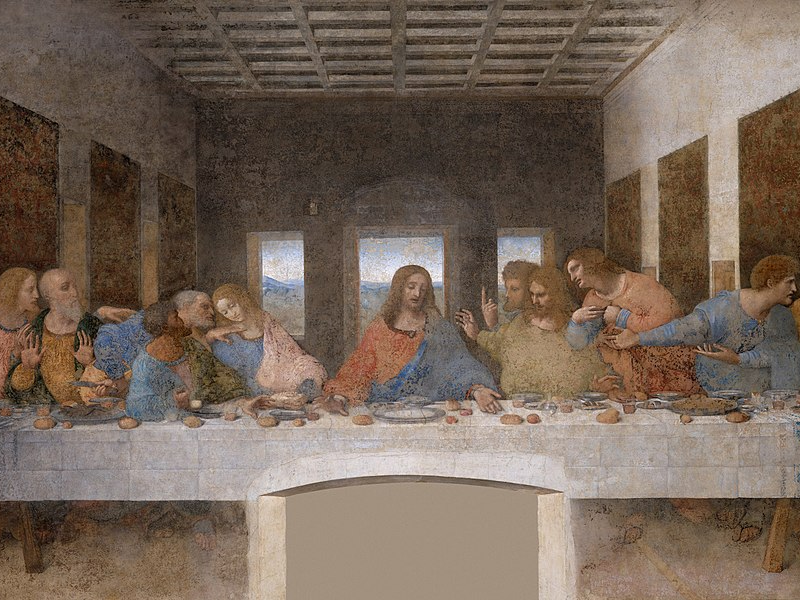
the_last_supper_-_leonardo_da_vinci_-_high_resolution_32x16-2
Biblical Horizons

Was the Last Supper a Passover?

Some readers of my essay, “ Strange and Glorious New Rites ,” have written to object that I have strained a gnat and swallowed a camel. I have strained out the gnat of a possible link to the memorial bread of the minchah (Lev. 2), while overlooking the camel that…

by James B. JordanMarch 22, 2011

screenshot-2023-09-19-at-10-48-12-am
Biblical Horizons

Planetary Judgments

In his lectures on Comparative Religion, Eugen Rosenstock-Huessy points to five fundamental gods that were over ancient man and still can dominate us today, and which must be respected. When we sin, we respect these gods more than we respect the Creator, disobeying the First Word: “You will have no…

by James B. JordanMarch 22, 2011

timothy-eberly-djj49s6ud2o-unsplash
Biblical Studies

Notes on the Book of Judges

A. Israel’s failure to hold land against the Canaanites. Progressive compromise, leading to judgment. 1:1–2:5. B. Israel’s idolatry, the cycle of judges, and war as God’s chastisement. 2:6–3:6. C. Northern Gentiles (Mesopotamia), and Othniel. 3:7-11. D. Lot: Moab, and Ehud. 3:12-13. E. Minor judge: Shamgar. 3:31. F. Canaanites opposed. Women…

by James B. JordanMarch 21, 2011
briana-tozour-mrfapsuyy8a-unsplash
Biblical Horizons

Principalities and Powers, (Part 2)

The great question for the emerging East, for Asia and other awakening third world areas, for an emerging nation like China is, “what fate awaits them?” They are now emerging from an analogous paganism that the West emerged from centuries ago. Here an amazing quotation from David Aikman, the Time…

by Richard BledsoeMarch 15, 2011
sinitta-leunen-dvibhmzsy8e-unsplash
Colossians

The Principalities and Powers, Part I

Paul contends that with the death of Christ on the Cross, there was an overcoming of the Principalities and the Powers (Col. 2:15). A great deal has been written on this subject over the last 60 years. What was for a long time either ignored, or regarded by liberal scholars…

by Richard BledsoeMarch 10, 2011
jimpreaching
Biblical Horizons

Eating and Drinking Together

One of the odd customs that has arisen in the 20th century is that many evangelical churches warp the rites of the Lord’s Supper by insisting that everyone wait so that they eat and drink together. Supposedly this is to emphasize the unity of the Church. This practice has no…

by James B. JordanMarch 3, 2011

Showing page 205 of 309

See all
See all
Philosophy

Rousseau and Voltaire

Rosenstock-Huessy’s discussion of Voltaire and Rousseau depends on his prior discussion of the role of inspired literature in the formation of a nation. They are adherents to the revolutionary creed of literary inspiration, the “cult o f an inspired literature.” He compares the two to Tolstoy and Dostoevsky, for like…

January 25, 2007
History

Paris and French Nationhood

Rosenstock-Huessy deals with a number of interrelated issues in a section of Out of Revolution dealing with Paris and the French notion of nationhood: He talks about the establishment of Paris as the intellectual center of France and of Europe; about the division between Paris and Versailles as background to…

January 25, 2007

Calvin on Baptism again

A couple of thoughts on the Calvin quotations I posted yesterday, inspired by a reader’s response. 1) Calvin appeals to his doctrine of “accommodation” to explain why the sign of baptism is necessary. God does speak in ways we can grasp; if that’s all accommodation is, fine. But it often…

January 25, 2007

Father and Son

Tom Smail’s Like Father, Like Son: The Trinity Imaged in Our Humanity (Eerdmans 2005) has a lot going for it. Written for a general Christian readership, it reflects a thorough familiarity with both tradition and contemporary work on the Trinity, and applies Trinitarian patterns to human life in interesting ways.…

January 25, 2007

Timely words

Stahmer offers this useful summary of Rosenstock-Huessy’s and Rosenzweig’s attack on “objectivity”: “For J. G. Hamann, and for all those who have accepted the sacramental qualities inherent in the frailty and tentativeness of human speech, the ambiguities and relativity of history could not possibly be denied. Both Rosenstock-Huessy and Rosenzweig…

January 24, 2007

Ahead of the Curve

In their capacity as Sprachdenkern - Speech-thinkers, Rosenstock-Huessy and Rosenzweig anticipated a number of developments in philosophy, theology, and hermeneutics. Stahmer writes, “Both Rosenzweig and Rosenstock-Huessy, but most especially the latter, can now be seen to have been hermeneutical pioneers who anticipated, by many years, the work of Martin Heidegger,…

January 24, 2007

Showing page 1729 of 2212

Browse by Category

In Medias Res

Your weekly digest for all things Theopolis.

Donate

Theopolis is nearly 100% donor-supported. Consider joining us on our mission.