Theopolis Logo

Writing

Explore our collection of theological essays, biblical studies, and reflections on faith and culture.

See all
mountains
American Culture

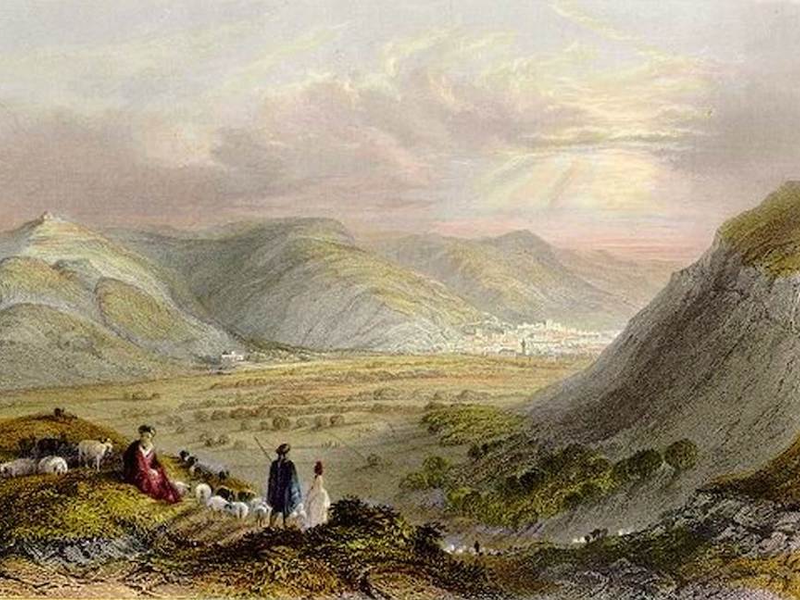
Gerazim and Ebal

Place names become fraught with meaning by association with people and events. The name “Wittenberg” calls to mind Luther and the Reformation for Protestants and Catholics alike. Geneva has a wider range of associations, but the Reformation Wall, with its four main statues of William Farel, John Calvin, Theodore Beza,…

by Ralph Allan SmithFebruary 16, 2017

screen-shot-2017-02-14-at-7-59-35-am
Art

Tomboys and Totems

“…a mystery without a solution, a horror story without savagery, a nightmare in which all the watches stop at noonday…” The Bestial Gardens of Men Then they will say to the mountains, “Fall on us!” and to the hills, “Cover us!” (Luke 23:30) The following lines by Edgar Allan Poe,…

by Mike BullFebruary 14, 2017
aaron-burden-1ebsmyrau-s-unsplash
Biblical Studies

The Structure and Typology of the Bathsheba Incident

2 Samuel 11-12, which record David’s sin with Bathsheba and its aftermath, is structured chiastically: This arrangement highlights several things about the episode. It reinforces what is obvious from even a casual reading, that the transition in the story occurs with Nathan’s confrontation of David’s sin and David’s confession. Up…

by James B. JordanFebruary 8, 2017
bestiary
Anthropology

Anthropomorphism and Christian Humanism

Medieval bestiaries are packed with quaintly inaccurate information about animals, birds, and other created things. Foxes and snakes are devilish critters; stags, pelicans and elephants are Christlike in their various ways. Of course, the medievals picked this up from the Bible, where bestiary observations are fairly common. “Go to the…

by Peter LeithartFebruary 2, 2017
beer
Beer

The End of Beerocracy

What do Reformational Catholicism and craft beer have in common? The question seems to beg for a punchline. Better yet, it would be pretty good clickbait for an article on Katharina von Bora’s “spirited” contribution that helped spark the Protestant Reformation. Well, this is no joke and I am certainly…

by John CrawfordJanuary 31, 2017
calvin
Pastoral Ministry

Calvin and Pastoral Care

Suffering Defined Suffering happens. We witness it all around us and experience it in our lives. It often comes from forces beyond our control. Suffering is inscrutable; it strikes unexpectedly, on a bright summer day or a cold winter night. We lament and are bewildered by suffering. But we are…

by Uri BritoJanuary 26, 2017

Showing page 117 of 309

See all
See all

Nine lives?

Few people today work at the same job throughout their 40 or so years of working life, and many economists and sociologists have pondered the effects of this development. No doubt there is something lost. But there is also gain. Rosenstock-Huessy suggests that, due to technical efficiencies, doctors can stuff…

January 6, 2007
History

Resurrected texts

When the young Yves Congar visited Lutheran theologians and pastors in Germany in 1930, he learned that Lutheran perceptions of Catholicism were largely shaped by Dostoevsky’s Grand Inquisitor, of which Congar had never heard. Today, it would be impossible for a sophisticated theologian like Congar to reach his mid-20s without…

January 6, 2007
Philosophy

Peirce and signs

Menand offers a useful summary of Peirce’s views on signs, in a way that highlights both similarities and differences with Derrida. Peirce taught a notion of differance : “The meaning of a representation,” he wrote, “can be nothing but a representation. In fact, it is nothing but the representation itself…

January 5, 2007
Philosophy

Pragmatism

In his very readable The Metaphysical Club (2001), Louis Menand gives a number of pithy summaries of pragmatism, its sources, its varieties, and its fundamental beliefs. The common attitude or idea among pragmatists has been “an idea about ideas.” Whatever their differences, pragmatists “all believed that ideas are not ‘out…

January 5, 2007

Between, and child actors

Everyone lives between times, and is the intersection of past and future. Everyone is always already taught, and always anticipating or actually teaching and ruling. Rosenstock-Huessy writes, “‘He’ never exists, but is always between two times, two ages, as son and father, layman and expert, the end of one era…

January 5, 2007

Double Procession

No generation ought to be determined by the spirit of the sons. As a matter of simple fact, the world is never occupied by a single generation. For a generation to be healthy, the spirit of the sons must mingle with the spirit of the fathers. The Spirit must proceed…

January 5, 2007

Showing page 1740 of 2212

Browse by Category

In Medias Res

Your weekly digest for all things Theopolis.

Donate

Theopolis is nearly 100% donor-supported. Consider joining us on our mission.