Theopolis Logo

Writing

Explore our collection of theological essays, biblical studies, and reflections on faith and culture.

See all
evangelists
Matthew

Dating Matthew, (Part 1)

When might the Gospel according to Matthew have been written? Of course, any answer can only be speculation, but that does not mean we are reduced to groundless opinion. In this series of articles I point the way to an approach different from the general consensus among scholars today which…

by Ralph Allan SmithNovember 22, 2016

hebrew-manuscript-3
Hermeneutics

Synopticity, (Part 2)

In my first essay on “synopticity” I offered a rather rough definition of the phenomenon and important, though not exhaustive examples. In this essay, I want to introduce broader aspects of the phenomenon of “synopticity.” The first example that I have in mind is conventional stories, stories of different historical…

by Ralph Allan SmithNovember 17, 2016
screen-shot-2016-03-31-at-9-32-11-am
Ascension

Brexit and the Binding of Satan, Part 4

Since the judgment of Babel was followed by the initiation of the circumcision, the impending end of the circumcision in AD70 explains the significance of the first century miracle of foreign tongues. Except for a few Aramaic “teasers” in the book of Daniel, the Word of God was monolingual and…

by Mike BullNovember 15, 2016
four-evangelists
Hermeneutics

Synopticity, (Part 1)

To the best of my knowledge “synopticity” is not a word used in theology or Biblical studies, but it seems an appropriate word to describe the kind of phenomena associated with the Synoptic Gospels, Matthew, Mark, and Luke. These three Gospels tell essentially the same story with significant — sometimes…

by Ralph Allan SmithNovember 10, 2016
laughing_statue_by_xxbobbiie-d5f0meh-2
Humor

Learning to Laugh

Humor is a funny thing. It is altogether familiar yet also mysterious. What makes us laugh? Why do we find things funny? There are academic fields of study dedicated to discovering what makes things humorous. These academicians even have a journal entitled International Journal of Humor Research . No joke.…

by Bill SmithNovember 8, 2016
chaucer
Literature

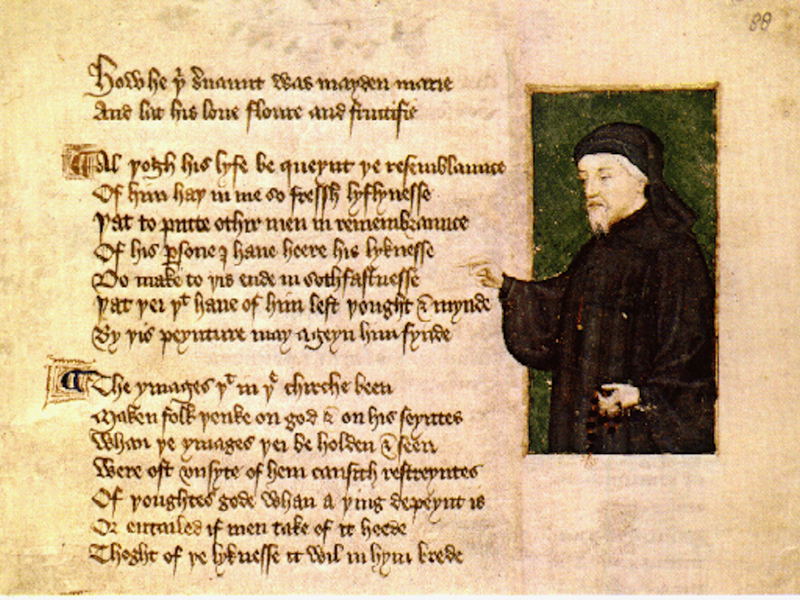
Flawed Means of Grace: Liturgy in The Pardoner's Tale

Out of all the characters in Geoffrey Chaucer’s The Canterbury Tales , the Pardoner has been called the “one lost soul.” The pious Parson, who closes out the collection of tales with a sermon on the seven deadly sins and how a sinner can absolve himself of them, connects the…

by Christian LeithartNovember 3, 2016

Showing page 122 of 309

See all
See all

Thy Word is Truth

Near the end of his prayer in 2 Samuel 7, David confesses his confidence in Yahweh’s promises concerning David’s house, saying “Thy words are truth” (v. 28). Jesus echoes this words in John 17:17. The connection seems to be a fruitful one, and perhaps there are more verbal links than…

January 5, 2007

Rigor

I and many of my friends have been criticized for our supposed lack theological rigor. It’s meant as an insult. I take it as a compliment. Rigor has its place. But it’s not the be and end all of theology. A Turretin is necessary for consolidating a Reformation. He could…

January 5, 2007

Proverbs 16:20-24

INTRODUCTION 16:20 starts a new section of the chapter, as Solomon returns again to the issue of speech. Waltke sees two sections here, verses 20-24 and 25-30. The first section focuses on the benefits of wise and winning speech, while the second section focuses negatively on destructive speech. Verse 20…

January 5, 2007
Art

Genius critics

Artists never accepted the attribution of genius as readily as theorists and bourgeois admirers applied it. Artists knew too much about the recalcitrantly physical qualities of words, paint, stone, ink, and sounds for that. Artists are as interested in technique as in inspirations. But for Kant genius was the criterion…

January 4, 2007
History

History of purity

Gadamer says, “One day someone should write the history of ‘purity.’” He cites one H. Sedlmayr, who “refers to Calvinistic purism and the deism of the Enlightenment.” Kant would play a key role: He “linked himself directly with the classical Pythagorean and Platonic doctrine of purity.” Gadamer wonders whether “Platonism…

January 4, 2007
Philosophy

Seeing as

Contrary to empiricism, perception is never pure, never merely a response to stimulus. That it is is merely a kind of “epistmological dogmatism” (Gadamer), which can only be defended if all instinct and fantasy is removed. In actual life, we never perceive without instinct or fantasy, and so “pure perception,…

January 4, 2007

Showing page 1741 of 2212

Browse by Category

In Medias Res

Your weekly digest for all things Theopolis.

Donate

Theopolis is nearly 100% donor-supported. Consider joining us on our mission.