Theopolis Logo

Writing

Explore our collection of theological essays, biblical studies, and reflections on faith and culture.

See all
mountains
American Culture

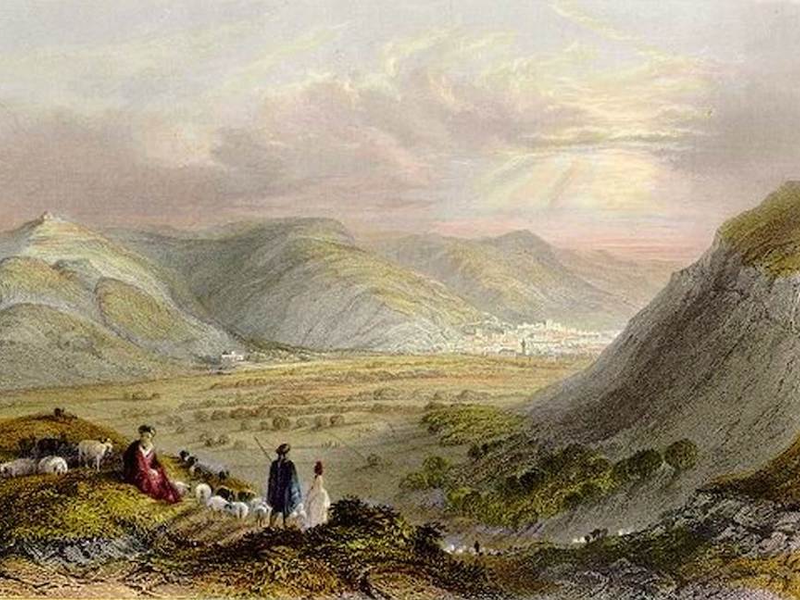
Gerazim and Ebal

Place names become fraught with meaning by association with people and events. The name “Wittenberg” calls to mind Luther and the Reformation for Protestants and Catholics alike. Geneva has a wider range of associations, but the Reformation Wall, with its four main statues of William Farel, John Calvin, Theodore Beza,…

by Ralph Allan SmithFebruary 16, 2017

screen-shot-2017-02-14-at-7-59-35-am
Art

Tomboys and Totems

“…a mystery without a solution, a horror story without savagery, a nightmare in which all the watches stop at noonday…” The Bestial Gardens of Men Then they will say to the mountains, “Fall on us!” and to the hills, “Cover us!” (Luke 23:30) The following lines by Edgar Allan Poe,…

by Mike BullFebruary 14, 2017
aaron-burden-1ebsmyrau-s-unsplash
Biblical Studies

The Structure and Typology of the Bathsheba Incident

2 Samuel 11-12, which record David’s sin with Bathsheba and its aftermath, is structured chiastically: This arrangement highlights several things about the episode. It reinforces what is obvious from even a casual reading, that the transition in the story occurs with Nathan’s confrontation of David’s sin and David’s confession. Up…

by James B. JordanFebruary 8, 2017
bestiary
Anthropology

Anthropomorphism and Christian Humanism

Medieval bestiaries are packed with quaintly inaccurate information about animals, birds, and other created things. Foxes and snakes are devilish critters; stags, pelicans and elephants are Christlike in their various ways. Of course, the medievals picked this up from the Bible, where bestiary observations are fairly common. “Go to the…

by Peter LeithartFebruary 2, 2017
beer
Beer

The End of Beerocracy

What do Reformational Catholicism and craft beer have in common? The question seems to beg for a punchline. Better yet, it would be pretty good clickbait for an article on Katharina von Bora’s “spirited” contribution that helped spark the Protestant Reformation. Well, this is no joke and I am certainly…

by John CrawfordJanuary 31, 2017
calvin
Pastoral Ministry

Calvin and Pastoral Care

Suffering Defined Suffering happens. We witness it all around us and experience it in our lives. It often comes from forces beyond our control. Suffering is inscrutable; it strikes unexpectedly, on a bright summer day or a cold winter night. We lament and are bewildered by suffering. But we are…

by Uri BritoJanuary 26, 2017

Showing page 117 of 309

See all
See all
History

St. Abraham

Rosenstock-Huessy strikingly sees the spirit of Francis in the person of Abraham Lincoln: “When Lincoln, as President and Commander-in-Chief of a victorious army, walked into Richmond in 1865, on foot, without escort, St. Francis had conquered the powers of this earth. In Siberia, in Egypt, people would whisper that old…

January 3, 2007
History

Reformation of gift

Natalie Zelmon Davis writes, “In a profound sense, the religious reformations of the sixteenth century were a quarrel about gifts, that is, about whether humans can reciprocate to God, about whether humans can put God under obligation, and about what this means for what people should give to each other.”

January 3, 2007

As if it were planned

Few areas of theology have been as ridiculed in modern times as eschatology. Antichrists, dragons, beasts, final judgments - it’s all superlatively mythological for modern rationalists. Sometime in the early part of the twentieth century, however, New Testament scholars began rediscovering the centrality of eschatology in NT theology. For some,…

January 3, 2007
Economics

Work and teaching

Discussing the separation of workplace and home, Rosenstock-Huessy makes the striking observation that this divide separates labor from a man’s “right to teach, once the supreme value of a master’s earthly life.”

January 3, 2007
History

Exorcising the family

The Protestant Reformation had well-known effects on the nuclear family, but Rosenstock-Huessy notes that a parallel movement occurred in the Roman Catholic church after 1500, when Catholics began to “lay far more stress on the cult of St. Joseph and on the conception of the Holy Family.” As a result,…

January 3, 2007
History

Childbirth again

In The Christian Future , Rosenstock-Huessy again makes some passing comments about childbirth. He is talking about the character of suburban life, its ethnic and economic uniformity, its placid and indifferent external peacefulness that hides, he claims, desperate inner conflicts. For Rosenstock-Huessy, the whole situation is summarized by the fact…

January 3, 2007

Showing page 1743 of 2212

Browse by Category

In Medias Res

Your weekly digest for all things Theopolis.

Donate

Theopolis is nearly 100% donor-supported. Consider joining us on our mission.