
Theopolis Logo

Writing

Explore our collection of theological essays, biblical studies, and reflections on faith and culture.

See all
emmanuel-phaeton-1bwmfmvybi8-unsplash
Federal Vision

The Righteous Judge

God is a righteous judge, And a God who has indignation every day. If a man does not repent, He will sharpen His sword; He has bent His bow and made it ready (Psalm 7.11, 12). David’s inspired lyrics do not sound very encouraging to modern ears–especially to modern Christian…

by Mark HorneJune 7, 2003
screenshot-2024-06-07-at-11-46-17-am
Luke

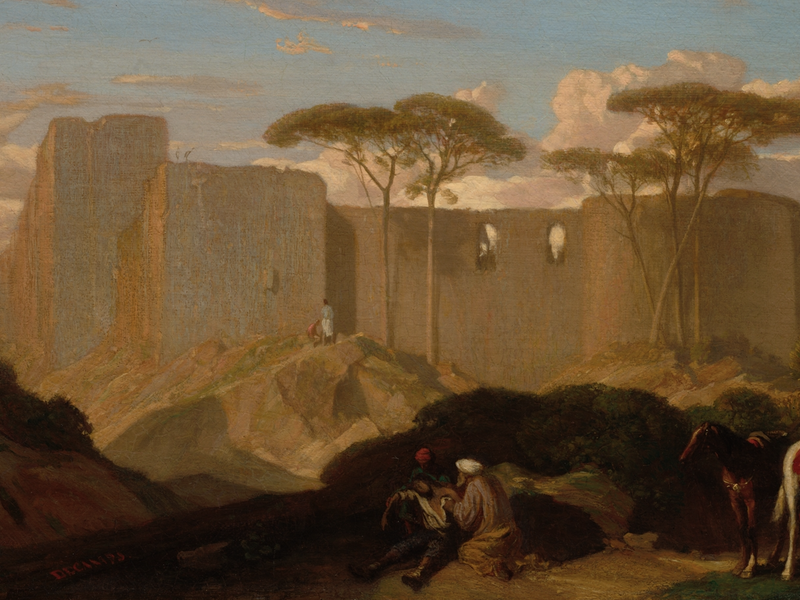
The Justification of the Good Samaritan

The story of the Good Samaritan (Lk. 10:25-37) is one of the best known and most loved of Jesus’ parables. I am not going to attempt to exegete the passage, as that has been done admirably and ably by others. Rather, I want to briefly examine what bearing the passage…

by Rich LuskJune 7, 2003
kelly-sikkema-gpoh17dxqdm-unsplash
1 Corinthians

The Grace of Judgment According to Works

In Romans 2.6-16, Paul writes, He will render to each one according to his works: to those who by patience in well-doing seek for glory and honor and immortality, he will give eternal life; but for those who are self-seeking and do not obey the truth, but obey unrighteousness, there…

by Mark HorneJune 7, 2003
karsten-wurth-imegmbunara-unsplash
Matthew

The Extra Mile: Matthew 5:38-42

It was still dark as David approached the crest of the little ridge. The eastern horizon was not even gray. It was early. But he knew this trail well. Every morning before dawn and every evening before dark, he would walk down to the well and carry water back to…

by Jeff MeyersJune 7, 2003
briana-tozour-mrfapsuyy8a-unsplash
Romans

Romans and God's Covenant Loyalty

The theme of Romans is the righteousness of God (Rom. 1:16-17). That is to say, Romans is something of a theodicy. Paul is defending God’s covenant faithfulness, particularly in light of Jewish unfaithfulness. How does it work? Without getting into exegetical details, we can still sketch out the big picture.…

by Rich LuskJune 6, 2003
jan-kahanek-g3o5ztrk2e4-unsplash
Federal Vision

Putting the New Perspective into Perspective: Some Thoughts on Second Temple Judaism

The New Perspective on Paul (NPP) is a loosely defined movement held together primarily by a common understanding of Second Temple Judaism. All NPP theologians basically adhere, with varying degrees of intensity and consistency, to Ed Sanders’ claims with regard to the nature of pre-70 A.D. Judaism. Sanders has sought…

by Rich LuskJune 6, 2003

Showing page 229 of 309

See all
See all
History

St. Abraham

Rosenstock-Huessy strikingly sees the spirit of Francis in the person of Abraham Lincoln: “When Lincoln, as President and Commander-in-Chief of a victorious army, walked into Richmond in 1865, on foot, without escort, St. Francis had conquered the powers of this earth. In Siberia, in Egypt, people would whisper that old…

January 3, 2007
History

Reformation of gift

Natalie Zelmon Davis writes, “In a profound sense, the religious reformations of the sixteenth century were a quarrel about gifts, that is, about whether humans can reciprocate to God, about whether humans can put God under obligation, and about what this means for what people should give to each other.”

January 3, 2007

As if it were planned

Few areas of theology have been as ridiculed in modern times as eschatology. Antichrists, dragons, beasts, final judgments - it’s all superlatively mythological for modern rationalists. Sometime in the early part of the twentieth century, however, New Testament scholars began rediscovering the centrality of eschatology in NT theology. For some,…

January 3, 2007
Economics

Work and teaching

Discussing the separation of workplace and home, Rosenstock-Huessy makes the striking observation that this divide separates labor from a man’s “right to teach, once the supreme value of a master’s earthly life.”

January 3, 2007
History

Exorcising the family

The Protestant Reformation had well-known effects on the nuclear family, but Rosenstock-Huessy notes that a parallel movement occurred in the Roman Catholic church after 1500, when Catholics began to “lay far more stress on the cult of St. Joseph and on the conception of the Holy Family.” As a result,…

January 3, 2007
History

Childbirth again

In The Christian Future , Rosenstock-Huessy again makes some passing comments about childbirth. He is talking about the character of suburban life, its ethnic and economic uniformity, its placid and indifferent external peacefulness that hides, he claims, desperate inner conflicts. For Rosenstock-Huessy, the whole situation is summarized by the fact…

January 3, 2007

Showing page 1743 of 2212

Browse by Category

In Medias Res

Your weekly digest for all things Theopolis.

Donate

Theopolis is nearly 100% donor-supported. Consider joining us on our mission.









