Theopolis Logo

Writing

Explore our collection of theological essays, biblical studies, and reflections on faith and culture.

See all
mountains
American Culture

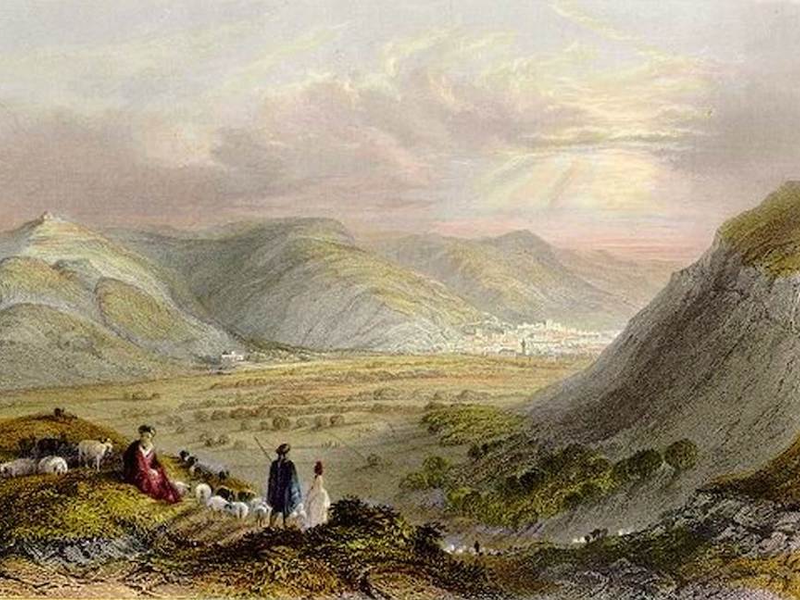
Gerazim and Ebal

Place names become fraught with meaning by association with people and events. The name “Wittenberg” calls to mind Luther and the Reformation for Protestants and Catholics alike. Geneva has a wider range of associations, but the Reformation Wall, with its four main statues of William Farel, John Calvin, Theodore Beza,…

by Ralph Allan SmithFebruary 16, 2017

screen-shot-2017-02-14-at-7-59-35-am
Art

Tomboys and Totems

“…a mystery without a solution, a horror story without savagery, a nightmare in which all the watches stop at noonday…” The Bestial Gardens of Men Then they will say to the mountains, “Fall on us!” and to the hills, “Cover us!” (Luke 23:30) The following lines by Edgar Allan Poe,…

by Mike BullFebruary 14, 2017
aaron-burden-1ebsmyrau-s-unsplash
Biblical Studies

The Structure and Typology of the Bathsheba Incident

2 Samuel 11-12, which record David’s sin with Bathsheba and its aftermath, is structured chiastically: This arrangement highlights several things about the episode. It reinforces what is obvious from even a casual reading, that the transition in the story occurs with Nathan’s confrontation of David’s sin and David’s confession. Up…

by James B. JordanFebruary 8, 2017
bestiary
Anthropology

Anthropomorphism and Christian Humanism

Medieval bestiaries are packed with quaintly inaccurate information about animals, birds, and other created things. Foxes and snakes are devilish critters; stags, pelicans and elephants are Christlike in their various ways. Of course, the medievals picked this up from the Bible, where bestiary observations are fairly common. “Go to the…

by Peter LeithartFebruary 2, 2017
beer
Beer

The End of Beerocracy

What do Reformational Catholicism and craft beer have in common? The question seems to beg for a punchline. Better yet, it would be pretty good clickbait for an article on Katharina von Bora’s “spirited” contribution that helped spark the Protestant Reformation. Well, this is no joke and I am certainly…

by John CrawfordJanuary 31, 2017
calvin
Pastoral Ministry

Calvin and Pastoral Care

Suffering Defined Suffering happens. We witness it all around us and experience it in our lives. It often comes from forces beyond our control. Suffering is inscrutable; it strikes unexpectedly, on a bright summer day or a cold winter night. We lament and are bewildered by suffering. But we are…

by Uri BritoJanuary 26, 2017

Showing page 117 of 309

See all
See all

Jihad

Despite the evidence of the past half-decade (longer, actually), many Muslims still insist on portraying Islam as fundamentally peaceful, tolerant of non-Muslims, and claim the holy-war interpretation of jihad as an aberration of a few fanatics. Perhaps not surprisingly, these apologists are found not only in Arab and Iranian mosques…

December 30, 2006

History of texts

One way to characterize the modern innovation in biblical interpretation is that it changes the Bible from a history of salvation into a history of documents. The Bible does not give access to history or the acts of God; it only gives us access to itself - the Bible as…

December 30, 2006
Literature

Oxford Companion

The new edition of the Oxford Companion to English Literature , edited by novelist Margaret Drabble, is a superb, entirely updated reference work. The range is astonishing: As one would expect, it includes biographical entries for British poets and novelists from the earliest times to yesterday, but also reviews the…

December 30, 2006
History

Allegory and the West

Gadamer traces the development of the notion of symbol and the corresponding, and contemporaneous, devaluation of allegory. Allegory came to be identified with “non-art” as experiential-expressive notions of art and poetry developed in post-Kantian romanticism. Along the way, he notes the importance that allegory played in the formation of Western…

December 29, 2006

Advice to young scholars, and old

In the same 1962 interview, Rosenstock-Huessy has some shrewd advice about the corrupting power of grant money on youn scholars. “If I have to solicit great foundations for money for my research,” he says, “then I have to propose something which is already obsolete for me. I know no researcher…

December 29, 2006

Masculine education

Rosenstock-Huessay notes that the differences between European and American elementary education have much to do with the fact that “The teaching function in America, until recent years [this from a 1962 interview], had been women’s work. All teaching up to higher education, therefore, had a completely different appearance than in…

December 29, 2006

Showing page 1745 of 2212

Browse by Category

In Medias Res

Your weekly digest for all things Theopolis.

Donate

Theopolis is nearly 100% donor-supported. Consider joining us on our mission.