Theopolis Logo

Writing

Explore our collection of theological essays, biblical studies, and reflections on faith and culture.

See all
tim-marshall-k2u71wv2ei4-unsplash
Modernity

Protestantism and the Postmodern self

Postmodernism has, we are told, “decentered” the modern self, that unified, sovereign, isolated, godlike “thinking thing” discovered by Rene Descartes. The postmodern self is not single but multiple; not sovereign but controlled by external forces; not isolated but “embedded” in the world and in relation; not godlike, but human, all…

by Peter LeithartMay 6, 2013

kiwihug-l4gw27xzn1i-unsplash
Matthew

Law and History: How to Read the Law of Moses (Part 8)

This is the eighth in a series of studies on Deuteronomy 22:30-23:8. And Jesus went out thence, and withdrew into the parts of Tyre and Sidon. And behold, a Canaanitish woman came out from those borders, and cried, saying, Have mercy on me, O Lord, thou son of David; my…

by Ralph Allan SmithMay 1, 2013
screen-shot-2023-09-20-at-7-04-07-am
Augustine

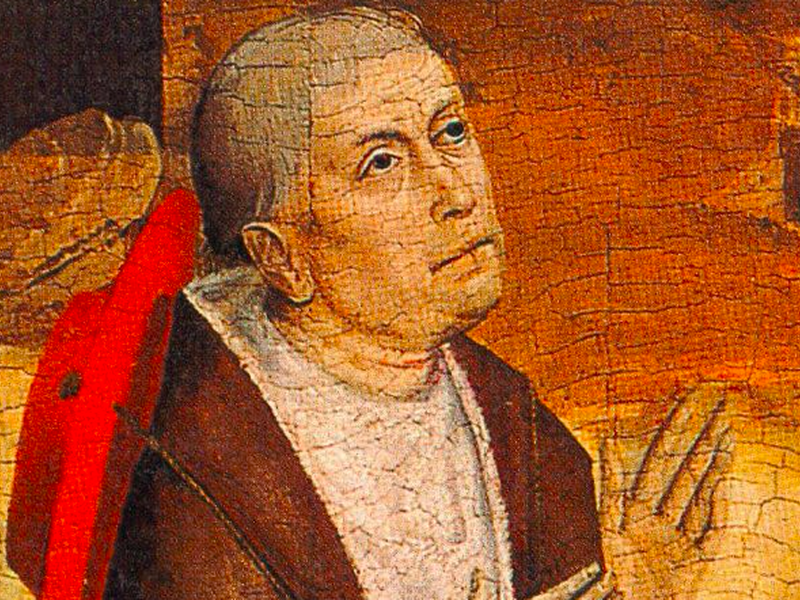
A Cusan Modernity?

The fifteenth-century German Cardinal Nicholas of Cusa led a busy and wide-ranging life. Educated in liberal arts and law at Heidelberg and Padua, Nicholas was a leading figure in the Conciliarist movement, and later served as a papal legate to both Constantinople and throughout Germany. As Bishop of Brixen, he…

by Peter LeithartApril 29, 2013
screenshot-2023-07-27-at-10-25-35-am
Deuteronomy

Law and History: How to Read the Law of Moses (Part 7)

This is the seventh in a series of studies on Deuteronomy 22:30-23:8. Thou shalt not abhor an Edomite, for he is thy brother; thou shalt not abhor an Egyptian, because thou wast a sojourner in his land. The children of the third generation that are born unto them shall enter…

by Ralph Allan SmithApril 25, 2013
ivan-aleksic-16yxcjsoaek-unsplash
Romans

What Advantage the Jew?

A sermon on Romans 3:1-8. 1 Then what advantage has the Jew? Or what is the value of circumcision? 2 Much in every way. To begin with, the Jews were entrusted with the oracles of God. A lot of people speculate here about what kind of advantage Paul is talking…

by Mark HorneApril 22, 2013
screenshot-2023-07-27-at-10-25-35-am
Deuteronomy

Law and History: How to Read the Law of Moses (Part 6)

This is the sixth in a series of studies on Deuteronomy 22:30-23:8. An Ammonite or a Moabite shall not enter into the assembly of Yahweh; even to the tenth generation shall none belonging to them enter into the assembly of Yahweh forever: because they met you not with bread and…

by Ralph Allan SmithApril 17, 2013

Showing page 195 of 309

See all
See all

Jihad

Despite the evidence of the past half-decade (longer, actually), many Muslims still insist on portraying Islam as fundamentally peaceful, tolerant of non-Muslims, and claim the holy-war interpretation of jihad as an aberration of a few fanatics. Perhaps not surprisingly, these apologists are found not only in Arab and Iranian mosques…

December 30, 2006

History of texts

One way to characterize the modern innovation in biblical interpretation is that it changes the Bible from a history of salvation into a history of documents. The Bible does not give access to history or the acts of God; it only gives us access to itself - the Bible as…

December 30, 2006
Literature

Oxford Companion

The new edition of the Oxford Companion to English Literature , edited by novelist Margaret Drabble, is a superb, entirely updated reference work. The range is astonishing: As one would expect, it includes biographical entries for British poets and novelists from the earliest times to yesterday, but also reviews the…

December 30, 2006
History

Allegory and the West

Gadamer traces the development of the notion of symbol and the corresponding, and contemporaneous, devaluation of allegory. Allegory came to be identified with “non-art” as experiential-expressive notions of art and poetry developed in post-Kantian romanticism. Along the way, he notes the importance that allegory played in the formation of Western…

December 29, 2006

Advice to young scholars, and old

In the same 1962 interview, Rosenstock-Huessy has some shrewd advice about the corrupting power of grant money on youn scholars. “If I have to solicit great foundations for money for my research,” he says, “then I have to propose something which is already obsolete for me. I know no researcher…

December 29, 2006

Masculine education

Rosenstock-Huessay notes that the differences between European and American elementary education have much to do with the fact that “The teaching function in America, until recent years [this from a 1962 interview], had been women’s work. All teaching up to higher education, therefore, had a completely different appearance than in…

December 29, 2006

Showing page 1745 of 2212

Browse by Category

In Medias Res

Your weekly digest for all things Theopolis.

Donate

Theopolis is nearly 100% donor-supported. Consider joining us on our mission.