Theopolis Logo

Writing

Explore our collection of theological essays, biblical studies, and reflections on faith and culture.

See all
max-kukurudziak-qbc3zmxw0g8-unsplash
History

Report from Ukraine

We lost Crimea. That is very clear. Putin proved he was not lying when he said he would place women and children ahead of his soldiers to storm Ukrainian military bases. Russian soldiers did exactly that with women (some who volunteered and some who were forced). Russia now occupies all…

by San SanychMarch 28, 2014

screenshot-2023-09-21-at-3-59-23-pm
Church Calendar

God Gone Silent

Sound is an indicator of life and energy. “Sound signals the present use of power, since sound must be in active production to exist at all.” Things don’t have to be alive to make themselves visible, and “a primitive hunter can see, feel, smell, and taste an elephant when the…

by Peter LeithartMarch 26, 2014
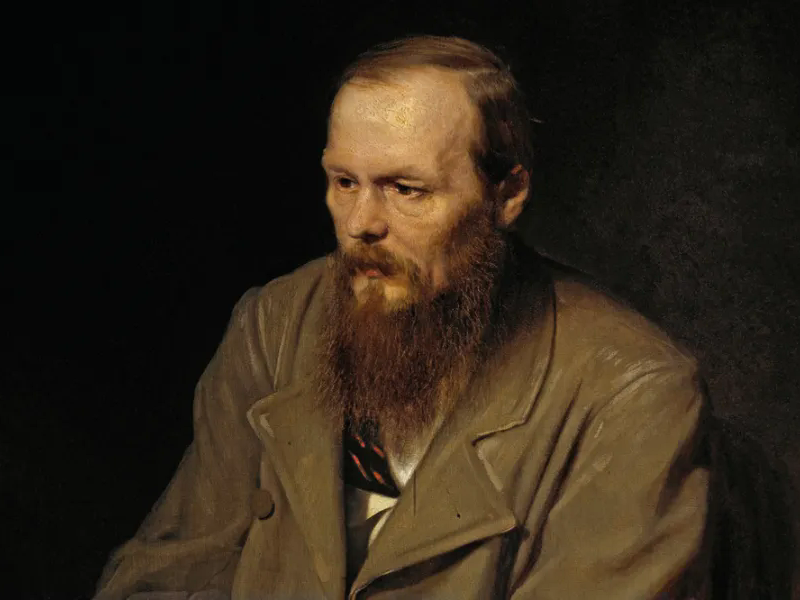
web-lead-image_final_dostoevsky
Books

Dostoevsky the Liberal

In the most famous section of his best-known novel, Dostoevsky’s Ivan Karamazov brings forward his case against God. He opens with a horrific litany of outrages against children. Turkish soldiers make a baby laugh and then shoot a pistol into his face. A little girl is beaten, thrashed, kicked by…

by Peter LeithartMarch 24, 2014
kelly-sikkema-ggs0_g6wi-i-unsplash
Epistemology

Subsidiary-Focal Integration and Liturgy

​At the heart of Esther Lightcap Meek's splendid ​Little Manual for Knowing is a concept she picked up from Michael Polanyi, "subsidiary-focal integration." The concept begins from the insight that all our knowing, all our experience, is double. We focus on something, but we are capable of "indwelling" that focal…

by Peter LeithartMarch 19, 2014
engin-akyurt-uz9qpvbol0e-unsplash
Revelation

White Stone

Jesus promises the overcomers of Pergamum "hidden manna" and a "white stone." The hidden manna is often linked with the manna stashed away in the ark of the covenant. The white stone has proved more elusive. Exodus tells us that manna was white (Exodus 16:31) and like bdellium (Numbers 11:7),…

by Peter LeithartMarch 17, 2014
226961fgsdl
Leviticus

A Theology of Festivity

Leviticus 23 begins with a reference to “Yahweh’s appointed times” ( mo’ade-YHWH ). Mo’ed is the common term for the feasts of Israel. A few dimensions to this term. First, it means “appointed time” or “designated time.” It is a time set by Yahweh. Yahweh has claimed certain times as…

by Peter LeithartMarch 12, 2014

Showing page 177 of 309

See all
See all
Biblical Studies

Critical Scholarship

One of the most annoying things about critical biblical scholarship is the way that every discussion has to contribute to questions of composition, authorship, historical setting, etc. Harrington gives a very intriguing paper on holiness in Ezra-Nehemiah, but the whole thing is part of a “larger” argument about the common…

November 19, 2006

Purity and holiness

Hannah Harrington gave a very fine presentation on the holiness and purity terminology in Ezra and Nehemiah. She showed that these post-exilic texts display an expansion of holy space to encompass the whole city as well as an expansion of the duties of Levites, a closing of the gap between…

November 19, 2006
Biblical Studies

Criterion of antiquity

John Milbank claims that the Wellhausen documentary hypothesis is shaped by what he calls the “liberal Protestant metanarrative,” the view that Christianity moved from a religion of inner simplicity to a religion of complex external ritual (JEDP traces this story). In his SBL presentation, Nick Perrin of Wheaton showed how…

November 18, 2006

Theopoiesis

Carl Mosser of Eastern College gave a superb presentation on deification at the ETS meeting. A large part of the presentation was a study of terminology. He noted that the Greek work THEOS (often thought to be equivalent to “God”) had a broader meaning, referring to powers that were immortal,…

November 18, 2006
History

More from Latour

A few further scattered comments from and on Latour. 1) He disputes the notion that the modern world is disenchanted, claiming that the claim of disenchantment is merely the reflex of the Constitution of modernity and its premise that We are completely different from Them. He also attributes the modern…

November 17, 2006

Remnant, Edom, AD 70

Some reflections based on an ETS talk by Edward Meadors on Romans 9-11. Meadors suggested that “Esau” in Romans 9 refers to Esau as the patriarch of Edom, well-known for its opposition to Israel throughout the centuries. That is Malachi’s focus in the passage Paul cites. And this is set…

November 17, 2006

Showing page 1761 of 2212

Browse by Category

In Medias Res

Your weekly digest for all things Theopolis.

Donate

Theopolis is nearly 100% donor-supported. Consider joining us on our mission.