Theopolis Logo

Writing

Explore our collection of theological essays, biblical studies, and reflections on faith and culture.

See all
31-03-0213
Hermeneutics

Apocalyptic Eyes

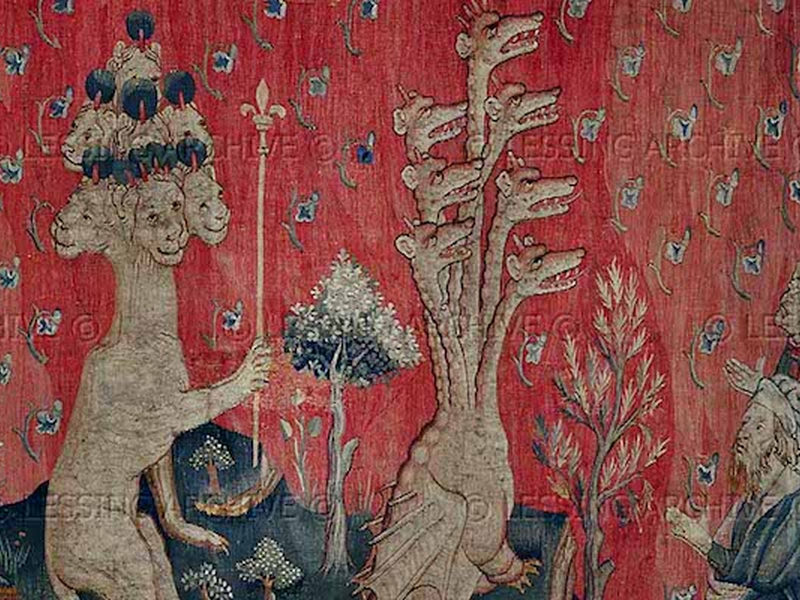
Flying scrolls. Red horses. Beasts coming out of the sea. Winged women. The list goes on. Apocalyptic literature in the Bible is like a cross between science fiction and Marvel comics. And the Bible has a fair bit of this sort of thing. Daniel sees visions in Babylon, Zechariah sees…

by Toby SumpterNovember 4, 2014

bhm-skyline-2
Theopolis News

New Name, New Look

Trinity House Institute has taken a new name, the Theopolis Institute. This striking new name expresses our unique vision and mission and captures the unified purpose behind all our specific programs and activities. We still have Bible, liturgy, and culture in our tagline. We still offer the same courses on…

by TheopolisNovember 4, 2014
istock_000012860926small
Atonement

Not Fearing the Devil

Adam Kotsko offers a socio-political variation on the Christus Victor atonement theory in his 2010 study, The Politics of Redemption: The Social Logic of Salvation . He does this by explaining "the devil" in terms of the Hegelian concept of "objective spirit," Geist . As Kotsko puts it, Geist "refers…

by Peter LeithartOctober 13, 2014
jez-timms-8muutamcwu4-unsplash
Leviticus

The Meaning of Sacrifice

Two factors keep Nahtali Meshel from discussing the meaning of sacrifice until late in his The "Grammar" of Sacrifice . The first has to do with the texts he draws from: "P says little about the meaning of its rituals" (174). The other has to do with the grammatical theory…

by Peter LeithartOctober 8, 2014
jez-timms-8muutamcwu4-unsplash
Leviticus

Praxemics

Chapter 5 of Naphtali Meshel's The "Grammar" of Sacrifice focuses on "praxemics," the physical actions of sacrificial ritual. Praxemes are constituted by six elements: an "atomact," an elementary physical act or gesture; an actor; an object that is acted up; a target for the action and often for the object…

by Peter LeithartOctober 6, 2014
markus-winkler-aid-xyrtlec-unsplash
Leviticus

Jugation and Hierarchy

Two chapters of Naphtali Meshel’s The “Grammar” of Sacrifice cover what he calls “jugation” and “hierarchies.” The first involves the addition of other materials to an animal offering. Jugates include wine, cereal, and oil that are added to the animals (zoemes) that are offered in sacrifice. Some jugates are coordinated…

by Peter LeithartOctober 1, 2014

Showing page 167 of 309

See all
See all
Biblical Studies

Incarnational revelation

Westminster OT professor Pete Enns has been a friend since he taught me German at seminary nearly twenty years ago, and as editor of the Westminster Journal he regularly published my work. I have raised questions to him in private in the past, and we have had our friendly disagreements.…

November 17, 2006

Cleanse, consecrate, atone

Jay Sklar of Covenant Seminary carefully examined the uses of various terms for cleansing, consecrating, and atonement, particularly aiming to distinguish “atone” (Heb kpr) from the others. He took aim particularly at Milgrom’s claim that kipper “means purge and nothing else,” and is synonymous with other terms for purging. Against…

November 17, 2006

Eternity in the heart

Brian Gault gave a carefully-argued paper on the meaning of “ha-olam” in Ecclesiastes 3:11 - normally translated as “eternity.” Gault ran through a number of possible interpretations of the verse, finally suggesting a repointing leads to a translation as “darkness” or “ignorance.” The point is that God makes the world…

November 17, 2006

Vestigia trinitatis

Keith Johnson gave a solid exposition of Augustine’s views on the vestigia trinitatis in an ETS session this morning. He argued that Augustine is not using the vestigia to prove the Trinity or as a “second root” (Barth) in addition to the economic revelation of the Trinity. In fact, Augustine…

November 16, 2006
Politics

True Toleration

J. Budziszewski gave a sharply argued and spryly humorous deconstruction of liberalism’s neutralist view of tolerance, arguing that liberal states are confessional states that pretend not to be and that liberalism leads to a disguised dictatorship (a plenary ETS session). He suggested that a confessional state that follows what he…

November 16, 2006
History

Purity

No doubt it goes without saying after the previous few posts, but Latour’s anthropological assessment of modernity provides a lot of ammo for a study of modernity that would treat it as the creation of a purity culture, as dirt-avoidance.

November 15, 2006

Showing page 1762 of 2212

Browse by Category

In Medias Res

Your weekly digest for all things Theopolis.

Donate

Theopolis is nearly 100% donor-supported. Consider joining us on our mission.