Theopolis Logo

Writing

Explore our collection of theological essays, biblical studies, and reflections on faith and culture.

See all
baptism
Baptism

Water, Spirit, and Fire, (Part 1)

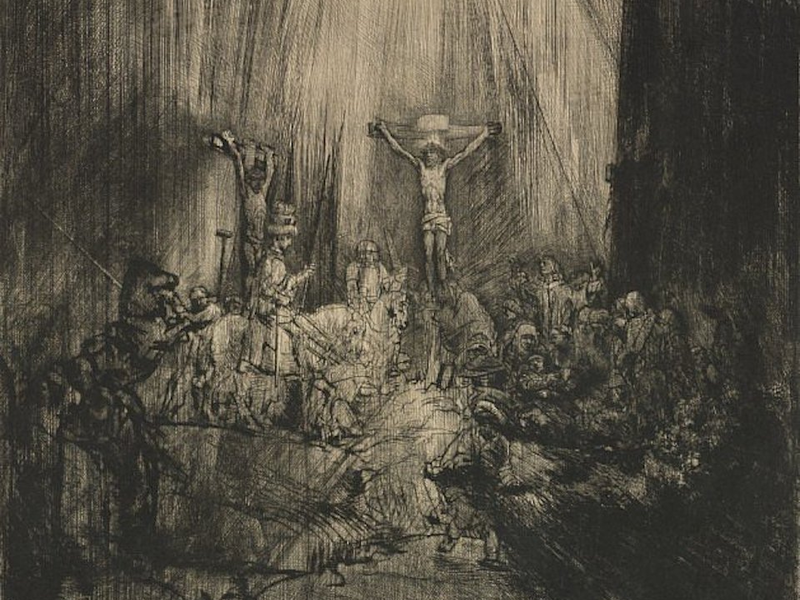
John the Baptist says, “I baptize you with water for repentance, but he who is coming after me . . . will baptize you with the Holy Spirit and fire (Mt. 3:11).” Much debate surrounds the nature of this statement and what exactly it prophesies. Sacramental, baptistic, and charismatic Christians…

by Adam McIntoshAugust 16, 2016
jesus-on-cross-rembrandt
Pastoral Ministry

Cruciform Pastoral Care

First Corinthians is not considered one of the Pastoral Epistles, but there is much to learn from Paul about pastoring a congregation by the way he writes to the Corinthians. Briefly, 1 Corinthians is an exposition of the cross and resurrection. In the first fourteen chapters, Paul gives an exposition…

by Bill SmithAugust 11, 2016
cross-2
Atonement

Bearing Sin

Fredrik Hagglund ( Isaiah 53 in the Light of Homecoming After Exile (Forschungen Zum Alten Testament) ) argues against the common notion that Isaiah 53 is about the atoning suffering of Yahweh’s Servant. The Servant’s suffering is vicarious (i.e., he suffers for the sins of others) but it is not…

by Peter LeithartAugust 9, 2016
screen-shot-2016-03-31-at-9-32-11-am
Biblical Theology

Brexit and the Binding of Satan: Part 2

With the inheritance of Canaan and the dividing up of this priestly territory among the tribes, Israel became a microcosm of the nations of the world. This division between Israel and the nations as a substitutionary “land and sea” would prevent another global rebellion, and thus another global judgment. ((For…

by Mike BullAugust 4, 2016
paul
Romans

Paul and James on the Meaning of Genesis 15:6

One of the more revealing aspects of Paul and James’ soteriology is the different ways they both use Genesis 15:6 (“And Abraham believed God and it was counted for him as righteousness,”) as a proof text to defend their comments about the gospel. The key observation to make is that…

by Gerald HiestandAugust 2, 2016
img_1456
Biblical Theology

Brexit and the Binding of Satan: Part 1

The disintegration of the EU is not the end of the world. It is a sign that the end of the world is anything but nigh. Western culture as we know it is dying at the hands of usurpers, traitors and prodigals. Even the worst rulers throughout Christian history at…

by Mike BullJuly 28, 2016

Showing page 127 of 309

See all
See all
Philosophy

Heidegger in his woods

Latour is tired of being accused of having forgotten Being, and offers this clever brush-off of Heidegger: “If, scorning empiricism, you opt out of the exact sciences, then the human sciences,, then traditional philosophy, then the sciences of language, and you hunker down in your forest - then you will…

November 15, 2006
History

Semi-modernism

Postmoderns, Latour suggests, think they are still modern, but in fact they have greatly oversimplified the modern Constitution. Postmoderns might emphasize the separation of subject and world, and stretch that opposition to a breaking point (Latour vividly describes them as doing the splits to keep subject and world apart); but…

November 15, 2006
History

Modern temporality

In his very good section on modern temporality, Latour argues that modernity assumes that everything in the present, modern moment, is purely modern, novel. Anything that appears that is not up-to-date is a “archaism,” and moderns worry constantly that this or that event or trend might “turn back the clock.”…

November 15, 2006
History

Representation

One of the key moves made since the 17th century, Latour argues, is a distinction between modes of “representation.” In the laboratory Boyle is representing things before selected witnesses through scientific experiments, giving mute nature a voice through the scientist, while in politics Hobbes suggests that the Sovereign speaks for…

November 15, 2006
History

We Have Never Been Modern

Bruno Latour’s We Have Never Been Modern (Harvard 1993) is a rich study. He describes modernity in terms of a dual process of “purification” and “hybridization.” Purification involves the clean construction of a nature (and science) separated off from society and the self, while hybridization involves mixtures of nature and…

November 15, 2006

Tears of things

And/Or: Virgil is aware that the furor of civil war can be curbed only by an opposing, and more intense, furor. That, as Milbank says, is the way of paganism - peace established only by superior violence against violence. But in those tears Virgil expresses the the painful recognition -…

November 13, 2006

Showing page 1763 of 2212

Browse by Category

In Medias Res

Your weekly digest for all things Theopolis.

Donate

Theopolis is nearly 100% donor-supported. Consider joining us on our mission.