Theopolis Logo

Writing

Explore our collection of theological essays, biblical studies, and reflections on faith and culture.

See all
cross-2
Atonement

God of the Furies

The idea of atonement is not a distinctly Christian, or even Hebraic, concept. It also makes an appearance in ancient Greek thought (among other places). The Greek tradition is by no means monolithic, so it isn’t possible to speak of a “Greek” concept of atonement. But there are certain commonalities…

by Gerald HiestandFebruary 18, 2016

aaron-burden-1ebsmyrau-s-unsplash
Acedia

Sloth, Song, Story

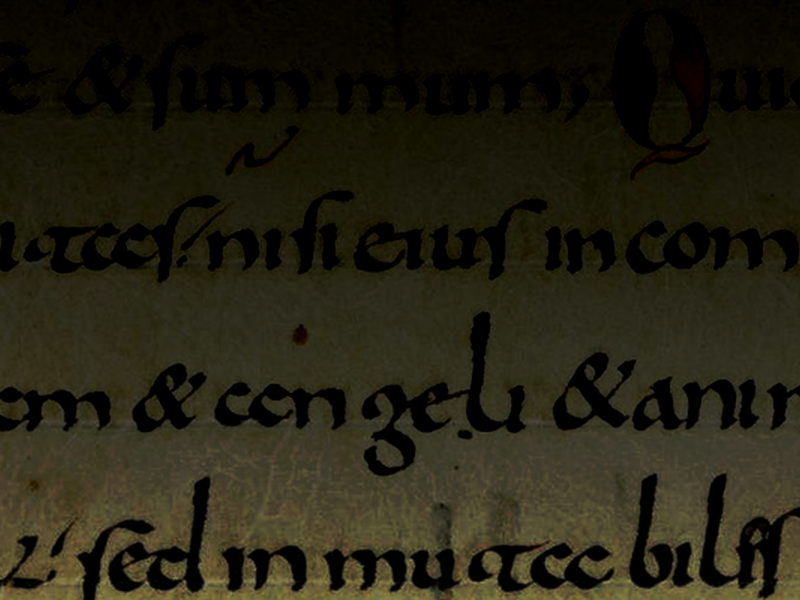
As we know, there are seven deadly or capital sins. Prior to the list of the seven deadly sins there was a list of eight evil thoughts or demons. It was made by an Eastern monk, Evagrius Ponticus. When the list was transposed to the West, one evil thought was…

by Bogumil JarmulakFebruary 16, 2016
medievalilluminatedmanuscript
1 Corinthians

What the Corinthians Did Right

Paul’s letter to the Corinthians is one of those epistles in Scripture to which pastors and teachers resort to show the church everything that it shouldn’t be . There is, of course, good reason for this. The Corinthian church was filled with all sorts of problems. Personality cults (i.e., factions),…

by Bill SmithFebruary 11, 2016
cross-2
Church Calendar

To Ash or Not To Ash

Today is Ash Wednesday , and as many Christians of the Protestant formerly "low church" persuasion are reacquiring some of the good and ancient practices of the church, one question in particular comes to the front: to ash or not to ash? That is, while many of us are finding…

by Timothy LeCroyFebruary 10, 2016
img_4660-2
Church Calendar

40+ Reasons To Observe Lent

A murder of tweets. To observe Lent rightly, we have to be persuaded that we already stand in God’s favor. Ash Wednesday reminds us to number our days. It helps us gain a heart of wisdom (Psalm 90:12). We keep Easter to manifest and deepen our prior share in resurrection.…

by Peter LeithartFebruary 9, 2016
medievalilluminatedmanuscript
Matthew

New Moses

Dale C. Allison, Jr., The New Moses: A Matthean Typology (Minneapolis: Fortress, 1993). Dale Allison 1993 book is a superb case study in the New Testament's use of the Old. Though he focuses on only a single typology (Christ as a new Moses) in only a single gospel (Matthew), Allison's…

by Peter LeithartFebruary 4, 2016

Showing page 136 of 309

See all
See all
Philosophy

Heidegger in his woods

Latour is tired of being accused of having forgotten Being, and offers this clever brush-off of Heidegger: “If, scorning empiricism, you opt out of the exact sciences, then the human sciences,, then traditional philosophy, then the sciences of language, and you hunker down in your forest - then you will…

November 15, 2006
History

Semi-modernism

Postmoderns, Latour suggests, think they are still modern, but in fact they have greatly oversimplified the modern Constitution. Postmoderns might emphasize the separation of subject and world, and stretch that opposition to a breaking point (Latour vividly describes them as doing the splits to keep subject and world apart); but…

November 15, 2006
History

Modern temporality

In his very good section on modern temporality, Latour argues that modernity assumes that everything in the present, modern moment, is purely modern, novel. Anything that appears that is not up-to-date is a “archaism,” and moderns worry constantly that this or that event or trend might “turn back the clock.”…

November 15, 2006
History

Representation

One of the key moves made since the 17th century, Latour argues, is a distinction between modes of “representation.” In the laboratory Boyle is representing things before selected witnesses through scientific experiments, giving mute nature a voice through the scientist, while in politics Hobbes suggests that the Sovereign speaks for…

November 15, 2006
History

We Have Never Been Modern

Bruno Latour’s We Have Never Been Modern (Harvard 1993) is a rich study. He describes modernity in terms of a dual process of “purification” and “hybridization.” Purification involves the clean construction of a nature (and science) separated off from society and the self, while hybridization involves mixtures of nature and…

November 15, 2006

Tears of things

And/Or: Virgil is aware that the furor of civil war can be curbed only by an opposing, and more intense, furor. That, as Milbank says, is the way of paganism - peace established only by superior violence against violence. But in those tears Virgil expresses the the painful recognition -…

November 13, 2006

Showing page 1763 of 2212

Browse by Category

In Medias Res

Your weekly digest for all things Theopolis.

Donate

Theopolis is nearly 100% donor-supported. Consider joining us on our mission.