Theopolis Logo

Writing

Explore our collection of theological essays, biblical studies, and reflections on faith and culture.

See all
eyasu-etsub-hn7scs05pju-unsplash
Leviticus

Priestly Animals

The first commandment given in the Levitical sacrificial legislation has to do with the animals appropriate to sacrifice: "When any man of you brings an offering to the Lord, you shall bring your offering of cattle ( behemah ), from the herd or the flock" (Lev. 1:2). Cattle alone were…

by Peter LeithartSeptember 3, 2024

james-coleman-hoznesupplm-unsplash
Baptism

Rome Won't Have Me

This post was originally posted in 2004 The ultimate condemnation of a position in Reformed circles is to show that it “leads back to Rome.” Indeed, one gets the feeling that Rome is a worse destination for a Presbyterian than even hell itself. The accusation of Rome stings deeply, of…

by Rich LuskAugust 27, 2024
alex-guillaume-2k4du3r1giy-unsplash-2
Biblical Theology

It's About Time

There are countless scholars who have helped me in my reading of various passages of Scripture. I have gleaned insights and keys from them that have unlocked texts that once perplexed me. However, no scholar has done so much to teach me how to read the Scripture more generally than…

by Alastair RobertsAugust 15, 2024
nicki-eliza-schinow-mg3nb1l2kdm-unsplash

The Dangers of Getting Ahead

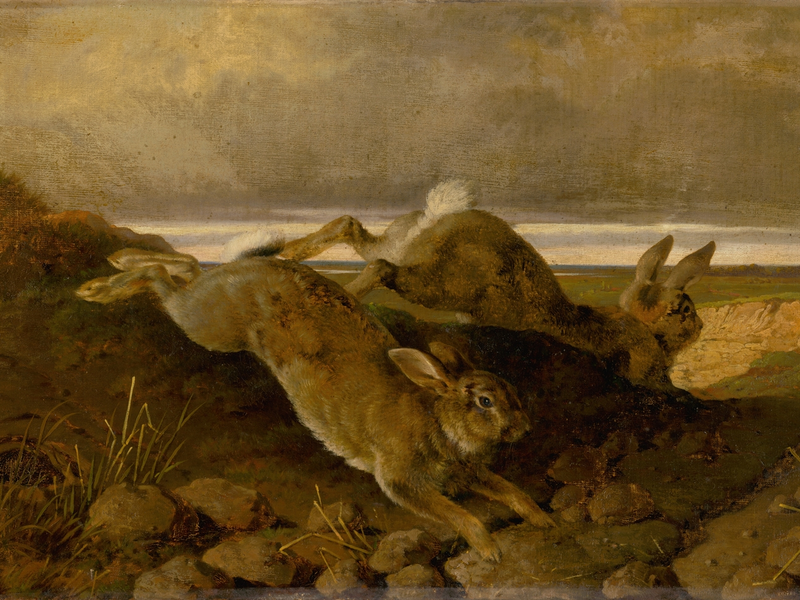
The Tortoise and the Hare is perhaps the most well-known of the Greek fables. Its story has been present in every era of human history. From the Indigenous retellings with hummingbirds and cranes to the Biblical account of David and Goliath, the basic furniture of an unlikely hero tale is…

by Garrett SoucyAugust 8, 2024
adam-and-eve-in-the-garden-of-eden-wenzel-peter
Genesis

Sinning Naked: Double the Exposure, Double the Shame

Sexual sins are perhaps the most shame-inducing sins experienced by Christians and non-Christians alike. All sins can bring shame, but sexual sins are deeply personal and affect us in profound ways. For example, adultery leaves its victim devastated by betrayal; porn addiction leaves men feeling gross, pathetic, and lazy; losing…

by Adam McIntoshAugust 6, 2024
714368ansdl
Books

Lessons from Watership Down: What Rabbits Can Teach the Church

If the mark of a good book is how many times a person can re-read it with pleasure, Richard Adams’ novel Watership Down is one of the best books of the 20 th century. I’ve taught this book in my middle school literature class for the past three years, and…

by Christian LeithartJuly 30, 2024

Showing page 18 of 309

See all
See all
Philosophy

Heidegger in his woods

Latour is tired of being accused of having forgotten Being, and offers this clever brush-off of Heidegger: “If, scorning empiricism, you opt out of the exact sciences, then the human sciences,, then traditional philosophy, then the sciences of language, and you hunker down in your forest - then you will…

November 15, 2006
History

Semi-modernism

Postmoderns, Latour suggests, think they are still modern, but in fact they have greatly oversimplified the modern Constitution. Postmoderns might emphasize the separation of subject and world, and stretch that opposition to a breaking point (Latour vividly describes them as doing the splits to keep subject and world apart); but…

November 15, 2006
History

Modern temporality

In his very good section on modern temporality, Latour argues that modernity assumes that everything in the present, modern moment, is purely modern, novel. Anything that appears that is not up-to-date is a “archaism,” and moderns worry constantly that this or that event or trend might “turn back the clock.”…

November 15, 2006
History

Representation

One of the key moves made since the 17th century, Latour argues, is a distinction between modes of “representation.” In the laboratory Boyle is representing things before selected witnesses through scientific experiments, giving mute nature a voice through the scientist, while in politics Hobbes suggests that the Sovereign speaks for…

November 15, 2006
History

We Have Never Been Modern

Bruno Latour’s We Have Never Been Modern (Harvard 1993) is a rich study. He describes modernity in terms of a dual process of “purification” and “hybridization.” Purification involves the clean construction of a nature (and science) separated off from society and the self, while hybridization involves mixtures of nature and…

November 15, 2006

Tears of things

And/Or: Virgil is aware that the furor of civil war can be curbed only by an opposing, and more intense, furor. That, as Milbank says, is the way of paganism - peace established only by superior violence against violence. But in those tears Virgil expresses the the painful recognition -…

November 13, 2006

Showing page 1763 of 2212

Browse by Category

In Medias Res

Your weekly digest for all things Theopolis.

Donate

Theopolis is nearly 100% donor-supported. Consider joining us on our mission.