Theopolis Logo

Writing

Explore our collection of theological essays, biblical studies, and reflections on faith and culture.

See all
screen-shot-2022-04-12-at-7-14-44-am
Biblical Horizons

Christ Is Risen! He Is Risen Indeed!

"Vanity of vanities", says the Preacher. "All is vanity". Life, we are told in the book of Ecclesiastes, is a repetitious, wearisome cycle; all that is and all that will be has already been. There is nothing new under the sun. What is crooked cannot be made straight, what is…

by Peter LeithartFebruary 23, 1991
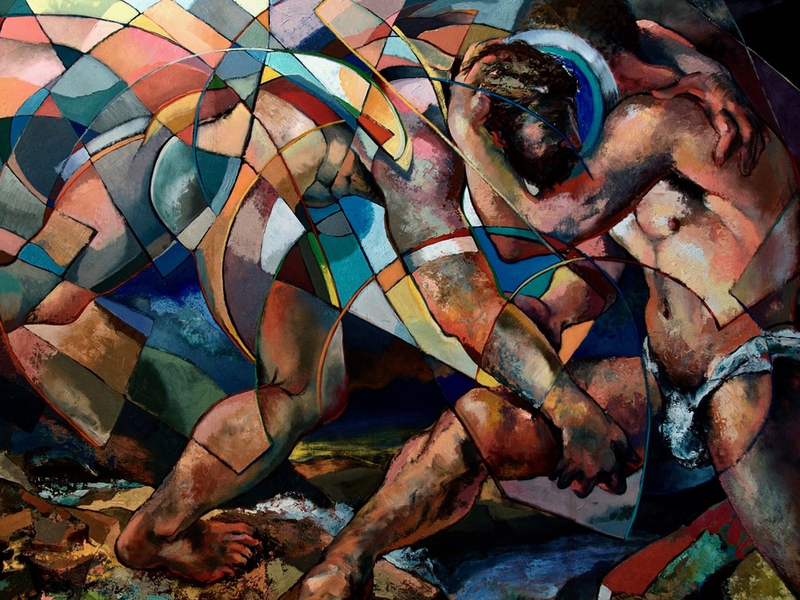
jacob-wrestling-the-angel
Biblical Studies

Three “Falls” and Three Heroes

The Bible tells us that when God created the earth, He set up three zones of life. The first was the world itself. The second was the holy land of Eden. And the third was the Garden in Eden, God’s sanctuary. God told Adam and Eve that every tree was…

by James B. JordanFebruary 22, 1991
mick-haupt-eq2z9ay9wws-unsplash
Biblical Studies

The Chronology of Ezra & Nehemiah, Part 1

In our survey of Biblical chronology we have arrived at the books of Ezra and Nehemiah, which provide chronological information for the period after the return from exile, the Restoration Period of Old Testament history. The question we begin to address in this essay is whether the Artaxerxes of these…

by James B. JordanFebruary 22, 1991
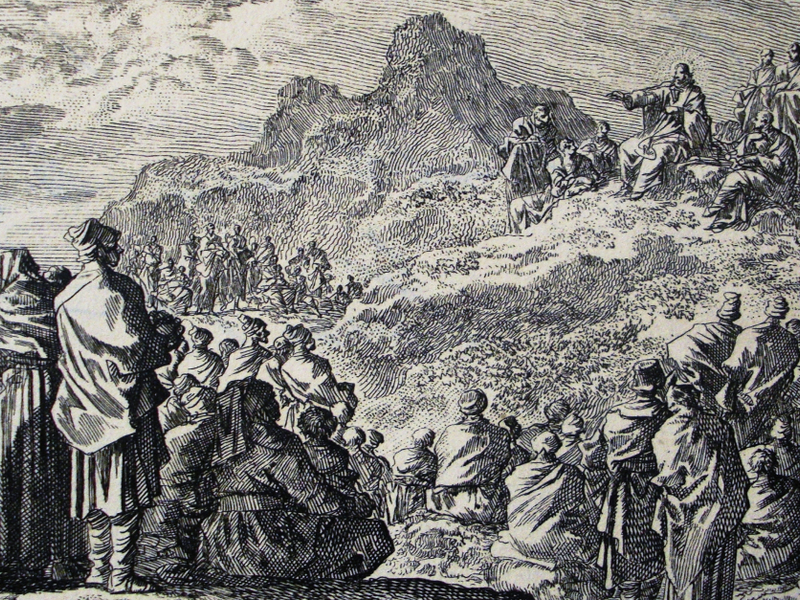
8226-sermon-on-the-mount-painting-2
Matthew

Pluck It Out!

These verses from the Sermon on the Mount are generally taken in connection with Jesus’ earlier statement concerning adultery in the heart (vv. 27-28); the eye and the hand have obvious relevance to the sin of adultery. At the same time, most commentators admit that the principle of avoiding occasions…

by Peter LeithartFebruary 2, 1991
49980-nicolas_poussin_-_the_judgment_of_solomon_-_wga18330-800w-tn
Proverbs

Advice From a Sojourner, Part 9

17. The eye that mocks a father, And despises to obey a mother, The ravens of the valley will pick it out, And the young eagles will eat it. 18. There are three things that are too wonderful for me, Four that I do not understand: 19. The way of…

by James B. JordanJanuary 30, 1991
screen-shot-2020-12-03-at-1-47-33-pm
Biblical Horizons

The Dominion Church

The modern Church in America and virtually everywhere else is ideology-centered, not geographical. This is because various Churches believe different things and have different customs of worship and sacraments. The ideological Church has gradually developed from the time of the Reformation, because accuracy of doctrine has become more important to…

by James B. JordanJanuary 30, 1991

Showing page 299 of 309

See all
See all
Philosophy

Heidegger in his woods

Latour is tired of being accused of having forgotten Being, and offers this clever brush-off of Heidegger: “If, scorning empiricism, you opt out of the exact sciences, then the human sciences,, then traditional philosophy, then the sciences of language, and you hunker down in your forest - then you will…

November 15, 2006
History

Semi-modernism

Postmoderns, Latour suggests, think they are still modern, but in fact they have greatly oversimplified the modern Constitution. Postmoderns might emphasize the separation of subject and world, and stretch that opposition to a breaking point (Latour vividly describes them as doing the splits to keep subject and world apart); but…

November 15, 2006
History

Modern temporality

In his very good section on modern temporality, Latour argues that modernity assumes that everything in the present, modern moment, is purely modern, novel. Anything that appears that is not up-to-date is a “archaism,” and moderns worry constantly that this or that event or trend might “turn back the clock.”…

November 15, 2006
History

Representation

One of the key moves made since the 17th century, Latour argues, is a distinction between modes of “representation.” In the laboratory Boyle is representing things before selected witnesses through scientific experiments, giving mute nature a voice through the scientist, while in politics Hobbes suggests that the Sovereign speaks for…

November 15, 2006
History

We Have Never Been Modern

Bruno Latour’s We Have Never Been Modern (Harvard 1993) is a rich study. He describes modernity in terms of a dual process of “purification” and “hybridization.” Purification involves the clean construction of a nature (and science) separated off from society and the self, while hybridization involves mixtures of nature and…

November 15, 2006

Tears of things

And/Or: Virgil is aware that the furor of civil war can be curbed only by an opposing, and more intense, furor. That, as Milbank says, is the way of paganism - peace established only by superior violence against violence. But in those tears Virgil expresses the the painful recognition -…

November 13, 2006

Showing page 1763 of 2212

Browse by Category

In Medias Res

Your weekly digest for all things Theopolis.

Donate

Theopolis is nearly 100% donor-supported. Consider joining us on our mission.