Theopolis Logo

Writing

Explore our collection of theological essays, biblical studies, and reflections on faith and culture.

See all
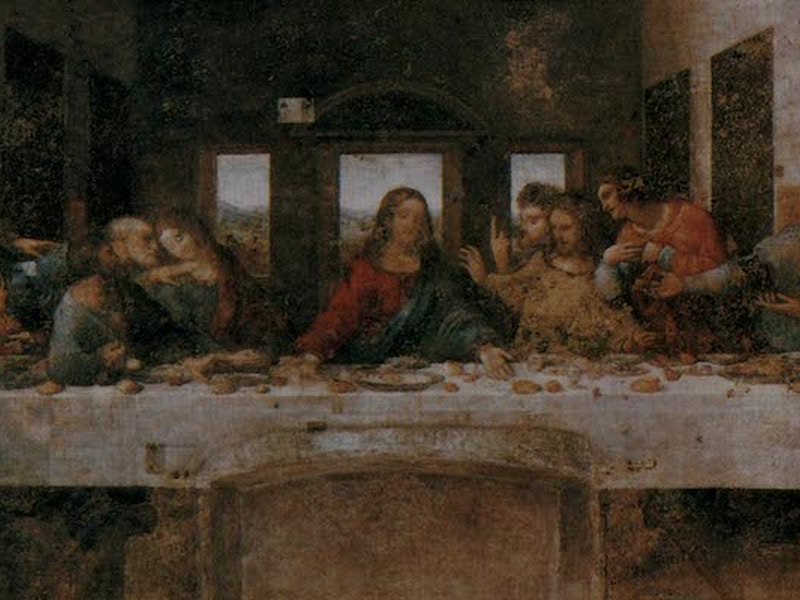
last-supper
Luke

Table Talk

Along His journey to Jerusalem, Jesus stops frequently to have meals, three times with Pharisees (7:37-50; 11:37-54; 14:1-35). Meals were central to Jesus’ ministry. He comes “eating and drinking” (Luke 7:34). While His meals are not just for refreshment, they are opportunities for teaching the protocols of the kingdom. Meals…

by Peter LeithartApril 19, 2016

music-violin
Biblical Theology

A Musical Case for Typological Realism, (Part 4)

Time as a realm of participation can be difficult for us imaginatively to grasp. While music is a profoundly temporal art, exploring the medium of time like no other, most of our temporal experience seems decidedly unmusical in character, disjointed and unorchestrated. The form in which we naturally discover time…

by Alastair RobertsApril 14, 2016
John

Jesus' Burial Clothes

John devotes much attention to Jesus’ burial clothes. He tells us that Nicodemus brought about a hundred pounds of myrrh and aloes to spice Jesus body, and that He was bound in linen wrappings. We find out that His body and His head were wrapped separately. (John 19:39-40; 20:6-7). When…

by James B. JordanApril 12, 2016
clock
Biblical Theology

A Musical Case for Typological Realism, (Part 3)

Thinking about time in terms of music also helps us to appreciate its unity and inner relations. Henri Bergson observes our cultural habit of dividing time into discrete moments, and conceiving of these as if akin to objects in a spatial succession. [1] Against such a notion, Bergson argues for…

by Alastair RobertsApril 7, 2016
screen-shot-2016-03-31-at-9-32-11-am
Biblical Theology

A Musical Case for Typological Realism, (Part 2)

As we attend to these and other aspects of music’s temporality, Begbie suggests, we will find means by which to resist some of our habitual modern ways of conceptualizing time, most especially our tendency to conceive of time as if it were a homogeneous set of technologically quantifiable units laid…

by Alastair RobertsMarch 31, 2016
biblioteca-vasconcelos-crop
Biblical Theology

Systematic Typology (Part Three)

The Hidden Dimension In many fields of scientific study, the apparent complications and contradictions are dispelled once the internal logic is perceived. Biblical hermeneutics is no different, since the author of Creation is the Author of the Word. The Bible’s literary labyrinth radiates organically from an algorithm so simple it…

by Mike BullMarch 29, 2016

Showing page 133 of 309

See all
See all
History

Universal exile

Ancient politics had to do with governing a people set in a particular location; so did the modern politics of the nation-state. With the large-scale population movements of the last half-century, the ethnic homogeneity of the nation-state (never entirely homogenous to begin with) has dissolved further. Nationality is no longer…

November 8, 2006
History

World Citizens

Political scientist David Jacobson notes the connection between immigration and shifts in understandings of rights: “Transnational migration is steadily eroding the traditional basis of nation-state membership, namely citizenship. As rights have come to be predicated on residency, not citizen state, the distiction between ‘citizen’ and ‘alian’ has eroded. The devaluation…

November 8, 2006
Economics

Iconomics

The reviewer of Ernest Sterberg’s 1999 Economy of Icons in the American Journal of Economics and Sociology summarizes some main points from this latter-day Thorstein Veblen: “The thesis of this controversial book is that ‘enterprises make their way in the capitalist economy by transforming commodities into icons.’ An icon is…

November 8, 2006
History

Artificial selves

Discussions of the postmodern self often trace a genealogy from Descartes to Locke to Kant to Nietzsche to Heidegger to Foucault. But though philosophers no doubt have some influence on the daily experiences of normal humans, this sort of treatment doesn’t quite get to the ground level. In 1991, Paul…

November 7, 2006
History

End of history

Evidence that Fukuyama may have had it right: Walter Truett Anderson writes that “the International Commission on Peace and Food (in its 1994 report) pointed to the urgent need to create employment for hundreds of millions of poor people, and at the same time dismissed the notion that most of…

November 7, 2006
History

We’re All Communitarians now

Psychologist Brewster Smith decries the solvents of postmodern life - cynicism, shallowness, sensationalism, warfare between fundamentalisms and relativisms, uncertainty about all standards, the “fin de siecle sense of drift and doom” (even after the fin). What’s his solution? Find yourself a community that can give you values, standards, a heritage,…

November 7, 2006

Showing page 1768 of 2212

Browse by Category

In Medias Res

Your weekly digest for all things Theopolis.

Donate

Theopolis is nearly 100% donor-supported. Consider joining us on our mission.