Theopolis Logo

Writing

Explore our collection of theological essays, biblical studies, and reflections on faith and culture.

See all
medievalilluminatedmanuscript
Biblical Studies

The Art of Why

“We have a God who hides things because He loves to be sought out, chewed out and found out.” As Christians, we are rightly taught that we must not question God’s Word. The problem is that the Scriptures record many things which appear to have been given to us for…

by Mike BullMay 12, 2015

last-supper
Revelation

Eucharistic Harvest

The book of Revelation is a liturgy. John begins “in the Spirit” on the “Lord’s day” (1:10). Jesus appears, and Jesus tells him to record messages to seven churches, words of encouragement and rebuke, like the call to worship and confession at the beginning of a Christian liturgy. In chapter…

by Peter LeithartMay 7, 2015
sunrise-2
Creation

Maker of Heaven and Earth, (Part 5)

In my previous posts, I looked at the theme of creation as it is found in a sequence of psalms devoted to Yahweh’s Kingship (Psalms 93-100). Among other matters, these psalms declare that when the Kingdom of Israel’s God comes, it is the Kingdom of the world’s own Creator .…

by Stephen LongMay 7, 2015
13071-probablyvalentindeboulogne-saintpaulwritinghi-1
Deuteronomy

Paul the Levir

The church in Corinth was a pastoral nightmare. Factionalism, sexual immorality, incipient syncretism, using the church as a stage for self-promotion, and denial of the final resurrection were just some of the problems. In Paul’s first letter to the Corinthian church, he confronts each of these problems directly and in…

by Bill SmithMay 5, 2015
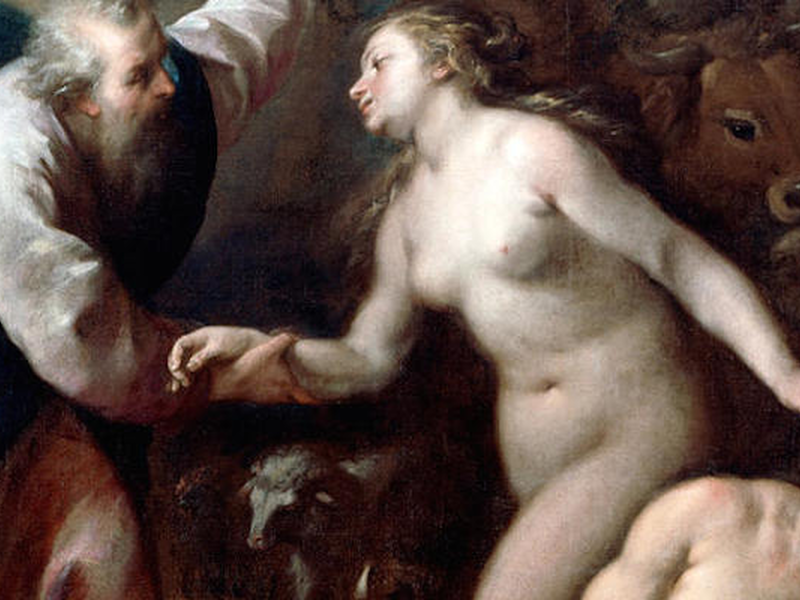
creation-eve
Covenant

Covenant Structure in Genesis 2

The first chapters of the Word of God have a poetic rhythm. This is used to discredit their accuracy as historical narrative, but the truth is that these same rhythms continue far beyond the book of Genesis. In fact, the later texts shed light on the frustratingly succinct account of…

by Mike BullApril 30, 2015
light-bulb
Creation

Must A Light Bulb Be "Oriented Toward Illumination"?

Mr. Martian: What’s that there? Mr. Edison: (Edison holds up a standard, 60 watt lightbulb). It’s a lightbulb. Mr. Martian: A “lightbulb” you say? What exactly is a “lightbulb”? Mr. Edison: A lightbulb is an object used to illuminate a dark area, say a room. It’s made primarily of filament…

by Gerald HiestandApril 28, 2015

Showing page 154 of 309

See all
See all
History

Universal exile

Ancient politics had to do with governing a people set in a particular location; so did the modern politics of the nation-state. With the large-scale population movements of the last half-century, the ethnic homogeneity of the nation-state (never entirely homogenous to begin with) has dissolved further. Nationality is no longer…

November 8, 2006
History

World Citizens

Political scientist David Jacobson notes the connection between immigration and shifts in understandings of rights: “Transnational migration is steadily eroding the traditional basis of nation-state membership, namely citizenship. As rights have come to be predicated on residency, not citizen state, the distiction between ‘citizen’ and ‘alian’ has eroded. The devaluation…

November 8, 2006
Economics

Iconomics

The reviewer of Ernest Sterberg’s 1999 Economy of Icons in the American Journal of Economics and Sociology summarizes some main points from this latter-day Thorstein Veblen: “The thesis of this controversial book is that ‘enterprises make their way in the capitalist economy by transforming commodities into icons.’ An icon is…

November 8, 2006
History

Artificial selves

Discussions of the postmodern self often trace a genealogy from Descartes to Locke to Kant to Nietzsche to Heidegger to Foucault. But though philosophers no doubt have some influence on the daily experiences of normal humans, this sort of treatment doesn’t quite get to the ground level. In 1991, Paul…

November 7, 2006
History

End of history

Evidence that Fukuyama may have had it right: Walter Truett Anderson writes that “the International Commission on Peace and Food (in its 1994 report) pointed to the urgent need to create employment for hundreds of millions of poor people, and at the same time dismissed the notion that most of…

November 7, 2006
History

We’re All Communitarians now

Psychologist Brewster Smith decries the solvents of postmodern life - cynicism, shallowness, sensationalism, warfare between fundamentalisms and relativisms, uncertainty about all standards, the “fin de siecle sense of drift and doom” (even after the fin). What’s his solution? Find yourself a community that can give you values, standards, a heritage,…

November 7, 2006

Showing page 1768 of 2212

Browse by Category

In Medias Res

Your weekly digest for all things Theopolis.

Donate

Theopolis is nearly 100% donor-supported. Consider joining us on our mission.