Theopolis Logo

Writing

Explore our collection of theological essays, biblical studies, and reflections on faith and culture.

See all
screen-shot-2023-02-24-at-1-48-41-pm
Biblical Chronology

Chronologies and Kings: Part 3

The chronology of the Kings of Judah and Israel can be divided into three periods with clearly defined boundaries. The first period begins with the death of Solomon and the accessions of Rehoboam in the south (Judah) and Jeroboam in the north (Israel). It ends with the deaths of Ahaziah…

by James B. JordanSeptember 22, 1991

johann-walter-bantz-clv9dfjlwac-unsplash-1-5
Art

Arts & Play, Part 1

Most modern people regard the arts as essentially decorative. They are hardly very important, as compared to business, politics, or religion. Yet, from a Biblical point of view, the arts lie close to the heart of human life. The universe that God created is itself an artistic masterpiece by the…

by James B. JordanSeptember 22, 1991
6273e95e0f5ac766258d8cf3_joshuasconquestoftheland-2
Exodus

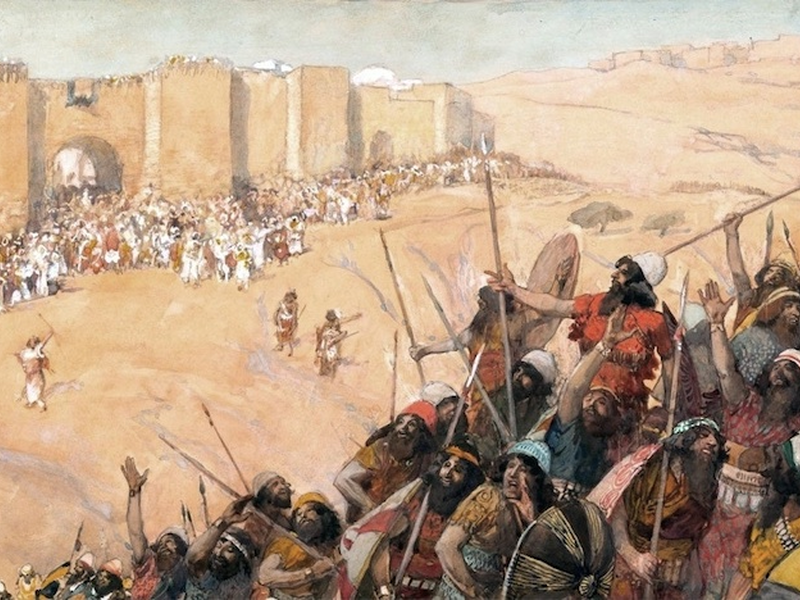
Chronologies and Kings, Part 2

Before we move into a detailed survey of the history and chronology of the kings of Israel and Judah, let us review the chronological information that leads from creation to the kingdom. This will be helpful both to new readers of these essays, and a reminder for those who have…

by James B. JordanAugust 22, 1991
screen-shot-2023-02-24-at-1-48-41-pm
Biblical Chronology

Chronologies and Kings, Part 1

We have completed our overall survey of Biblical chronology, and now turn to a detailed examination of the Biblical information regarding the chronology of Israel’s kings. The first piece of chronological information we have regarding Israel’s kings is very cryptic, and it serves as an guide to the interpretation of…

by James B. JordanJuly 22, 1991
screenshot-2023-08-09-at-2-13-32-pm
Biblical Horizons

Book Review - To Take Place: Toward Theory in Ritual

Jonathan Z. Smith, To Take Place: Toward Theory in Ritual (Chicago: University of Chicago Press, 1987). Reviewed by Peter J. Leithart. The philosophes of the 18th century often attacked Christendom using the tools of anthropology and comparative religion. Rousseau contrasted the idyllic equality of primitive, natural peoples with the bondage…

by Peter LeithartJuly 6, 1991
screenshot-2023-08-09-at-1-47-41-pm
Biblical Horizons

Book Review: The Rise of Magic in Early Medieval Europe

Valerie I. J. Flint, The Rise of Magic in Early Medieval Europe (Princeton University Press, 1991). Reviewed by Peter J. Leithart. Valerie I. J. Flint, Professor of History at the University of Auckland, New Zealand, is refreshingly candid about her reasons for undertaking a study of The Rise of Magic…

by Peter LeithartJuly 6, 1991

Showing page 295 of 309

See all
See all
History

We’re All Communitarians now

Psychologist Brewster Smith decries the solvents of postmodern life - cynicism, shallowness, sensationalism, warfare between fundamentalisms and relativisms, uncertainty about all standards, the “fin de siecle sense of drift and doom” (even after the fin). What’s his solution? Find yourself a community that can give you values, standards, a heritage,…

November 7, 2006
Theology

Proteus

God cannot deny Himself and is unchangeable in His being, wisdom, power, holiness, justice, goodness and truth. He never contradicts Himself or becomes other than the faithful God that He is. And yet: Our God is shown to be God above all in becoming man; our Creator is shown to…

November 7, 2006
Theology

Poet or poem?

Lacan, stressing how language controls us, says “I am not a poet, but a poem.” I don’t know about Lacan, but that is certainly the case for Christians: “For we are His workmanship (Gr. poema ), created in Christ Jesus for good works” (Ephesians 2:10).

November 7, 2006
History

Pro Patria Mori

The history of the modern nation-state, and the disillusionment with it, can be told as the story of changing responses to Roman-inspired patriotism, tinged with the rhetoric of Christian martyrdom and sacrifice. Simplifying to an extreme, the story of modern politics is about the resurgence (in France in 1789 or…

November 6, 2006
History

Other-directeds and Decentereds

In his 1950 book, The Lonely Crowd , David Reisman divided humanity into three parts: the tradition-directed, the inner-directed, and the other-directed. The last were distinguished from the first by the fact that they looked to the present rather than to the past for direction: “What is common to all…

November 6, 2006
History

Solitude and individualism

Is solitide a prerequisite for the rise of individualism? If someone is never actually alone, can he ever conceive of himself as being defined in isolation and separation from others? This line of questioning might give some part of the explanation for the rise of individualism in the modern world.…

November 6, 2006

Showing page 1769 of 2212

Browse by Category

In Medias Res

Your weekly digest for all things Theopolis.

Donate

Theopolis is nearly 100% donor-supported. Consider joining us on our mission.