Theopolis Logo

Writing

Explore our collection of theological essays, biblical studies, and reflections on faith and culture.

See all
little-girl
Children

Honor God With Your Body

I am making a new rule in our house! We are actually kind of skimpy on the house rules. I try very hard to keep things simple: love God, love others, be joyful. It’s not complicated to avoid discipline here. But I have found myself repeating this new rule over…

by Lindsey TollefsonApril 9, 2015

giotto-noli-me-3
John

The Gardener and the Beloved, (Part 3)

Click HERE for Part 2 The voice of Jesus transforms and changes Mary when she hears him speak her name. This is her last “turning.” So also the woman in the Song of Songs longs to hear the voice of her beloved. Let me see your face, let me hear…

by Jeff MeyersApril 6, 2015
giotto-noli-me-2
John

The Gardener and the Beloved, (Part 2)

Click HERE for Part 1. The details of this story call the attentive reader back to the drama of Solomon’s Song of Songs. And the Song of Song’s alludes to, ties us into the story of Adam and Eve in the Garden and the promise of a coming Messiah that…

by Jeff MeyersApril 4, 2015
easter-term-2015-2
Theopolis News

Easter Term, 2015

“The course was a paradigm shift for me,” said Jonathan Sedlak, a Milwaukee electrical contractor who attended Theopolis’s course on Revelation. “I am left with a book that is far more practical than it has ever seemed before.” Jonathan Anderson of Louisville, Kentucky found the course “refreshing.” “I finished with…

by TheopolisApril 2, 2015
psalm-singing
Genesis

Worship as Response: Liturgical Logic, (Part 1)

“It is only by participation in a rational, practice-based community that one becomes rational.” – Alasdair MacIntyre It may be perfectly clear to a chef why adding unsifted powdered sugar to a hot frosting is a bad idea. But for an amateur cook, this may be the kind of rule…

by Jonathan BarlowApril 2, 2015
giotto-noli-me
John

The Gardener and the Beloved, (Part 1)

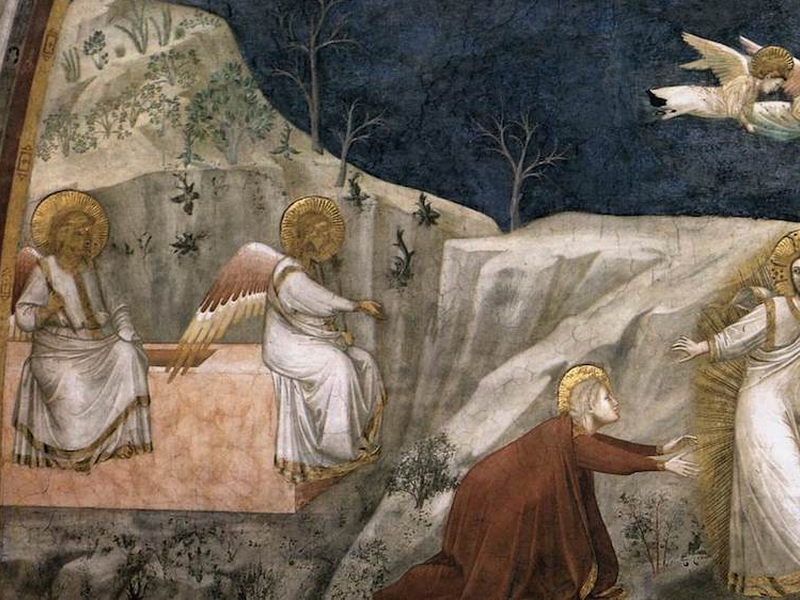
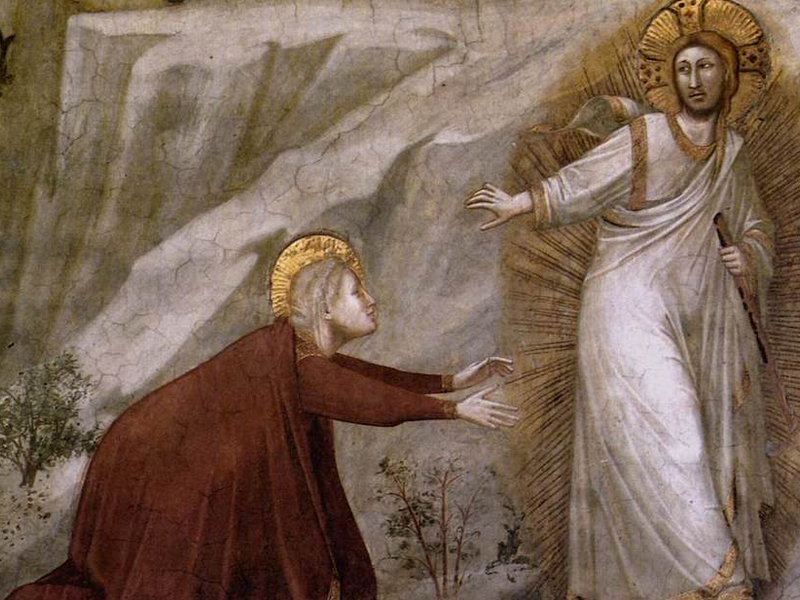
On a fresco in a chapel in Padua, Italy, there is a famous painting depicting the dramatic post-resurrection scene in John 20 with Mary and Jesus outside of the garden tomb. Giotto di Bondone painted it in the early 14th century. Jesus is striding from the tomb with a victor’s…

by Jeff MeyersApril 1, 2015

Showing page 156 of 309

See all
See all
History

Hyperreal

Baudrillard sounds like a nut when he says that we are now living in a hyperreal world, a virtual world. But there is certainly something to it. We’re still physical creatures, of course, surrounded by physical objects, and that doesn’t change when we get strapped in for some virtual experience.…

November 2, 2006
History

Community of the fearful

Postmodernity unleashes fear, Bauman says: “Modernity was a continuous and uncompromising effort to fill or to cover up the void; the modern mentality held a stern belief that the job can be done - if not today then tomorrow. The sin of postmodernity is to abandon the effort and to…

November 2, 2006
History

Chronopolitics

Johannes Fabian argues in his Time and the Other that “geopolitics has its ideological foundations in chronopolitics.” Bauman summarizes the argument: “The modern perspective ‘denied coevality’ to any form of life different from its own; it construed the Other of itself as ‘living in another time.’ The allochronic distancing device…

November 2, 2006
History

Slavery in America

In his recent history of slavery in the New World, David Brion Davis records some surprising facts about American slavery. Prior to 1820, for instance, African slaves were more numerous than European settlers by a ratio of 5 to 1. About 5-6 percent of slaves in the Western hemisphere were…

November 1, 2006
Politics

Toleration and absolutism

In his history of the idea of toleration, the late A.J. Conyers summarizes the arguments of Robert P. Kraynak on the development of Locke’s thought on religious toleration. The puzzle is this: Locke’s early works are absolutist in a Hobbesian vein, invoking the supreme magistrate’s power to oversee religion for…

November 1, 2006
Literature

Herbert on Pop Music

Zbigniew Herbert writes in a poem entitled “Mr Cogito and Pop” of a visit to a concert. “Mr Cogito,” a recurring character in Herbert’s poems, reflects on the “aesthetics of noise” and offers some penetrating observations on the character of contemporary pop music: “to be a god means to hurl…

November 1, 2006

Showing page 1772 of 2212

Browse by Category

In Medias Res

Your weekly digest for all things Theopolis.

Donate

Theopolis is nearly 100% donor-supported. Consider joining us on our mission.