Theopolis Logo

Writing

Explore our collection of theological essays, biblical studies, and reflections on faith and culture.

See all
e99a9334
Advent

Stretching Christmas

For many people Christmas comes on December 25 and is over December 26. The tree is taken down along with the lights and the other decorations, and everyone begins setting the house in order for the new year. No more Christmas hymns. No more celebrations (well, until New Year’s Eve).…

by Steve WilkinsDecember 24, 2016
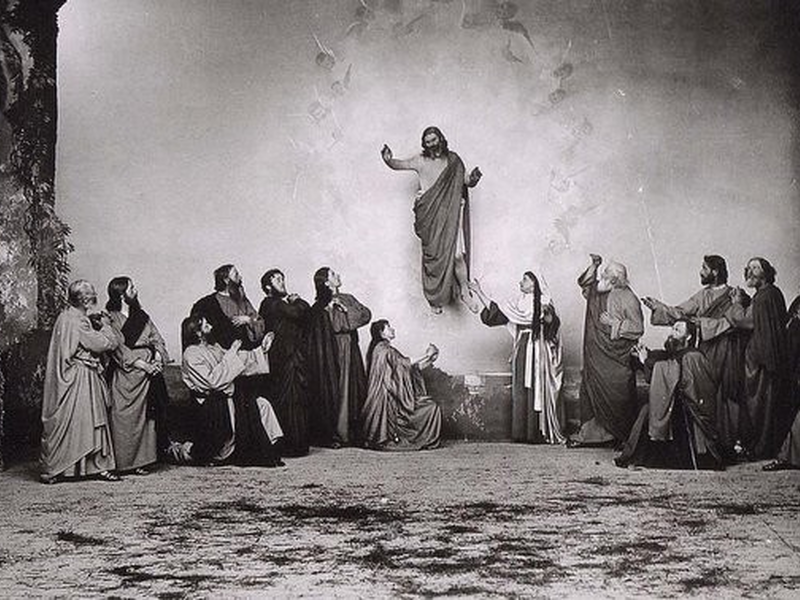
ascension
Advent

Ascension and Incarnation

The Ascension and the Incarnation should not be disconnected in our Christmas thinking or celebrations. As N.T. Wright notes, the ascension is "a central and vital feature without which all sorts of other things start to go demonstrably wrong. . . . where the ascension has been ignored or misunderstood,…

by Roy AtwoodDecember 23, 2016
nativity-rembrandt
Advent

Christmas Light

“In the Word was life, and the life was the light of men. And the light shines in the darkness.” Thus John describes the incarnation of the Son. He comes as the living and life-giving light of the world. That’s good news. In the beginning, God spoke and light shone…

by Peter LeithartDecember 23, 2016
nativity-chagall
Advent

The Spirit of Christmas

Christmas is all about Jesus. The angels announce Jesus’ birth, shepherds and wise men come to see Jesus, Herod wants to kill Jesus. We occasionally think of the Father who sent the Son, but we keep returning to the Son made flesh in Bethlehem’s manger. Meanwhile, as always, the Spirit…

by Peter LeithartDecember 22, 2016
nativity
Advent

The Humility of God

Christmas is about many things, but one of the chief things revealed in the gospel of Christmas is the humility of God. We don't often think of humility as an attribute of God. If God is glorious and exalted, we think, He must be haughty and proud and self-centered. We…

by Peter LeithartDecember 21, 2016
screenshot-2025-12-15-at-8-35-45-am
Advent

Advent of Unity

John famously begins his Gospel with a piece of theology: “In the beginning was the Word, and the Word was with God, and the Word was God.” Matthew starts with a genealogy. John celebrates Advent with a hymn, Matthew with a list. For John, Jesus is the Word of creation…

by Peter LeithartDecember 20, 2016

Showing page 120 of 309

See all
See all

Knowing the “From the Begining”

1 John 2:13-14 twice says that groups within the church “know the one from the beginning.” That is a perfectly fine way to translate it, but the Greek has TON AP’ ARXES, “the from the beginning.” To whom is this phrase referring? The more awkward translation suggests the possibility that…

October 12, 2006

Overcoming the world

The sequence from 1 John 2:14-15 seems abrupt: John moves from addressing children, fathers, and young men to the warning not to love the world. But there is a link between the “overcoming” in 2:14 to the “world” in 2:15. Every other time the verb “overcome” is used in John,…

October 12, 2006
Theology

Persistence of the past

The doctrine of original sin is bound up with the conviction that the past inheres in the present, for the human race and for individuals. And for this the denial of original sin is the necessary premise for all revolutionary politics and also explains why revolutionary politics invariably ends up…

October 12, 2006
History

Political religion

Few have said it with the forthrightness of Joseph II, the Habsburg emperor from 1780 to 1790, who justified his 1781 Edict of Toleration because “with freedom of religion, one religion will remain, that of guiding all citizens alike to the welfare of the state. Without this approach we shall…

October 11, 2006
History

Enthusiasts of reason

Since Carl Becker’s book on the heavenly city of the philosophes, historians have recognized that the Enlightenment was motivated, by a secularized version of the biblical story - a fall from the Golden Age of the classical world into the darkness of superstitution and priestcraft, the gospel of Enlightenment and…

October 11, 2006
History

Cleric and Philosophe

Battle lines are never, in reality, as clean as we see them in retrospect. Some 700 of the 20,000 freemasons in pre-Revolutionary France were Catholic clergy, and Michael Burleigh reports that “revolutionaries and counter-revolutionaries, clergy and laity shared a taste for the same authors. In 1778 Marie Antoinette attended the…

October 11, 2006

Showing page 1779 of 2212

Browse by Category

In Medias Res

Your weekly digest for all things Theopolis.

Donate

Theopolis is nearly 100% donor-supported. Consider joining us on our mission.