Theopolis Logo

Writing

Explore our collection of theological essays, biblical studies, and reflections on faith and culture.

See all
max-kukurudziak-qbc3zmxw0g8-unsplash
History

Report from Ukraine

We lost Crimea. That is very clear. Putin proved he was not lying when he said he would place women and children ahead of his soldiers to storm Ukrainian military bases. Russian soldiers did exactly that with women (some who volunteered and some who were forced). Russia now occupies all…

by San SanychMarch 28, 2014

screenshot-2023-09-21-at-3-59-23-pm
Church Calendar

God Gone Silent

Sound is an indicator of life and energy. “Sound signals the present use of power, since sound must be in active production to exist at all.” Things don’t have to be alive to make themselves visible, and “a primitive hunter can see, feel, smell, and taste an elephant when the…

by Peter LeithartMarch 26, 2014
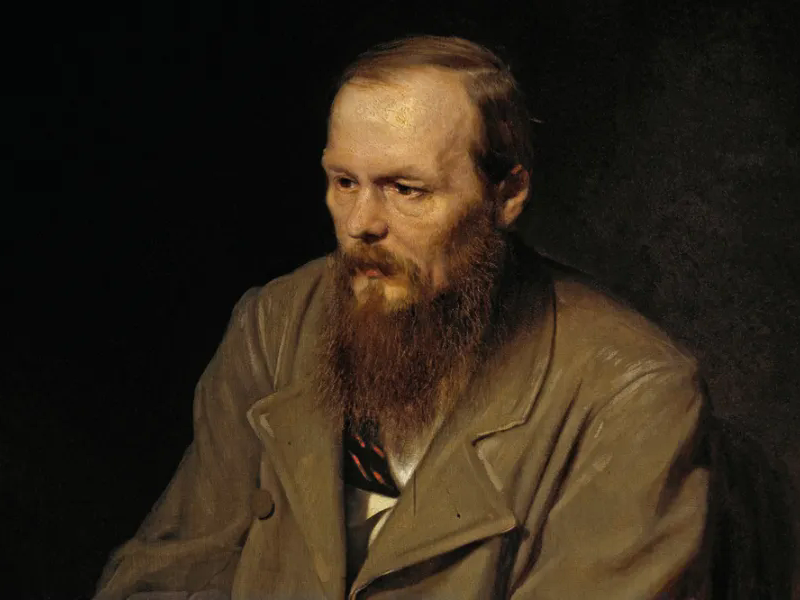
web-lead-image_final_dostoevsky
Books

Dostoevsky the Liberal

In the most famous section of his best-known novel, Dostoevsky’s Ivan Karamazov brings forward his case against God. He opens with a horrific litany of outrages against children. Turkish soldiers make a baby laugh and then shoot a pistol into his face. A little girl is beaten, thrashed, kicked by…

by Peter LeithartMarch 24, 2014
kelly-sikkema-ggs0_g6wi-i-unsplash
Epistemology

Subsidiary-Focal Integration and Liturgy

​At the heart of Esther Lightcap Meek's splendid ​Little Manual for Knowing is a concept she picked up from Michael Polanyi, "subsidiary-focal integration." The concept begins from the insight that all our knowing, all our experience, is double. We focus on something, but we are capable of "indwelling" that focal…

by Peter LeithartMarch 19, 2014
engin-akyurt-uz9qpvbol0e-unsplash
Revelation

White Stone

Jesus promises the overcomers of Pergamum "hidden manna" and a "white stone." The hidden manna is often linked with the manna stashed away in the ark of the covenant. The white stone has proved more elusive. Exodus tells us that manna was white (Exodus 16:31) and like bdellium (Numbers 11:7),…

by Peter LeithartMarch 17, 2014
226961fgsdl
Leviticus

A Theology of Festivity

Leviticus 23 begins with a reference to “Yahweh’s appointed times” ( mo’ade-YHWH ). Mo’ed is the common term for the feasts of Israel. A few dimensions to this term. First, it means “appointed time” or “designated time.” It is a time set by Yahweh. Yahweh has claimed certain times as…

by Peter LeithartMarch 12, 2014

Showing page 177 of 309

See all
See all

Knowing the “From the Begining”

1 John 2:13-14 twice says that groups within the church “know the one from the beginning.” That is a perfectly fine way to translate it, but the Greek has TON AP’ ARXES, “the from the beginning.” To whom is this phrase referring? The more awkward translation suggests the possibility that…

October 12, 2006

Overcoming the world

The sequence from 1 John 2:14-15 seems abrupt: John moves from addressing children, fathers, and young men to the warning not to love the world. But there is a link between the “overcoming” in 2:14 to the “world” in 2:15. Every other time the verb “overcome” is used in John,…

October 12, 2006
Theology

Persistence of the past

The doctrine of original sin is bound up with the conviction that the past inheres in the present, for the human race and for individuals. And for this the denial of original sin is the necessary premise for all revolutionary politics and also explains why revolutionary politics invariably ends up…

October 12, 2006
History

Political religion

Few have said it with the forthrightness of Joseph II, the Habsburg emperor from 1780 to 1790, who justified his 1781 Edict of Toleration because “with freedom of religion, one religion will remain, that of guiding all citizens alike to the welfare of the state. Without this approach we shall…

October 11, 2006
History

Enthusiasts of reason

Since Carl Becker’s book on the heavenly city of the philosophes, historians have recognized that the Enlightenment was motivated, by a secularized version of the biblical story - a fall from the Golden Age of the classical world into the darkness of superstitution and priestcraft, the gospel of Enlightenment and…

October 11, 2006
History

Cleric and Philosophe

Battle lines are never, in reality, as clean as we see them in retrospect. Some 700 of the 20,000 freemasons in pre-Revolutionary France were Catholic clergy, and Michael Burleigh reports that “revolutionaries and counter-revolutionaries, clergy and laity shared a taste for the same authors. In 1778 Marie Antoinette attended the…

October 11, 2006

Showing page 1779 of 2212

Browse by Category

In Medias Res

Your weekly digest for all things Theopolis.

Donate

Theopolis is nearly 100% donor-supported. Consider joining us on our mission.