Theopolis Logo

Writing

Explore our collection of theological essays, biblical studies, and reflections on faith and culture.

See all
kyler-nixon-urkdeazlvtq-unsplash
Music

The Case for Shorter Hymnals

I believe hymnals should be shorter than they are. Much shorter. 100 hymns at most, let’s say. I imagine that this will be a hard one to swallow for most of my readers, so I will attempt to bolster my argument as best I can. I can’t think of any…

by John AhernNovember 16, 2021

books-of-the-bible-joshua-by-ralph-drollinger-capitol-ministries
Hermeneutics

King Joshua and the Christian

Joshua is never called a king in the Bible. Yet while lacking the title, Joshua possesses the trappings of biblical kingship to a degree that it seems warranted to consider him a royal figure. There are lots of reasons for thinking this. In a 1981 Journal of Biblical Literature article,…

by Daniel HoffmanNovember 9, 2021
raphael-schaller-gkincd2eniy-unsplash-5
Language

The Liturgy of Language

God speaks. He is not silent. He has designed humanity for reception of such communication and also to speak on His behalf. This speaking is not simply happenstance. It is not just a curious quirk about humanity. It is intrinsic to who we are that we speak and shape the…

by Chase DavisNovember 2, 2021
ross-sneddon-zstkmnvmwsq-unsplash

Practicing Repentance

One evening, years ago, home from college for Christmas break, I dreamt that I was playing the piano, passionately and well, in the church sanctuary beneath the parsonage in the renovated mansion in rural New Hampshire where my father was the minister. It was something of a lucid dream because…

by Garrett SoucyOctober 26, 2021
artem-kovalev-fk3xucftavk-unsplash
Anxiety

Let Not Your Heart Be Troubled

I’m a big worrier. Always have been. Some of my earliest memories are of being anxious to the point of getting sick, sometimes for trivial reasons. My mind moves a million miles a minute, wondering what will happen in 5 minutes, or tomorrow, or next week, or in ten years.…

by MargaretAnn HesterOctober 21, 2021
main-image
Biblical Studies

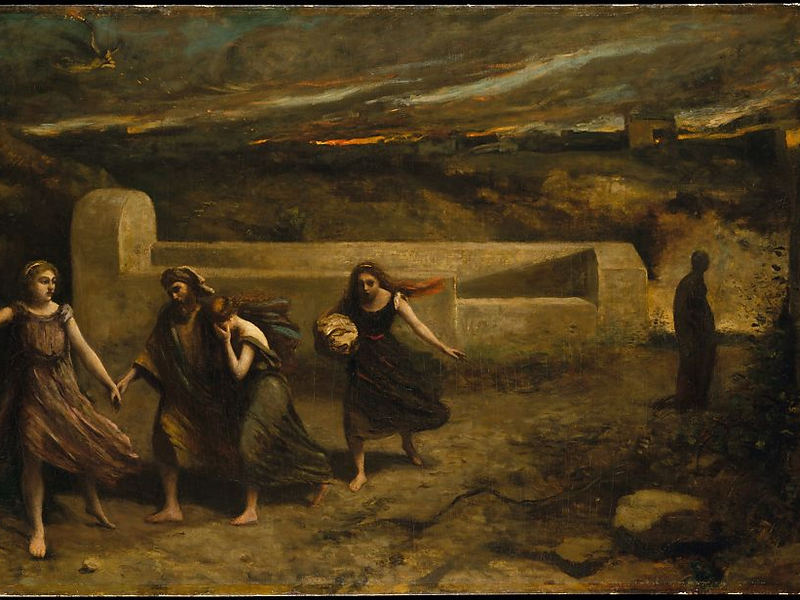
“But Lot’s Wife Behind Him”: Translating a Conjunction in the Sodom Story

“The sun had gone up on the earth when Lot came to Zoar. And the LORD rained on Sodom and on Gomorrah sulfur and fire from the LORD from heaven, and he devastated those cities and the whole valley and all those dwelling in the cities and the growth of…

by Josh JensenOctober 19, 2021

Showing page 50 of 309

See all
See all

Objective/Subjective

McGrath notes that Augustine interpreted the genitive in the phrase “righteousness of God” in Rom 1 objectively, so that it was understood as the righteousness that God gives in saving sinners (in “making” them righteous). Ambrosiaster, as I pointed out in an earliet post, interpreted the genitive subjectively - the…

April 20, 2006

Old Perspective on Paul

Ambrosiaster writes, “Iustitia est Dei, quia quod promisit dedit, ideo credens hoc esse se consecutum quod promiserat Deus per prophetas suos, iustum Deum probat et testis est iustitiae eius” (PL, 17.56b). McGrath explains: “God, having promised to give salvation, subsequently gives it, and as a result is deemed to be…

April 20, 2006
History

Unfinished Reformation

Nevin wrote: “There is more a great deal in Christianity, I firmly believe, more in the idea of hte Holy Catholic Church, than has yet been attained, either in the way of knowledge or in the way of life, by the Protestant Reformation.”

April 20, 2006

Factitive Justification

There was a consensus among the theologians of Trent, McGrath argues, that justification was “factitive,” a view that excluded that “a sinner may be justified solely as a matter of reputation or imputation, while remaining a sinner in fact.” But of course that raises the question, What exactly is a…

April 20, 2006

True Lutherans

McGrath traces the odd development in Lutheran Orthodoxy of the notion that regeneration and faith precede justification in such a way that “where Luther had understood justification to concern the unbelieving sinner, orthodoxy revised this view, referring justification to the believing sinner.” This takes Lutheran Orthodoxy back in the direction…

April 20, 2006

Ontological change

McGrath notes, “While justification was universally understood to involve the regeneration of humanity, the opinion that an ontological change is thereby effected within humans is particularly associated with the period of High Scholasticism and the development of the concept of created grace. The earlier medieval theologians expressed the change effected…

April 20, 2006

Showing page 1854 of 2212

Browse by Category

In Medias Res

Your weekly digest for all things Theopolis.

Donate

Theopolis is nearly 100% donor-supported. Consider joining us on our mission.