Theopolis Logo

Writing

Explore our collection of theological essays, biblical studies, and reflections on faith and culture.

See all
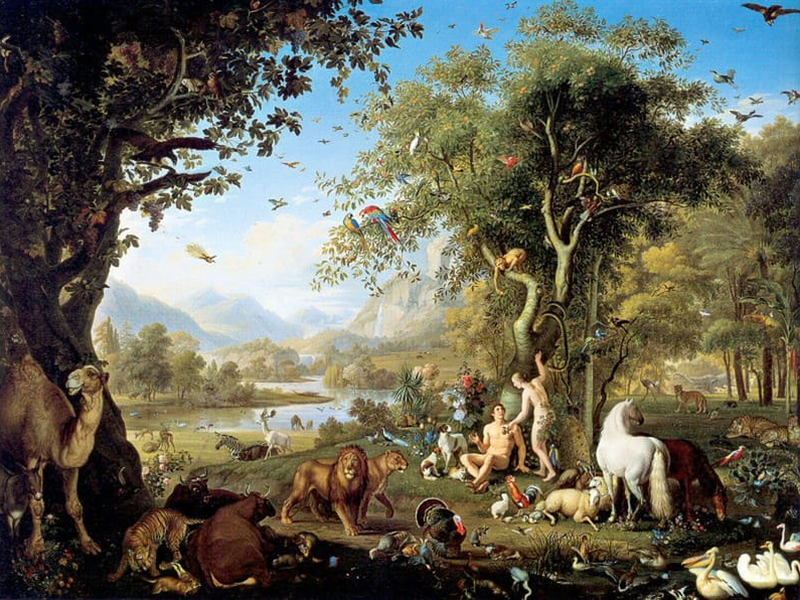
29994-adam-and-eve-in-the-garden-of-eden-800w-tn
Biblical Theology

Jesus in the Garden

Figure: Literary structure of the Garden narrative The Garden narrative describes God forming the adam , resting him in his presence, then provisioning for his appetites of food, vocation, and mate. It continues to describe a snake, the introduction of death, and humanity's expulsion from the garden. The pages of…

by Scott FairbanksJune 25, 2019

irenaeus-of-lyons-620x350
Christology

St. Irenaeus, the Beatific Vision, and the Instrumentalization of Creation

I’ve spent the last few years studying the theology of St. Irenaeus (d. circ. 200ad). In particular, I’ve been gripped by the way that Irenaeus consistently resisted the anti-body emphasis that emerged in later Christian theology. His eschatology is remarkably focused on the resurrection of the body, and the renewal…

by Gerald HiestandJune 18, 2019
aaron-burden-1ebsmyrau-s-unsplash
Exodus

The Light Before the Switch

Details of Jesus in Exodus 1:22-2:25 Although there are a great many Christ-types in the Old Testament, it is hard to overplay the obviousness of some that seem to necessarily rise to the top before others. One of these is Isaac, with his near sacrifice by his own father after…

by Eric RobinsonJune 11, 2019
thomas-habr-185321-unsplash
Biblical Theology

Characteristics of the Wicked City

What can we say about Cain's wicked sanctuary-city of Enoch? First that it was built with a brother's blood as its cornerstone. The Church is also built such, for Jesus was the younger brother of the whole Adamic race, slain by that company of older brothers because they hated Him.…

by James B. JordanJune 4, 2019
simon-caminada-107680-unsplash
Biblical Theology

Trees and Thorns

In Genesis 2:9 the ground brought forth trees good for food, delightful to view, and in two cases, life-giving or rule-bestowing. Adam, made of the ground (2:7), would by implication bring forth new trees, and thus trees and plants are among the symbols for human beings throughout the Bible. The…

by James B. JordanMay 28, 2019
annie-spratt-44241-unsplash
Biblical Theology

Trees for Food

One of the must fundamental teachings of the Bible and of the Christian religion is that man does not have life in himself. Man must get life from outside of himself, in order to maintain his life. The way this is done is through eating and drinking. Apart from life,…

by James B. JordanMay 21, 2019

Showing page 78 of 309

See all
See all

Objective/Subjective

McGrath notes that Augustine interpreted the genitive in the phrase “righteousness of God” in Rom 1 objectively, so that it was understood as the righteousness that God gives in saving sinners (in “making” them righteous). Ambrosiaster, as I pointed out in an earliet post, interpreted the genitive subjectively - the…

April 20, 2006

Old Perspective on Paul

Ambrosiaster writes, “Iustitia est Dei, quia quod promisit dedit, ideo credens hoc esse se consecutum quod promiserat Deus per prophetas suos, iustum Deum probat et testis est iustitiae eius” (PL, 17.56b). McGrath explains: “God, having promised to give salvation, subsequently gives it, and as a result is deemed to be…

April 20, 2006
History

Unfinished Reformation

Nevin wrote: “There is more a great deal in Christianity, I firmly believe, more in the idea of hte Holy Catholic Church, than has yet been attained, either in the way of knowledge or in the way of life, by the Protestant Reformation.”

April 20, 2006

Factitive Justification

There was a consensus among the theologians of Trent, McGrath argues, that justification was “factitive,” a view that excluded that “a sinner may be justified solely as a matter of reputation or imputation, while remaining a sinner in fact.” But of course that raises the question, What exactly is a…

April 20, 2006

True Lutherans

McGrath traces the odd development in Lutheran Orthodoxy of the notion that regeneration and faith precede justification in such a way that “where Luther had understood justification to concern the unbelieving sinner, orthodoxy revised this view, referring justification to the believing sinner.” This takes Lutheran Orthodoxy back in the direction…

April 20, 2006

Ontological change

McGrath notes, “While justification was universally understood to involve the regeneration of humanity, the opinion that an ontological change is thereby effected within humans is particularly associated with the period of High Scholasticism and the development of the concept of created grace. The earlier medieval theologians expressed the change effected…

April 20, 2006

Showing page 1854 of 2212

Browse by Category

In Medias Res

Your weekly digest for all things Theopolis.

Donate

Theopolis is nearly 100% donor-supported. Consider joining us on our mission.