Theopolis Logo

Writing

Explore our collection of theological essays, biblical studies, and reflections on faith and culture.

See all
max-kukurudziak-qbc3zmxw0g8-unsplash
History

Report from Ukraine

We lost Crimea. That is very clear. Putin proved he was not lying when he said he would place women and children ahead of his soldiers to storm Ukrainian military bases. Russian soldiers did exactly that with women (some who volunteered and some who were forced). Russia now occupies all…

by San SanychMarch 28, 2014

screenshot-2023-09-21-at-3-59-23-pm
Church Calendar

God Gone Silent

Sound is an indicator of life and energy. “Sound signals the present use of power, since sound must be in active production to exist at all.” Things don’t have to be alive to make themselves visible, and “a primitive hunter can see, feel, smell, and taste an elephant when the…

by Peter LeithartMarch 26, 2014
web-lead-image_final_dostoevsky
Books

Dostoevsky the Liberal

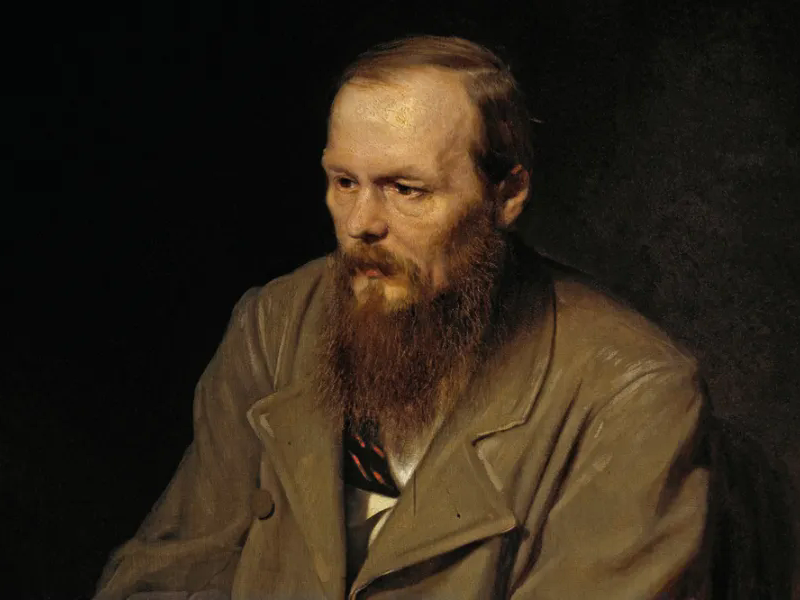
In the most famous section of his best-known novel, Dostoevsky’s Ivan Karamazov brings forward his case against God. He opens with a horrific litany of outrages against children. Turkish soldiers make a baby laugh and then shoot a pistol into his face. A little girl is beaten, thrashed, kicked by…

by Peter LeithartMarch 24, 2014
kelly-sikkema-ggs0_g6wi-i-unsplash
Epistemology

Subsidiary-Focal Integration and Liturgy

​At the heart of Esther Lightcap Meek's splendid ​Little Manual for Knowing is a concept she picked up from Michael Polanyi, "subsidiary-focal integration." The concept begins from the insight that all our knowing, all our experience, is double. We focus on something, but we are capable of "indwelling" that focal…

by Peter LeithartMarch 19, 2014
engin-akyurt-uz9qpvbol0e-unsplash
Revelation

White Stone

Jesus promises the overcomers of Pergamum "hidden manna" and a "white stone." The hidden manna is often linked with the manna stashed away in the ark of the covenant. The white stone has proved more elusive. Exodus tells us that manna was white (Exodus 16:31) and like bdellium (Numbers 11:7),…

by Peter LeithartMarch 17, 2014
226961fgsdl
Leviticus

A Theology of Festivity

Leviticus 23 begins with a reference to “Yahweh’s appointed times” ( mo’ade-YHWH ). Mo’ed is the common term for the feasts of Israel. A few dimensions to this term. First, it means “appointed time” or “designated time.” It is a time set by Yahweh. Yahweh has claimed certain times as…

by Peter LeithartMarch 12, 2014

Showing page 177 of 309

See all
See all
Theology

Time and the end of actions

Why should there be a final judgment when God judges in time? Aquinas answers: “Judgment on something changeable cannot be rendered fully before its consummation. Thus judgment cannot be rendered fully regarding the quality of any action before its completion, both in itself and its results, because many actions appear…

April 6, 2006

Observations on 2 Corinthians 1

1) Verse 4 moves from the affliction of the apostles (“our”) to the comfort of “those who are in any affliction.” This movement does not depend on any similarity or identity between the affliction of the apostles and the affliction of other sufferers (though cf. v. 6b). Members of the…

April 6, 2006
Philosophy

Descartes, Meditations

A few notes on Descartes, Meditations 1-2, with lots of help from Jean-Luc Marion. Descartes’s ego cogito, ergo sum is not, Marion points out, original, at least in its form. It has origins in Augustine, who offered this response to the skeptics: “I have no fear of the arguments of…

April 6, 2006

Copernican Revolution

Some scattered thoughts inspired by comments from Chris Schlect and Doug Wilson at a faculty discussion of de Lubac today: How is it that theologians (like Norman Shepherd, Steve Wilkins, Rich Lusk, and others) who want to expunge the notion of merit from theology get accused of being “neo-nomians” and…

April 5, 2006
Theology

Surnaturel and Protestantism

Milbank asks the intriguing question of whether de Lubac’s surnaturel thesis “rather deconstructs the terms of the Schleiermacher/Barth divide.” He appears to mean that the polarization of Schleiermacher’s “intrinicism” and Barth’s “extrinicisim” is dissolved by de Lubac’s Thomist understand of nature and grace. To adopt, for the moment, an idiom…

April 5, 2006

Against Yale

Milbank contrasts de Lubac’s advocacy of patristic and medieval hermeneutics, which insists that the allegorical fulfills and completes the literal, with the Yale school, which he sees as living in “the no-man’s land of ‘history-like narrative’ which at once abolishes real history and ignores the essential allegorical underpinning of Christian…

April 5, 2006

Showing page 1862 of 2212

Browse by Category

In Medias Res

Your weekly digest for all things Theopolis.

Donate

Theopolis is nearly 100% donor-supported. Consider joining us on our mission.