Theopolis Logo

Writing

Explore our collection of theological essays, biblical studies, and reflections on faith and culture.

See all
sixteen-miles-out-al48tflf4e8-unsplash
Food

Gluttony In The Bible (As Opposed To Gluttony In The American Church)

In the Bible, fatness is such a blessing, that it is especially hard to understand why wicked men are permitted to enjoy such a state. It requires a theodicy and faith in God. Thus: “For they have no pangs until death; their bodies are fat and sleek . They are…

by Mark HorneAugust 12, 2013

jeremy-yap-j39x2xx_8cq-unsplash
How to Worship

Biblical Worship (Video with James B. Jordan)

[fve]http://vimeo.com/71901553[/fve]

by Peter LeithartAugust 8, 2013
chris-bair-ndczc5739ck-unsplash
Deuteronomy

Holy Things for Holy People

The allusion to the Exodus story is contained in the first words of Deuteronomy 14:1 — “ye are the sons of Yahweh your God” — as well as in 14:2 in the use of the technical term translated “treasured possession,” “His own possession,” “peculiar people,” “precious people,” and so forth.…

by Ralph Allan SmithAugust 5, 2013
adam-and-eve-in-the-garden-of-eden-wenzel-peter
Deuteronomy

Forbidden Foods

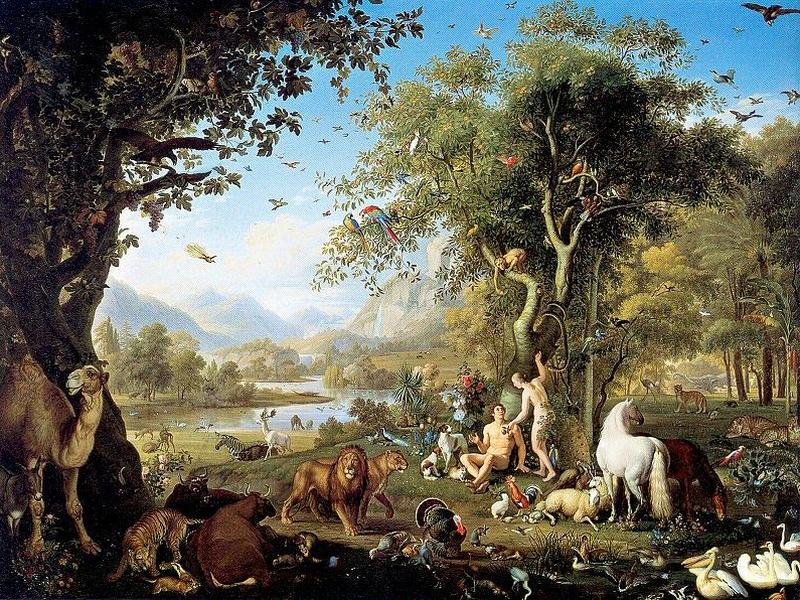
I have argued that Deuteronomy 14:1-21 is an independent literary unit that applies the Third Word to the lives of Israelites from the time of Moses and Joshua. In this short pericope, Moses suggests broad and deep meaning by means of literary allusion to the stories of the creation and…

by Ralph Allan SmithJuly 31, 2013
david-weber-fwuo_zluhnw-unsplash
How to Worship

Pro-Sacramental Reformation

In his recently republished The New Creation , the late, delightful Herbert McCabe defends the priesthood of the plebs as roundly as anyone could want. Citing Hebrews, he claims that "there is an essential difference between the Christian community and the community of the Old Law, or any other religious…

by Peter LeithartJuly 29, 2013
eric-ward-7kqe_8meex8-unsplash
Augustine

Sexual Idolatry

Augustine famously prayed, “Our hearts our restless until they rest in You.” True indeed. Being creatures, we inherently sense our ontological poverty—our innate condition of dependence—and are compelled to find a sense of security. And it is also true—as Augustine’s own narrative painfully illustrates—that one of the things we most…

by Gerald HiestandJuly 24, 2013

Showing page 190 of 309

See all
See all

Reformation Rhetoric

Peter Matheson ( Rhetoric of Reformation ) recognizes that polemic is “both necessary and useful” (8). It enables underdogs to gain a foothold, and “enables us to see things as they are. Its caricatures are nearer to the truth than the smooth rhetoric and facile images beloved of politician, businessman…

April 13, 2017

Ladder to Heaven

2 Chronicles 3-4, the Chronicler's account of the temple, uses the phrase “left and right” several times. Jachin and Boaz, the two pillars, are “left and right” at the porch (3:17). Ten basins are set up in two groups of five on the left and right of the court (4:6).…

April 12, 2017

The Pillars that Huram Built

In her study of Leviticus as Literature , Mary Douglas notes the “house that Jack built” quality of the Levitical descriptions of sacrifice. Priests put animal parts on the wood that is on the fire that is on the altar. Douglas takes this as a sign that Leviticus describes sacrifice…

April 11, 2017

Pollution and Purgation in the Reformation

I n a famous essay on “rites of violence” in sixteenth-century France, Natalie Zemon Davis argued that one motivation behind mob violence was the desire to purge “the community of dreaded pollution. The word ‘pollution' is often on the lips of the violent, and the concept serves well to sum…

April 11, 2017

Creating the Temple

T he Chronicler's account of the construction of Solomon's temple (2 Chronicles 3:1-5:1) follows the creation week of Genesis 1 in general and in specific details. In general, the account moves from a description of the dimensions, materials and adornments of the three zones of the temple (porch, palace, most…

April 10, 2017

Weber the Idealist

R obert Scribner doesn't think Protestantism “disenchanted” the world. Reformers did attack certain forms of medieval “magic.” They rejected “sacramentals,” which were “functional” rituals that could be used as protection against devils. This didn't produce a “buffered” world, impervious to outside influence. No one surpassed Luther in his obsession with…

April 7, 2017

Showing page 187 of 2212

Browse by Category

In Medias Res

Your weekly digest for all things Theopolis.

Donate

Theopolis is nearly 100% donor-supported. Consider joining us on our mission.