Theopolis Logo

Writing

Explore our collection of theological essays, biblical studies, and reflections on faith and culture.

See all
indiana-protests
American Politics

In Whom Do We Trust?

"Put not your trust in princes, in a son of man, in whom there is no salvation. When his breath departs, he returns to the earth; on that very day his plans perish. Blessed is he whose help is the God of Jacob, whose hope is in the Lord his…

by Gregory LaughlinMarch 31, 2015
macbeth
Literature

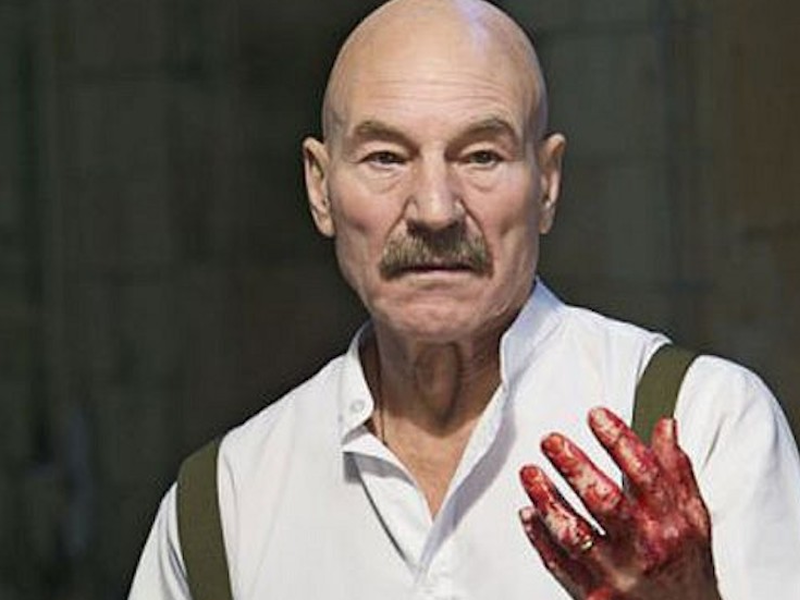
Macbeth and Nihilism

When it comes to the interpretation of Shakespeare, Harold Bloom is my favorite enemy. His writing is brilliant, his knowledge of things Shakespearean encyclopedic, and the insights he offers may puzzle, startle, or amaze, but they always educate. How then can he be an enemy? Because his anti-Christian bias is…

by Ralph Allan SmithMarch 31, 2015
london
Theopolis News

Theopolis in the UK

Theopolis President Peter Leithart spent the last week of March lecturing on worship and sacraments in England. He delivered four lectures on liturgy in Bolton, a town north of Manchester, arguing that Christian worship must be worship fit for the king and fit for the kingdom that has come in…

by TheopolisMarch 31, 2015
claudel-rheault-zvbv1aka-l4-unsplash
Creation

Heavenizing Earth: Eschatology in the Beginning

When we think about eschatology, we think immediately of Daniel, of Matthew 24-25, of 1 Corinthians 15 and 2 Thessalonians 2, and of course of Revelation. We don’t, I suspect, think about Genesis. Perhaps Genesis 3:15, with its promise of the woman’s seed, would come to mind. So might the…

by John BarachMarch 26, 2015
baptism
Baptism

Baptism as Exorcism

Alexander Schmemann in his book, Of Water and the Spirit, expounds the question that appears in nearly all the older baptismal liturgies, “Do you renounce the devil and all his works, the vain pomp and glory of the world and all sinful lusts of the flesh.” This renunciation, according to…

by Steve WilkinsMarch 24, 2015
day-2-ferguson-protests-nationwide
American Culture

Franklin Graham and the Problem of Reaction

Franklin Graham recently posted the following statement on his Facebook page: “Listen up—Blacks, Whites, Latinos, and everybody else. Most police shootings can be avoided. It comes down to respect for authority and obedience. If a police officer tells you to stop, you stop. If a police officer tells you to…

by A. K. ShaukuMarch 20, 2015

Showing page 157 of 309

See all
See all

Hypocrisy and Motive

W hen Jesus condemns hypocrisy, argues Oliver O'Donovan ( Desire of Nations , 109–10), He is speaking of conformity to “public expectation.” O'Donovan suggests that the sense is captured by the word “performance.” Jesus is not speaking of motives in the modern sense of the word: “A motive, as we…

April 7, 2017
Slavery

Abolition

W hy didn't the apostles move more quickly to protest and attempt to abolish slavery? There are various answers to that, but Oliver O'Donovan's gets to the heart of the issue: The church “believed that Christ had abolished it” ( Desire of Nations , 185). Of course, the church had…

April 7, 2017

Kulturkampf

P hilip Rieff notes, “That word [ Kulturkampf ] first appeared in common German use in the early 1870s during the struggle of the National Liberal political party to disarm by law the moral/educational authority, and political punditry, of a triumphalist Roman Catholic hierarchy, revitalized as it then was by…

April 6, 2017

Fences and Neighbors

K. Luria examines the Sacred Boundaries (xxvii–xxxxi) of early modern France, in an effort to correct extremes of historiography. Some have argued that sacred boundaries between religious groups led to violence; other historians have pointed to continuous interaction between Catholics and Protestants. Both are right. Symbolic boundaries separated Catholic and…

April 6, 2017

Building the Confessional State

A 1989 article by Wolfgang Reinhard on the relationships among the Reformation, Counter-Reformation, and early modern state-building is an excellent brief summary of the relationship between Reformation and post-Reformation “confessionalization” and the formation of modern states and national identities. The Reformers' turn to the state was in the first instance…

April 5, 2017

What Solomon Made

O verall, the Chronicler's account of Solomon's temple construction (2 Chronicles 3:1-5:1) is arranged chiastically: A. Solomon begins to build, 3:1-2 B. What Solomon made, 3:3-4:10 C. What Huram-abi made, 4:11-17 B’. What Solomon made, 4:18-22 A’. Solomon completes ( shalam ) work, 5:1 The long section in B is…

April 4, 2017

Showing page 189 of 2212

Browse by Category

In Medias Res

Your weekly digest for all things Theopolis.

Donate

Theopolis is nearly 100% donor-supported. Consider joining us on our mission.