
Theopolis Logo

Writing

Explore our collection of theological essays, biblical studies, and reflections on faith and culture.

See all
giammarco-zeh-ljawhtg-unsplash
Biblical Horizons

OPEN BOOK: Views and Reviews

Isaac E. Mozeson, The Word: The Dictionary that Reveals the Hebrew Sources of English (Northvale, NJ: Jacob Aaronson Inc., 1995), 310 pp. Reviewed by James B. Jordan. Once there was only one language in the world, the language God spoke to Adam. At the Tower of Babel, there came to…

by James B. JordanJune 28, 1996
tim-wildsmith-j6jv-mkdzqs-unsplash
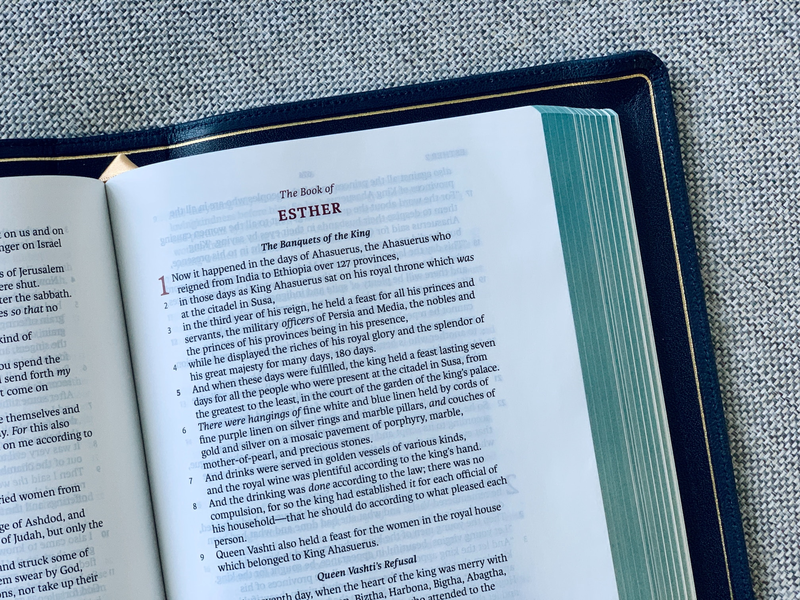
Esther

Esther: Historical & Chronological Comments (IV)

2. The Setting of the Book of Esther A. Xerxes (continued from previous issue) Ezra 6:14 says that the Jews finished building "according to the command of the God of Israel and the decree of Cyrus and Darius and Artaxerxes king of Persia." The problem with this verse is that…

by James B. JordanJune 28, 1996

ales-krivec-4mibe6zg5r0-unsplash
Acts

Jesus and Amalek

This essay goes with our previous study of the Amalek pattern back in Biblical Horizons No. 2. Since many do not have this essay, entitled "The Battle of Gog and Magog," let me cite the relevant paragraphs: Note in Genesis 12-15 that Abram moves into the land after escaping Pharaoh…

by James B. JordanJune 28, 1996

aaron-burden-1ebsmyrau-s-unsplash
Proverbs

The Strange Woman

Proverbs 7:6-23 is one of several passages early in the Proverbs in which Solomon warns his son about the wiles and dangers of the "strange woman." It is certainly quite proper to take these as straightforward warnings against sexual sins, and these are certainly warnings that need to be impressed…

by Peter LeithartJune 27, 1996
jan-kahanek-g3o5ztrk2e4-unsplash
Biblical Studies

Some Observations

1. In Luke 4:20 we read that after Jesus finished reading from Isaiah, "the eyes of all in the synagogue were fixed upon Him." This is usually taken in a psychological sense: They were amazed at Jesus somehow. I suggest that, as always, a merely psychological reading is a modern…

by James B. JordanMay 28, 1996
tim-wildsmith-j6jv-mkdzqs-unsplash
Esther

Esther: Historical & Chronological Comments (III)

2. The Setting of the Book of Esther Up to now we have assumed what we must prove, that the king in Esther is Darius the Great. While Biblical chronologists have usually taken this position, commentators on the book of Esther have often taken others as the king. One view,…

by James B. JordanMay 28, 1996

Showing page 265 of 309

See all
See all
Philosophy

Collapsing Foundationalisms

Wells quotes from British sociologist Anthony Giddens , who argues that postmodernism is not so much a rejection of modern foundationalism as “unmasking what has been hidden in the modern.” In classic Enlightenment foundationalism, reason is self-grounded, and faith in reason is a dogmatic faith. For consistency’s sake, Enlightenment thinkers…

December 23, 2005
Theology

David Wells on Pomo

Like many of David Wells ‘s books, I’ve find his recent Above All Earthly Pow’rs simultaneously bracing, stimulating, and frustrating. Wells examines the consequences of the confluence of two main cultural trends - the postmodern ethos and the increasingly pluralistic religious situation of the West. He makes many good points:…

December 23, 2005

Moses in 1-2 Kings

Moses is mentioned 10 times in Kings, and there are some tantalizing connections with the 10 Words that Moses delivered to Israel. For instance: 1. 1 Kings 2:3: David exhorts Solomon to guard the Lord’s commandments and walk in his ways, using a 7fold description of the law. This is…

December 23, 2005

Homo Creator

In his 1607 treatise, Idea of Painters, Sculptors, and Architects , the painter Federigo Zuccaro claimed that human being was creative being: “Because of His goodness and to show in a small replica the excellence of his divine art, [God] having created man in His image and likeness with respect…

December 22, 2005
History

Augustine and the Renaissance Self

William Bouwsma points out in his book on the “waning of the Renaissance” that the Renaissance challenged what he calls the “traditional conception of the self,” in which reason sits at the top of a hierarchy of discrete faculties, including will, passions, and body. The challenge to this conception during…

December 22, 2005
Theology

Frame on McLaren

John Frame has a typically gracious though critical review of Brian McLaren ‘s Generous Orthodoxy in the current issue of Reformation and Revival Journal. Frame appreciates a number of the concerns that animate McLaren (learning from other Christian traditions, the missional concept of the church, a hermeneutic of love, among…

December 21, 2005

Showing page 1909 of 2212

Browse by Category

In Medias Res

Your weekly digest for all things Theopolis.

Donate

Theopolis is nearly 100% donor-supported. Consider joining us on our mission.