Theopolis Logo

Writing

Explore our collection of theological essays, biblical studies, and reflections on faith and culture.

See all
tanner-mardis-xuxghzhibn4-unsplash-1-2
Biblical Studies

Tweets-turned-Notes on the Bible’s Chronology

Summary In what follows, I will consider the “year-stamps” employed in Scripture, i.e., statements of the form, “Such-and-such an event took place in the Xth year of Y.” In the process, I will suggest some ways in which the Biblical narrative might relate to events in the extra-Biblical world, though…

by James BejonJuly 16, 2019
durer-prodigal-son-2
Luke

Perspectives on the Prodigal, (Part 2)

In the first essay on the parable of the Prodigal Son, I suggested that the problems commentators and others encounter in interpreting Jesus three-part parable are not accidental. These are not just problems in our ignorance of cultural background. They are intentional features of the stories —stories designed to poke…

by Ralph Allan SmithJuly 11, 2019
durer-prodigal-son-2
Luke

Perspectives on the Prodigal, (Part 1)

The story of the Prodigal Son is perhaps the most well-known story in the Bible. As others have observed, it may also be one of the most misunderstood. In two short essays, I will point out features of this story that are commonly neglected, aspects of Jesus’ parable that might…

by Ralph Allan SmithJuly 9, 2019
de-rijke-man-en-de-arme-lazarus-by-jacopo-da-ponte-16th-century
Luke

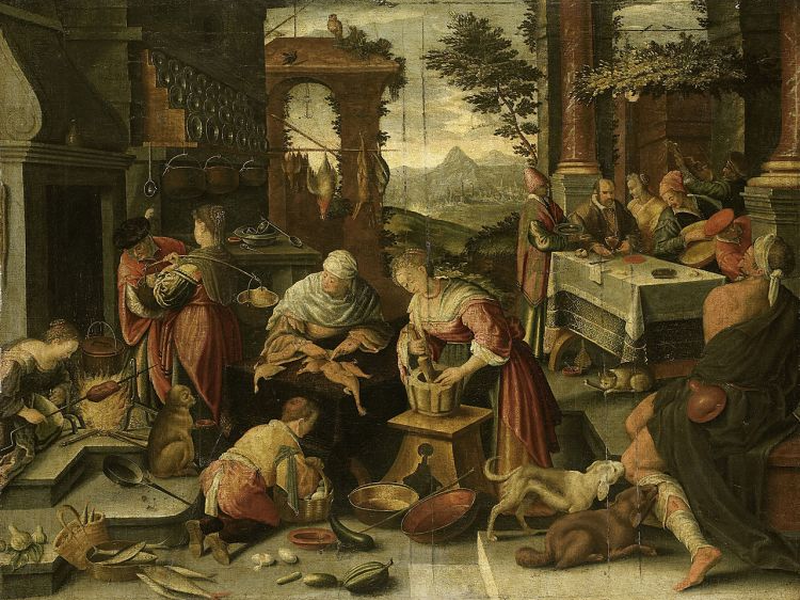
Lazarus and the Rich Man

The parable of Lazarus and the nameless rich man is not an independent story. It is part of a long context that begins in Luke 15:1, where Jesus is eating with tax collectors and sinners and the scribes and Pharisees grumble. In response to their hardheartedness, Jesus tells a three-part…

by Ralph Allan SmithJuly 4, 2019
aaron-burden-uynrnfdkjwg-unsplash
Luke

Everybody has Dropsy - Luke 14:1-24

The Bible is written so that even when a reader cannot pick up on what might be deeper or more detailed aspects of a text, there is virtually always a message to be heard. In the ancient world, where the “reader” of Scripture would likely be a church official facing…

by Ralph Allan SmithJuly 2, 2019
communion
Biblical Theology

Fruit Trees and Grain Plants

The distinction between garden (or vineyard) and field begins in Genesis 2. This relates to the ordering of the formless world. Plants of the field are contrasted with the garden planted by God in Genesis 2:5&8. Later on, under the Old Covenant the Israelites will be required to keep their…

by James B. JordanJune 27, 2019

Showing page 77 of 309

See all
See all
Philosophy

Collapsing Foundationalisms

Wells quotes from British sociologist Anthony Giddens , who argues that postmodernism is not so much a rejection of modern foundationalism as “unmasking what has been hidden in the modern.” In classic Enlightenment foundationalism, reason is self-grounded, and faith in reason is a dogmatic faith. For consistency’s sake, Enlightenment thinkers…

December 23, 2005
Theology

David Wells on Pomo

Like many of David Wells ‘s books, I’ve find his recent Above All Earthly Pow’rs simultaneously bracing, stimulating, and frustrating. Wells examines the consequences of the confluence of two main cultural trends - the postmodern ethos and the increasingly pluralistic religious situation of the West. He makes many good points:…

December 23, 2005

Moses in 1-2 Kings

Moses is mentioned 10 times in Kings, and there are some tantalizing connections with the 10 Words that Moses delivered to Israel. For instance: 1. 1 Kings 2:3: David exhorts Solomon to guard the Lord’s commandments and walk in his ways, using a 7fold description of the law. This is…

December 23, 2005

Homo Creator

In his 1607 treatise, Idea of Painters, Sculptors, and Architects , the painter Federigo Zuccaro claimed that human being was creative being: “Because of His goodness and to show in a small replica the excellence of his divine art, [God] having created man in His image and likeness with respect…

December 22, 2005
History

Augustine and the Renaissance Self

William Bouwsma points out in his book on the “waning of the Renaissance” that the Renaissance challenged what he calls the “traditional conception of the self,” in which reason sits at the top of a hierarchy of discrete faculties, including will, passions, and body. The challenge to this conception during…

December 22, 2005
Theology

Frame on McLaren

John Frame has a typically gracious though critical review of Brian McLaren ‘s Generous Orthodoxy in the current issue of Reformation and Revival Journal. Frame appreciates a number of the concerns that animate McLaren (learning from other Christian traditions, the missional concept of the church, a hermeneutic of love, among…

December 21, 2005

Showing page 1909 of 2212

Browse by Category

In Medias Res

Your weekly digest for all things Theopolis.

Donate

Theopolis is nearly 100% donor-supported. Consider joining us on our mission.