Theopolis Logo

Writing

Explore our collection of theological essays, biblical studies, and reflections on faith and culture.

See all
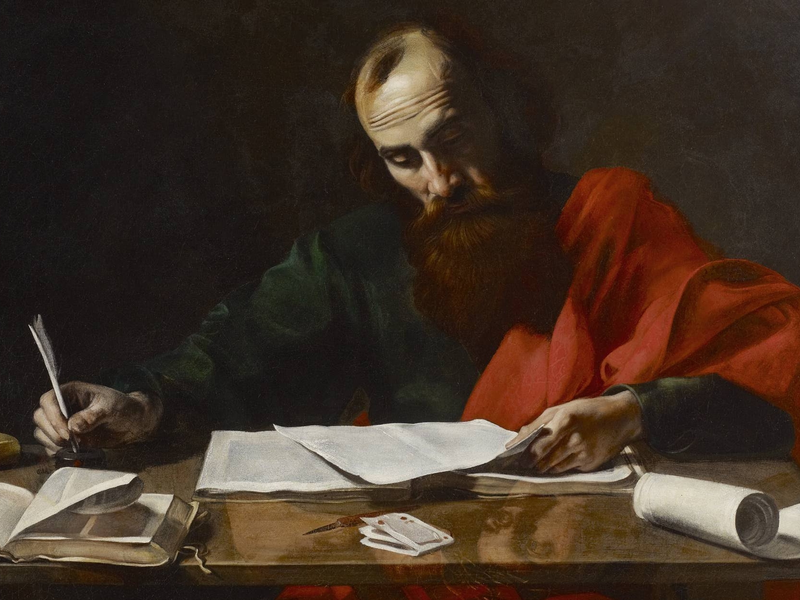
13071-probablyvalentindeboulogne-saintpaulwritinghi-1
1 Corinthians

The Great Exchange: Understanding Second Corinthians 5.21

He made Him who knew no sin to be sin on our behalf, that we might become the righteousness of God in Him. My argument is simple: What Paul means in writing the quotation above in context is the same as what he was telling the Ephesians when he wrote,…

by Mark HorneJune 7, 2004

ben-white-w8qqn1pmqh0-unsplash
Biblical Theology

What is Biblical Theology (Part 3) : The Art of Biblical Theology

THE ART OF BIBLICAL THEOLOGY IN PRACTICE: INTERTEXTUALITY AND TWO PAULINE CASE STUDIES The Art of Biblical Theology: Intertextuality Biblical Theology is really an art. Like other skills of this sort, it is not a matter of following rules (though there are certainly guidelines and techniques). Rather, it’s matter of…

by Rich LuskJune 6, 2004
malcolm-lightbody-tc2f02iq8le-unsplash
Biblical Theology

What is Biblical Theology: (Part 2) The Christotelic Spiral

Click HERE for Part 1 Reading Christotelically Jesus Christ is the heart of God’s plan for creation and history. There is no “hidden plan” or “hidden God” lurking behind Christ; rather, in and through Christ God has revealed himself and his intentions towards the world. In Christ, the Father has…

by Rich LuskJune 6, 2004
aaron-burden-qjdzyt_k8xg-unsplash
Biblical Studies

What is Biblical Theology? (Part 1)

STORY THEOLOGY AND A THEOLOGY OF STORY Defining Biblical Theology What is Biblical Theology? How does it compare to other ways of doing theology, such as Systematic Theology? Geerhardus Vos suggested that whereas Biblical Theology draws a line, Systematic Theology draws a circle. That is to say, Biblical Theology is…

by Rich LuskJune 6, 2004
screenshot-2023-09-21-at-3-59-23-pm
Hebrews

Living by His Faith: Some Rough Thoughts on the Faithfulness of Christ

The gospels strongly imply Jesus lived by faith in the promise of his heavenly Father. How else can his prayer life understood? How else could he have wrestled through the Gethsemane experience? How else could he have committed himself into his Father’s care at death? How could Jesus have presented…

by Rich LuskJune 6, 2004
sixteen-miles-out-al48tflf4e8-unsplash
John

John 3:16

John 3:16 is probably best-known, or at least, best-liked Bible passage in North America: “For God so loved the world, that he gave his only Son, that whoever believes in him should not perish but have eternal life.” This declaration of God’s love of the whole world is greatly comforting…

by Mark HorneJune 6, 2004

Showing page 223 of 309

See all
See all
History

Calvin’s Theocracy

Lindberg points out that “Calvin’s Protestant contemporaries did not view Geneva as a vengeful theocracy. Thousands of religious refugees flocked to Geneva from nearly every province in France, as well as from England, Scotland, Holland, Italy, Spain, Germany, Poland, and Bohemia. When they returned hom, they took Calvinism with them.”…

December 9, 2005
History

Monks and culture

Lindberg summarizes the important, if sometimes inadvertent, cultural contributions of monasticism: “Monastic culture was not limited to copying texts from the past, but also engaged in a variety of intellectual pursuits related to monastic life. These included maintaining a liturgical calendar; mathematics for managing estates; calculations for determining times of…

December 9, 2005
Theology

Typology of heresy

In his recent Brief History of Christianity , Carter Lindberg suggests that “orthodoxy is the language that preserves the promise character of the gospel, that salvation is received from God, not achieved by humans.” By contrast, “heresy is the language that in one way or another vitiates the promise of…

December 9, 2005

Eschatological Vindication

In his book on the work of Christ, Robert Letham has this neat summary of the relation of present to future justification: “faith has an eschatological side to it. Paul can say we are justified by faith (Rom. 5:1) but he can equally talk of our being saved in hope…

December 7, 2005
Literature

Shield of Aeneas

Philip Hardie argues that the shield of Aeneas in Virgil’s Aeneid makes significant use not only of the Homeric description of the shield of Achilles but of ancient allegorizations of Homer’s description: “The central feature of ancient exegesis is its insistence that the great circle of the Shield of Achilles,…

December 7, 2005
Philosophy

Aesthetics and counter-modern philosophy

Andrew Bowie’s *Aesthetics and subjectivity from Kant to Nietzsche* emphasizes the role of aesthetic theory in the development of post-Kantian notions of the subject. He points out that some philosophers challenged Cartesian and Kantian views by direct appeal to aesthetic experience: “these theories . . . regard the experience of…

December 6, 2005

Showing page 1915 of 2212

Browse by Category

In Medias Res

Your weekly digest for all things Theopolis.

Donate

Theopolis is nearly 100% donor-supported. Consider joining us on our mission.