Theopolis Logo

Writing

Explore our collection of theological essays, biblical studies, and reflections on faith and culture.

See all
tanner-mardis-xuxghzhibn4-unsplash-1-2
Biblical Studies

Tweets-turned-Notes on the Bible’s Chronology

Summary In what follows, I will consider the “year-stamps” employed in Scripture, i.e., statements of the form, “Such-and-such an event took place in the Xth year of Y.” In the process, I will suggest some ways in which the Biblical narrative might relate to events in the extra-Biblical world, though…

by James BejonJuly 16, 2019
durer-prodigal-son-2
Luke

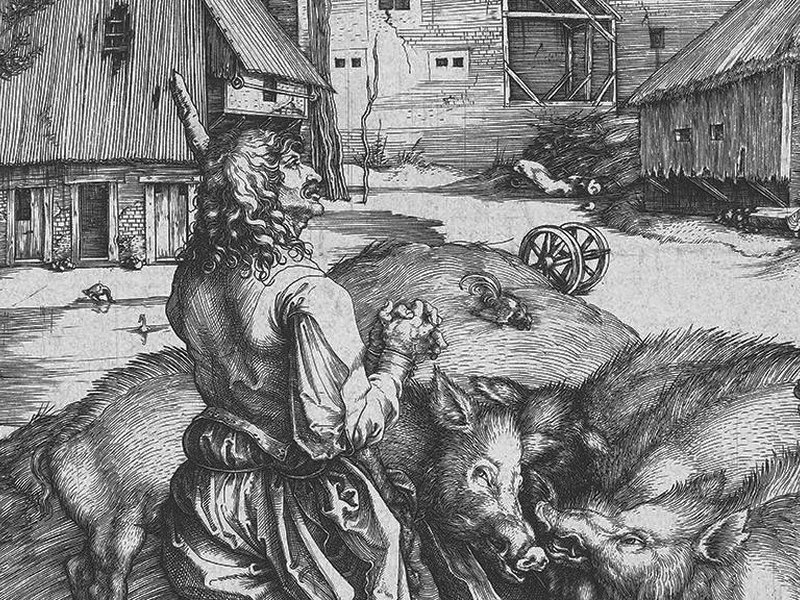
Perspectives on the Prodigal, (Part 2)

In the first essay on the parable of the Prodigal Son, I suggested that the problems commentators and others encounter in interpreting Jesus three-part parable are not accidental. These are not just problems in our ignorance of cultural background. They are intentional features of the stories —stories designed to poke…

by Ralph Allan SmithJuly 11, 2019
durer-prodigal-son-2
Luke

Perspectives on the Prodigal, (Part 1)

The story of the Prodigal Son is perhaps the most well-known story in the Bible. As others have observed, it may also be one of the most misunderstood. In two short essays, I will point out features of this story that are commonly neglected, aspects of Jesus’ parable that might…

by Ralph Allan SmithJuly 9, 2019
de-rijke-man-en-de-arme-lazarus-by-jacopo-da-ponte-16th-century
Luke

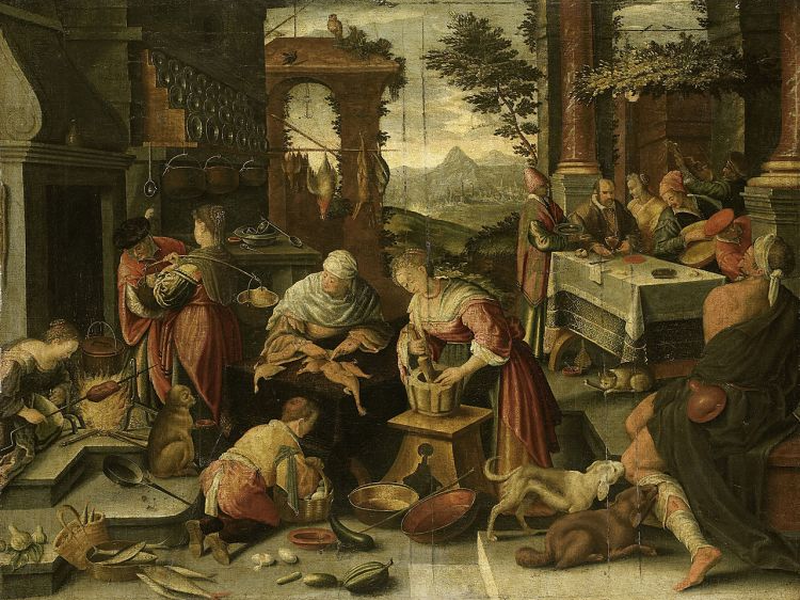
Lazarus and the Rich Man

The parable of Lazarus and the nameless rich man is not an independent story. It is part of a long context that begins in Luke 15:1, where Jesus is eating with tax collectors and sinners and the scribes and Pharisees grumble. In response to their hardheartedness, Jesus tells a three-part…

by Ralph Allan SmithJuly 4, 2019
aaron-burden-uynrnfdkjwg-unsplash
Luke

Everybody has Dropsy - Luke 14:1-24

The Bible is written so that even when a reader cannot pick up on what might be deeper or more detailed aspects of a text, there is virtually always a message to be heard. In the ancient world, where the “reader” of Scripture would likely be a church official facing…

by Ralph Allan SmithJuly 2, 2019
communion
Biblical Theology

Fruit Trees and Grain Plants

The distinction between garden (or vineyard) and field begins in Genesis 2. This relates to the ordering of the formless world. Plants of the field are contrasted with the garden planted by God in Genesis 2:5&8. Later on, under the Old Covenant the Israelites will be required to keep their…

by James B. JordanJune 27, 2019

Showing page 77 of 309

See all
See all
History

Calvin’s Theocracy

Lindberg points out that “Calvin’s Protestant contemporaries did not view Geneva as a vengeful theocracy. Thousands of religious refugees flocked to Geneva from nearly every province in France, as well as from England, Scotland, Holland, Italy, Spain, Germany, Poland, and Bohemia. When they returned hom, they took Calvinism with them.”…

December 9, 2005
History

Monks and culture

Lindberg summarizes the important, if sometimes inadvertent, cultural contributions of monasticism: “Monastic culture was not limited to copying texts from the past, but also engaged in a variety of intellectual pursuits related to monastic life. These included maintaining a liturgical calendar; mathematics for managing estates; calculations for determining times of…

December 9, 2005
Theology

Typology of heresy

In his recent Brief History of Christianity , Carter Lindberg suggests that “orthodoxy is the language that preserves the promise character of the gospel, that salvation is received from God, not achieved by humans.” By contrast, “heresy is the language that in one way or another vitiates the promise of…

December 9, 2005

Eschatological Vindication

In his book on the work of Christ, Robert Letham has this neat summary of the relation of present to future justification: “faith has an eschatological side to it. Paul can say we are justified by faith (Rom. 5:1) but he can equally talk of our being saved in hope…

December 7, 2005
Literature

Shield of Aeneas

Philip Hardie argues that the shield of Aeneas in Virgil’s Aeneid makes significant use not only of the Homeric description of the shield of Achilles but of ancient allegorizations of Homer’s description: “The central feature of ancient exegesis is its insistence that the great circle of the Shield of Achilles,…

December 7, 2005
Philosophy

Aesthetics and counter-modern philosophy

Andrew Bowie’s *Aesthetics and subjectivity from Kant to Nietzsche* emphasizes the role of aesthetic theory in the development of post-Kantian notions of the subject. He points out that some philosophers challenged Cartesian and Kantian views by direct appeal to aesthetic experience: “these theories . . . regard the experience of…

December 6, 2005

Showing page 1915 of 2212

Browse by Category

In Medias Res

Your weekly digest for all things Theopolis.

Donate

Theopolis is nearly 100% donor-supported. Consider joining us on our mission.