Theopolis Logo

Writing

Explore our collection of theological essays, biblical studies, and reflections on faith and culture.

See all
tanner-mardis-xuxghzhibn4-unsplash-1-2
Biblical Studies

Tweets-turned-Notes on the Bible’s Chronology

Summary In what follows, I will consider the “year-stamps” employed in Scripture, i.e., statements of the form, “Such-and-such an event took place in the Xth year of Y.” In the process, I will suggest some ways in which the Biblical narrative might relate to events in the extra-Biblical world, though…

by James BejonJuly 16, 2019
durer-prodigal-son-2
Luke

Perspectives on the Prodigal, (Part 2)

In the first essay on the parable of the Prodigal Son, I suggested that the problems commentators and others encounter in interpreting Jesus three-part parable are not accidental. These are not just problems in our ignorance of cultural background. They are intentional features of the stories —stories designed to poke…

by Ralph Allan SmithJuly 11, 2019
durer-prodigal-son-2
Luke

Perspectives on the Prodigal, (Part 1)

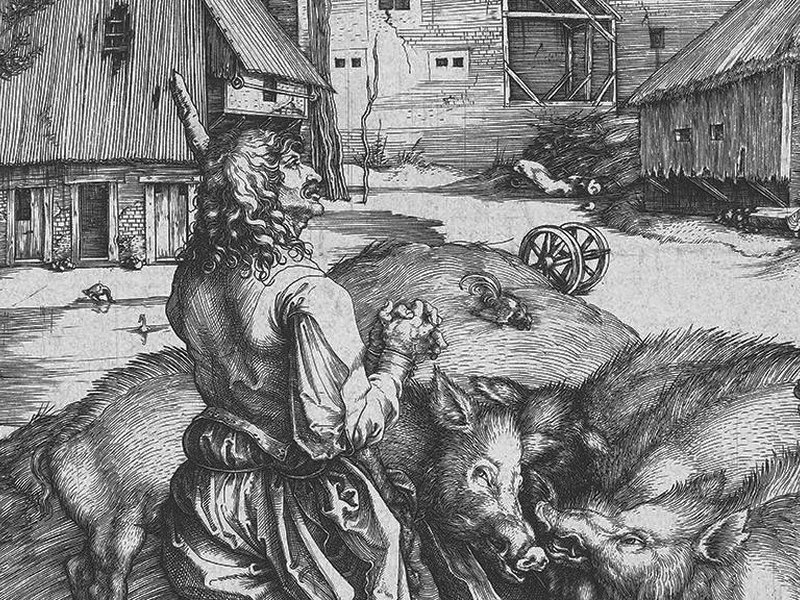
The story of the Prodigal Son is perhaps the most well-known story in the Bible. As others have observed, it may also be one of the most misunderstood. In two short essays, I will point out features of this story that are commonly neglected, aspects of Jesus’ parable that might…

by Ralph Allan SmithJuly 9, 2019
de-rijke-man-en-de-arme-lazarus-by-jacopo-da-ponte-16th-century
Luke

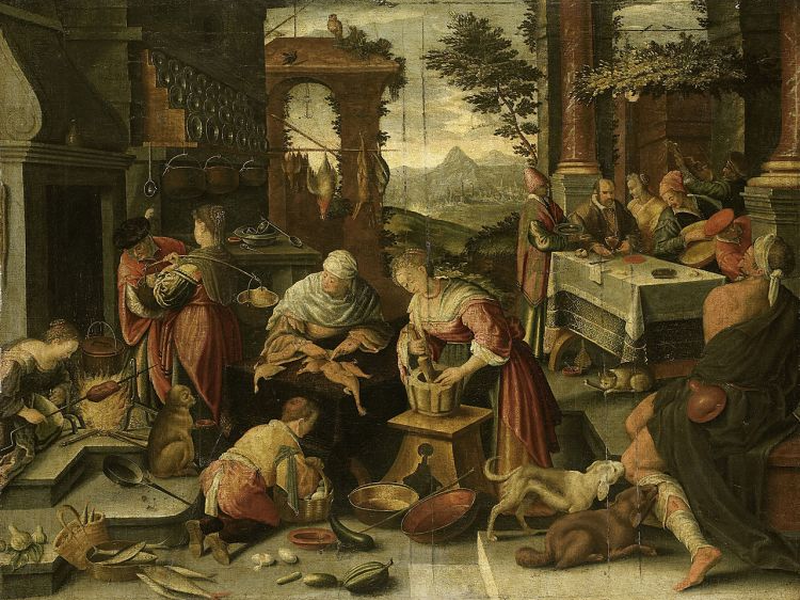
Lazarus and the Rich Man

The parable of Lazarus and the nameless rich man is not an independent story. It is part of a long context that begins in Luke 15:1, where Jesus is eating with tax collectors and sinners and the scribes and Pharisees grumble. In response to their hardheartedness, Jesus tells a three-part…

by Ralph Allan SmithJuly 4, 2019
aaron-burden-uynrnfdkjwg-unsplash
Luke

Everybody has Dropsy - Luke 14:1-24

The Bible is written so that even when a reader cannot pick up on what might be deeper or more detailed aspects of a text, there is virtually always a message to be heard. In the ancient world, where the “reader” of Scripture would likely be a church official facing…

by Ralph Allan SmithJuly 2, 2019
communion
Biblical Theology

Fruit Trees and Grain Plants

The distinction between garden (or vineyard) and field begins in Genesis 2. This relates to the ordering of the formless world. Plants of the field are contrasted with the garden planted by God in Genesis 2:5&8. Later on, under the Old Covenant the Israelites will be required to keep their…

by James B. JordanJune 27, 2019

Showing page 77 of 309

See all
See all

Proverbs 11:1-8

INTRODUCTION This section of Proverbs 11 highlights several issues. The first two verses treat issues of honesty and dishonesty; verses 3-8 describe the security of the righteous. Verses 9-14 return to various concerns regarding the use of the tongue, which was a theme of the previous chapter. HONESTY AND HUMILITY…

November 4, 2005

Race in the South

James C. Cobb cites revealing statistics concerning the self-identification of blacks in the South: “In 1964, only 55 percent of southern black respondents expressed ‘warm’ feelings toward southerners, as opposed to nearly 90 percent of the southern white polled. By 1976, however, the proportion of southern blacks who expressed this…

November 4, 2005
History

Dynamo and virgin

Modernism, critic Richard Lehan writes, was built on the conception that the world was caught in a conflict between organicism and mechanism, between the feminine and masculine, or, as Henry Adams put it, between the dynamo and the virgin. Modernist writers can be classified by their responses to this division:…

November 3, 2005

Shared Nakedness

Leviticus 18 describes sexual sin as occasions of exposure, as “uncovering nakedness.” At times, the nakedness is not only an individual’s, but is shared. The reason given for the prohibition of maternal incest in Lev 18:8 is that the mother’s nakedness is the “father’s nakedness.” This makes sense: In the…

November 3, 2005
Biblical Studies

Scripture and Tradition

Patrick Henry Reardon writes concerning the use of “tradition” in the NT (2 Thes 2:15 especially): “In this respect it is important, I believe, not to interject into Paul’s formula a later controversy between the Protestants and the Council of Trent. We observe that Paul does not distinguish between ‘Scripture…

November 3, 2005

Gunton on Genesis 1

In his Triune Creator, Colin Gunton offers this “argument” against reading Gen 1 as an account of six literal days of divine activity: “the sophistication and complexity of the writings make it clear that the authors, and that includes those who wrote the books in their canonical form, exclude -…

November 2, 2005

Showing page 1929 of 2212

Browse by Category

In Medias Res

Your weekly digest for all things Theopolis.

Donate

Theopolis is nearly 100% donor-supported. Consider joining us on our mission.