Theopolis Logo

Writing

Explore our collection of theological essays, biblical studies, and reflections on faith and culture.

See all
tanner-mardis-xuxghzhibn4-unsplash-1-2
Biblical Studies

Tweets-turned-Notes on the Bible’s Chronology

Summary In what follows, I will consider the “year-stamps” employed in Scripture, i.e., statements of the form, “Such-and-such an event took place in the Xth year of Y.” In the process, I will suggest some ways in which the Biblical narrative might relate to events in the extra-Biblical world, though…

by James BejonJuly 16, 2019
durer-prodigal-son-2
Luke

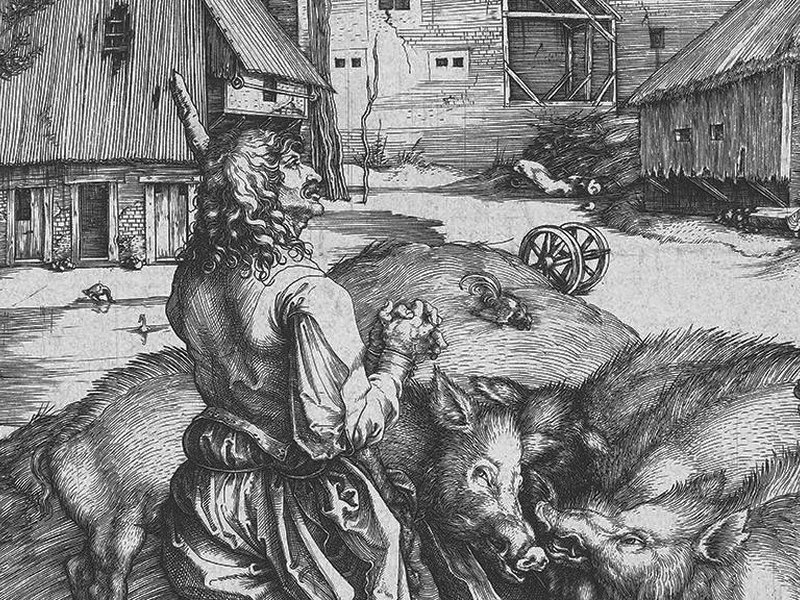
Perspectives on the Prodigal, (Part 2)

In the first essay on the parable of the Prodigal Son, I suggested that the problems commentators and others encounter in interpreting Jesus three-part parable are not accidental. These are not just problems in our ignorance of cultural background. They are intentional features of the stories —stories designed to poke…

by Ralph Allan SmithJuly 11, 2019
durer-prodigal-son-2
Luke

Perspectives on the Prodigal, (Part 1)

The story of the Prodigal Son is perhaps the most well-known story in the Bible. As others have observed, it may also be one of the most misunderstood. In two short essays, I will point out features of this story that are commonly neglected, aspects of Jesus’ parable that might…

by Ralph Allan SmithJuly 9, 2019
de-rijke-man-en-de-arme-lazarus-by-jacopo-da-ponte-16th-century
Luke

Lazarus and the Rich Man

The parable of Lazarus and the nameless rich man is not an independent story. It is part of a long context that begins in Luke 15:1, where Jesus is eating with tax collectors and sinners and the scribes and Pharisees grumble. In response to their hardheartedness, Jesus tells a three-part…

by Ralph Allan SmithJuly 4, 2019
aaron-burden-uynrnfdkjwg-unsplash
Luke

Everybody has Dropsy - Luke 14:1-24

The Bible is written so that even when a reader cannot pick up on what might be deeper or more detailed aspects of a text, there is virtually always a message to be heard. In the ancient world, where the “reader” of Scripture would likely be a church official facing…

by Ralph Allan SmithJuly 2, 2019
communion
Biblical Theology

Fruit Trees and Grain Plants

The distinction between garden (or vineyard) and field begins in Genesis 2. This relates to the ordering of the formless world. Plants of the field are contrasted with the garden planted by God in Genesis 2:5&8. Later on, under the Old Covenant the Israelites will be required to keep their…

by James B. JordanJune 27, 2019

Showing page 77 of 309

See all
See all

Nevin on the church

A couple of quotations from Hart’s biography of Nevin: “The force of the question in the end is nothing less than this, whether the original catholic doctrine concerning the Church, as it stood in universal authority through all ages before the Reformation, is to be received and held still as…

October 28, 2005

Calvinism and Chosenness

John Milbank’s opening essay in the recently-released Radical Orthodoxy and the Reformed Tradition (edited by James KA Smith and James Olthuis) is a challenging critique of Calvin and the Reformed tradition, one that I hope to interact with more in the future. One particularly striking passage had to do with…

October 28, 2005

Trickster God

Yahweh is the trickster God of 1-2 Kings. He tricks the Moabites into thinking that the three kings have slaughtered each other (2 Kings 3), and Israel rises from their camp and slaughters them. He tricks the Arameans in the opposite way: chasing them away from their camp so that…

October 28, 2005

Delayed Parousia

Why the delay of judgment throughout 1-2 Kings? Two reasons: First, judgment is passed, but Yahweh waits for the sin of the Amorites to come to completion, for sin to ripen to be utterly sinful. Second, Yahweh gives time for the declaration of judgment to work repentance among a remnant.…

October 28, 2005

Before kings, before prophets

Another aspect of the “satire” of royal power in 1-2 Kings comes out when we examine scenes of womena appealing for help before an authority. Early in Kings, women appeal to Kings and receive what they need (Bath-sheba and David; prostitutes and Solomon). Sheba is overwhelmed by Solomon’s kingdom. For…

October 27, 2005

Geography of Elijah and Elisha

Why does Yahweh send two prophets to the Omrides? Two witnesses no doubt. But their ministries are so similar in many respects; why double it? And what, if any, are the differences between them? One difference is geography. Elijah spends a good bit of the narrative on the far side…

October 27, 2005

Showing page 1931 of 2212

Browse by Category

In Medias Res

Your weekly digest for all things Theopolis.

Donate

Theopolis is nearly 100% donor-supported. Consider joining us on our mission.