Theopolis Logo

Writing

Explore our collection of theological essays, biblical studies, and reflections on faith and culture.

See all
tanner-mardis-xuxghzhibn4-unsplash-1-2
Biblical Studies

Tweets-turned-Notes on the Bible’s Chronology

Summary In what follows, I will consider the “year-stamps” employed in Scripture, i.e., statements of the form, “Such-and-such an event took place in the Xth year of Y.” In the process, I will suggest some ways in which the Biblical narrative might relate to events in the extra-Biblical world, though…

by James BejonJuly 16, 2019
durer-prodigal-son-2
Luke

Perspectives on the Prodigal, (Part 2)

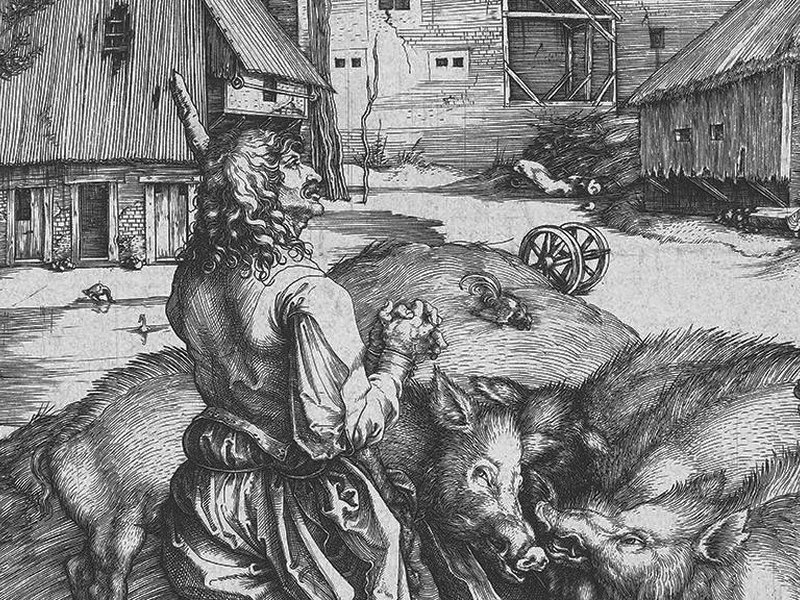
In the first essay on the parable of the Prodigal Son, I suggested that the problems commentators and others encounter in interpreting Jesus three-part parable are not accidental. These are not just problems in our ignorance of cultural background. They are intentional features of the stories —stories designed to poke…

by Ralph Allan SmithJuly 11, 2019
durer-prodigal-son-2
Luke

Perspectives on the Prodigal, (Part 1)

The story of the Prodigal Son is perhaps the most well-known story in the Bible. As others have observed, it may also be one of the most misunderstood. In two short essays, I will point out features of this story that are commonly neglected, aspects of Jesus’ parable that might…

by Ralph Allan SmithJuly 9, 2019
de-rijke-man-en-de-arme-lazarus-by-jacopo-da-ponte-16th-century
Luke

Lazarus and the Rich Man

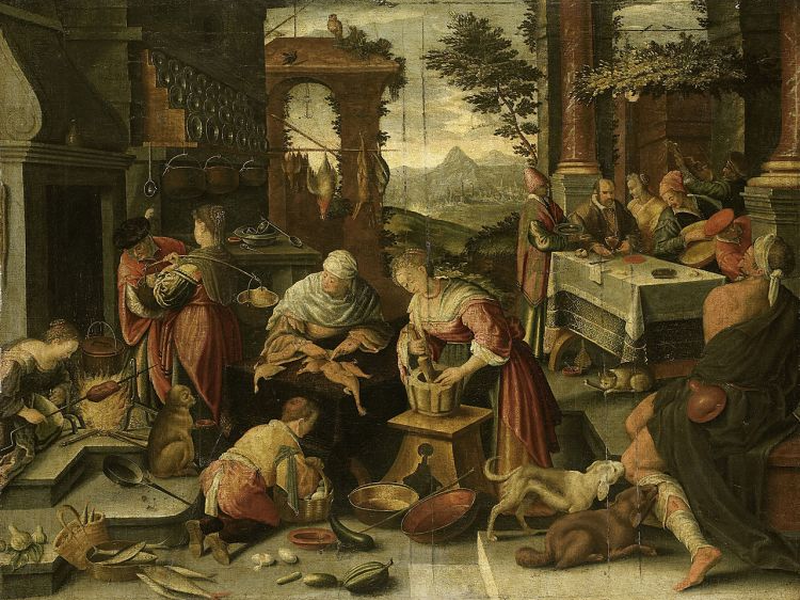
The parable of Lazarus and the nameless rich man is not an independent story. It is part of a long context that begins in Luke 15:1, where Jesus is eating with tax collectors and sinners and the scribes and Pharisees grumble. In response to their hardheartedness, Jesus tells a three-part…

by Ralph Allan SmithJuly 4, 2019
aaron-burden-uynrnfdkjwg-unsplash
Luke

Everybody has Dropsy - Luke 14:1-24

The Bible is written so that even when a reader cannot pick up on what might be deeper or more detailed aspects of a text, there is virtually always a message to be heard. In the ancient world, where the “reader” of Scripture would likely be a church official facing…

by Ralph Allan SmithJuly 2, 2019
communion
Biblical Theology

Fruit Trees and Grain Plants

The distinction between garden (or vineyard) and field begins in Genesis 2. This relates to the ordering of the formless world. Plants of the field are contrasted with the garden planted by God in Genesis 2:5&8. Later on, under the Old Covenant the Israelites will be required to keep their…

by James B. JordanJune 27, 2019

Showing page 77 of 309

See all
See all
Politics

Brownson on Social Contract

Orestes Brownson has some sharp insights on the purposes and effects of social contract theory as developed by early modern theorists. He recognizes that Hobbes, Locke, and Rousseau have detached social contract ideas from their original mooring in Christian thought and “abused the phrase borrowed from the theologians and made…

August 19, 2005
Literature

Poetry

Poetry is a concentrated excess of language. Concentrated because it always means more than it says. Excessive because it always says more than it needs to say, because in many cases it need not be said at all. Concentration: “The Lord is my shepherd” unlatches a window on an alternative…

August 19, 2005

Nomos

Thinking about Plato’s Crito, it again strikes me that NOMOS is closer to what our “culture” than to “law.” If Paul is entering into a Greek debate about NOMOS (as well, of course, as a Jewish one), then he’s critiquing the notion that justice can be achieved through the institutions…

August 19, 2005

Proverbs 8

CONTEXT AND STRUCTURE Proverbs 8 follows Proverbs 7. In chapter 7, Solomon records the speech of Lady Folly, the adulteress, who entices the simple to her house for a night of love-making. In chapter 8, Solomon records the speech of Lady Wisdom, who offers herself as the means to rule,…

August 19, 2005
Media

Circulation of opinion

Last week, The New Republic posted a lengthy article by Jerry Coyne on Intelligent Design (ID) on its web site, along with a brief piece by Leon Wieseltier. Yesterday, the local paper carried a brief excerpt from the Columbus, Ohio, Dispatch, claiming that ID should be recognized as veiled philosophy…

August 16, 2005

Sermon Outline, August 21

INTRODUCTION According to Ephesians, the gospel is about God’s formation of a new humanity. This is true in two senses: First, in Jesus, the Last Adam, believers are made new Adams and Eves; and, second, in Jesus the divided human race is united into a new family, the temple of…

August 16, 2005

Showing page 1954 of 2212

Browse by Category

In Medias Res

Your weekly digest for all things Theopolis.

Donate

Theopolis is nearly 100% donor-supported. Consider joining us on our mission.