Theopolis Logo

Writing

Explore our collection of theological essays, biblical studies, and reflections on faith and culture.

See all
paul-2
Romans

Notes on Scary Stuff in Romans 9

What shall we say then? Is there injustice on God’s part? By no means! For he says to Moses, “I will have mercy on whom I have mercy, and I will have compassion on whom I have compassion.” So then it depends not on human will or exertion, but on…

by Mark HorneFebruary 5, 2015
lunch-counter
American Politics

Covenants of Exclusion

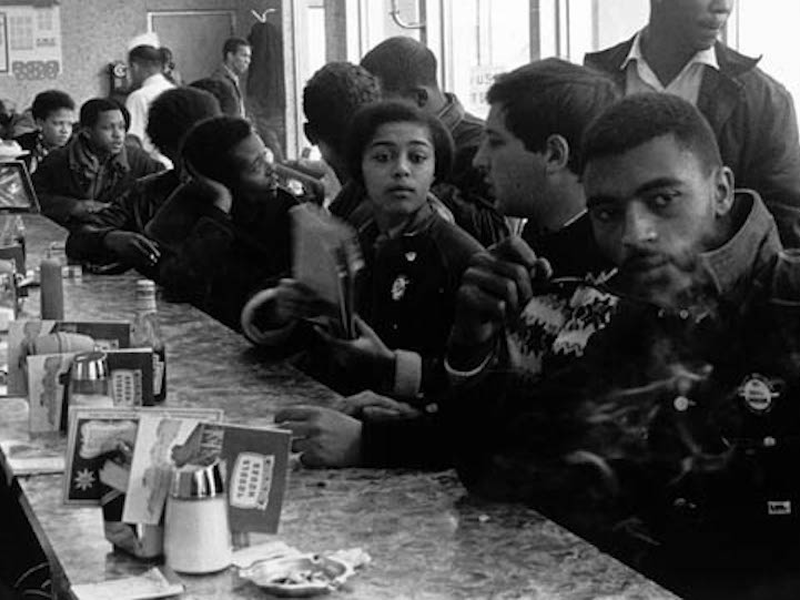
A hundred years ago, William Warley signed a contract to buy a house in Louisville, Kentucky from Charles Buchanan, a white man. Before closing the sale, Warley, who was black, learned that the lot was subject to a city ordinance barring blacks from occupying the premises if most of the…

by Brendan O'DonnellFebruary 3, 2015
shakespeare-2
Literature

The Bard and the Book

I concluded the first essay on this topic by saying that I would introduce three books about Shakespeare and the Bible, but I decided to introduce four instead. The three books become four are: Naseeb Shaheen, Biblical References in Shakespeare’s Plays (London: Associated University Presses, 1999) ; Hannibal Hamlin, The…

by Ralph Allan SmithJanuary 29, 2015
augustine-2
Augustine

Augustine on Pagan Virtue

My children attend a classical Christian school, situated in the independent “free church” evangelical tradition. Over the past few years they have been growing in their acquaintance with the world of Homer, Plato, Virgil, and Livy. They enjoy it, and I envy it. The school is a great school. My…

by Gerald HiestandJanuary 27, 2015
prodigal-son
Atonement

The Prodigal and the Cross

The Prodigal Son parable (Luke 15) has been a favorite of liberal theologians for a couple of centuries. It seems to be a parable designed for liberal sensibilities: An indulgent, accepting Father; forgiveness extended without a cross; a surly older brother who might represent the "conservative" face of religion who…

by Peter LeithartJanuary 22, 2015
sky-from-bridge
Ascension

Underground Man, Ascended Man

“I want now to tell you, gentlemen, whether you care to hear it or not, why I could not even become an insect. I tell you solemnly, that I have many times tried to become an insect. But I was not equal even to that. I swear, gentlemen, that to…

by Richard BledsoeJanuary 20, 2015

Showing page 161 of 309

See all
See all
Philosophy

Giving and receiving

Pickstock offers a theological alternative to Derrida’s concern that giving is impossible since any hope of a return robs the gift of its character as gift and puts it instead into the category of mutually advantageous capitalist exchange. Pickstock points out that in renouncing “the return” as “an ethical category,”…

July 14, 2005
Philosophy

Lists

Pickstock uses the “list” as a crucial example of the dominance of asyndeton of modern discourse. Lists provide “a powerful organization of random phenomena,” but at the same time the order slips into chaos because there is nothing linking the “unrelated elements” of the list. They are merely juxtaposed spatially,…

July 14, 2005
Philosophy

Derrida’s indifference

Pickstock again: For Derrida, there is ultimately no real difference, since all difference is univocally violent. There are particular differences of this and that, but they are all different in the same way - violently different - so there is a “transcendent” sameness. Derrida’s absolute difference collapses is really penultimate…

July 14, 2005
Philosophy

Derrida’s indifference

Pickstock again: For Derrida, there is ultimately no real difference, since all difference is univocally violent. There are particular differences of this and that, but they are all different in the same way - violently different - so there is a “transcendent” sameness. Derrida’s absolute difference collapses is really penultimate…

July 14, 2005
Theology

Socrates and the erotic gaze

Catherine Pickstock argues that Socrates does not articulate a “metaphysical” view of self-presence or interiority. She focuses on the erotic character of knowledge in the Phaedrus, which she points out, radically undermines the interior/exterior boundary. Knowledge on this view always involves ecstasy, an attraction to an object outside, and the…

July 14, 2005

Structure in 2 Kings 16

2 Kings 16 is organized chiastically: 1. Formulaic introduction, 16:1-4 2. Threat to Jerusalem, and bribe of Tiglath-pileser, 16:5-9 3. State visit to Damascus, 16:10-11 (altar) 4. Ahaz ministers at the altar, 16:12-14 3’. Continuing worship at the altar, 16:15-16 2’. Tribute to Tiglath-pileser and plunder of temple, 16:17-18 1’.…

July 13, 2005

Showing page 1962 of 2212

Browse by Category

In Medias Res

Your weekly digest for all things Theopolis.

Donate

Theopolis is nearly 100% donor-supported. Consider joining us on our mission.