Theopolis Logo

Writing

Explore our collection of theological essays, biblical studies, and reflections on faith and culture.

See all
tanner-mardis-xuxghzhibn4-unsplash-1-2
Biblical Studies

Tweets-turned-Notes on the Bible’s Chronology

Summary In what follows, I will consider the “year-stamps” employed in Scripture, i.e., statements of the form, “Such-and-such an event took place in the Xth year of Y.” In the process, I will suggest some ways in which the Biblical narrative might relate to events in the extra-Biblical world, though…

by James BejonJuly 16, 2019
durer-prodigal-son-2
Luke

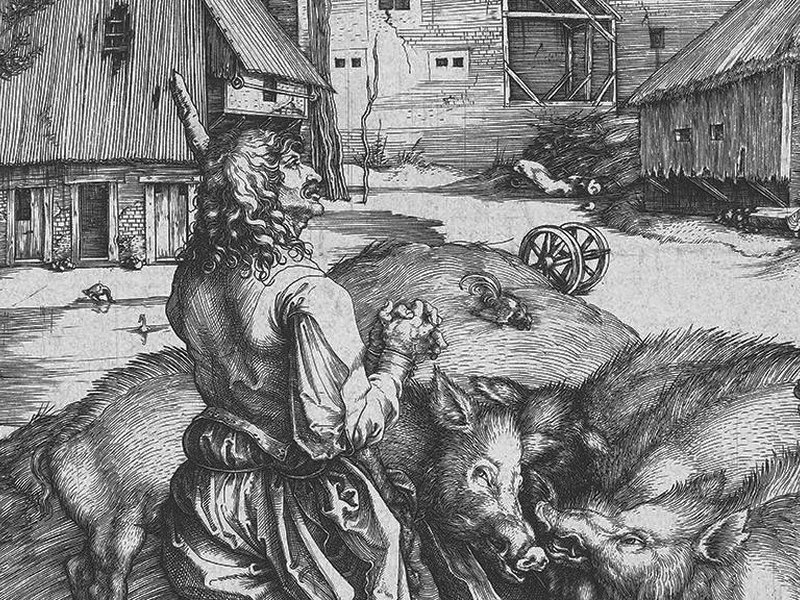
Perspectives on the Prodigal, (Part 2)

In the first essay on the parable of the Prodigal Son, I suggested that the problems commentators and others encounter in interpreting Jesus three-part parable are not accidental. These are not just problems in our ignorance of cultural background. They are intentional features of the stories —stories designed to poke…

by Ralph Allan SmithJuly 11, 2019
durer-prodigal-son-2
Luke

Perspectives on the Prodigal, (Part 1)

The story of the Prodigal Son is perhaps the most well-known story in the Bible. As others have observed, it may also be one of the most misunderstood. In two short essays, I will point out features of this story that are commonly neglected, aspects of Jesus’ parable that might…

by Ralph Allan SmithJuly 9, 2019
de-rijke-man-en-de-arme-lazarus-by-jacopo-da-ponte-16th-century
Luke

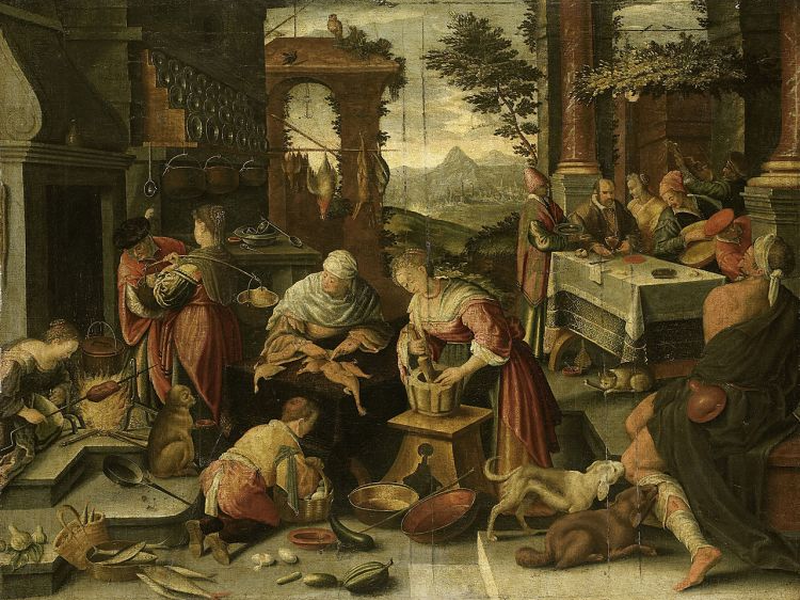
Lazarus and the Rich Man

The parable of Lazarus and the nameless rich man is not an independent story. It is part of a long context that begins in Luke 15:1, where Jesus is eating with tax collectors and sinners and the scribes and Pharisees grumble. In response to their hardheartedness, Jesus tells a three-part…

by Ralph Allan SmithJuly 4, 2019
aaron-burden-uynrnfdkjwg-unsplash
Luke

Everybody has Dropsy - Luke 14:1-24

The Bible is written so that even when a reader cannot pick up on what might be deeper or more detailed aspects of a text, there is virtually always a message to be heard. In the ancient world, where the “reader” of Scripture would likely be a church official facing…

by Ralph Allan SmithJuly 2, 2019
communion
Biblical Theology

Fruit Trees and Grain Plants

The distinction between garden (or vineyard) and field begins in Genesis 2. This relates to the ordering of the formless world. Plants of the field are contrasted with the garden planted by God in Genesis 2:5&8. Later on, under the Old Covenant the Israelites will be required to keep their…

by James B. JordanJune 27, 2019

Showing page 77 of 309

See all
See all

Faithfulness to Israel

Through much of Kings, the parallel of North and South has been deigned to emphasize the South’s apostasy. When the South becomes a mirror-image of the idolatrous North, it’s a sign of Judah’s doom. Here, the mirroring goes the other way: Yahweh’s faithfulness to David’s house is reflected in His…

July 13, 2005
Literature

Antony and Aeneas

Shakespeare’s Antony is an Aeneas who refuses to act piously by leaving his Dido and moving on to found Rome. Hence, in pursuit of Cleopatra he leaves Empire to Octavius, and Aeneas is split between the two of them. But Antony is also an Aeneas who will never be separated…

July 13, 2005

Perpetual War

According to Deuteronomy 20, any man who had built a house, planted a vineyard, or married a wife without enjoying their benefits and joys was excused from military service. While it was certainly possible for a 20-year-old Israelite to be unmarried and propertyless, it would seem that the military was…

July 12, 2005

Of Kline and Kings

In his book on the Deuteronomistic history, Terence Fretheim notes the marked differences between God’s dealings with Israel and the expectations suggested by suzereignty treaties: “the historian makes it abundantly clear that God is not bound to react to the people in some schematic or univocal fashion. The relationship between…

July 12, 2005

From Former Prophets to Deuteronomistic History

Here’s a PhD thesis: What is going on, philosophically and theologically, in the transition from viewing Joshua-2 Kings as Former Prophets (Jewish tradition) to seeing them as Historical Books (evangelical) to seeing them as Deuteronomistic History (contemporary academic consensus). There’s a story to unpack there similar to the story that…

July 12, 2005

Parabolic history

Jesus comes telling parables, so that seeing they might not see and hearing they might not understand. Yahweh does the same in Kings; He tells and enacts parables that are understood only by those who have received the wisdom that comes from God. It is, as with Jesus and Paul,…

July 12, 2005

Showing page 1963 of 2212

Browse by Category

In Medias Res

Your weekly digest for all things Theopolis.

Donate

Theopolis is nearly 100% donor-supported. Consider joining us on our mission.