Theopolis Logo

Writing

Explore our collection of theological essays, biblical studies, and reflections on faith and culture.

See all
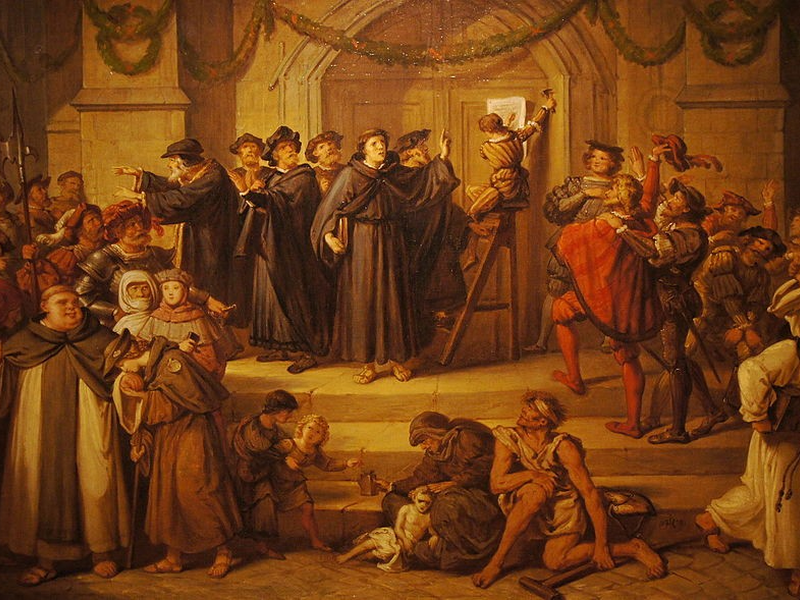
der_anschlag_von_luthers_95_thesen-1024x589
Church Calendar

Five Misconceptions of Reformation Day

For many people the date October 31 is significant not only for being the Eve of All Saints (All Hallows Eve, Halloween) but as the day in 1517 when Martin Luther nailed his 95 theses to the door of the Castle Church in Wittenburg. These theses were a list of…

by Timothy LeCroyOctober 31, 2017

sacre-bleu-r__kixb0i5m-unsplash
Church Calendar

Concerning Halloween

It has become routine in October for some Christian schools to send out letters warning parents about the evils of Halloween, and it has become equally routine for me to be asked questions about this matter. "Halloween" is simply a contraction for All Hallows’ Eve. The word "hallow" means "saint,"…

by James B. JordanOctober 26, 2017
revelation-john-with-rod
Revelation

Preaching, An Art of Division

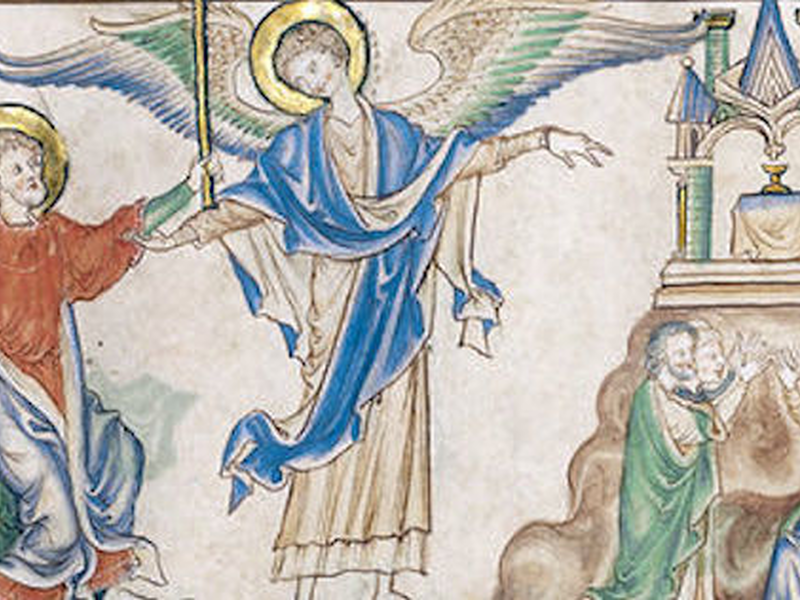
The following is an excerpt from Peter Leithart's forthcoming two-volume commentary on Revelation (T&T Clark). Y ou must prophesy again concerning many peoples and nations and tongues and kings,” a voice tells John (Rev. 10:11). Then someone gives him a “reed like a rod” and instructs him to measure (11:1).…

by Peter LeithartOctober 24, 2017
josiah-death

Back To Egypt

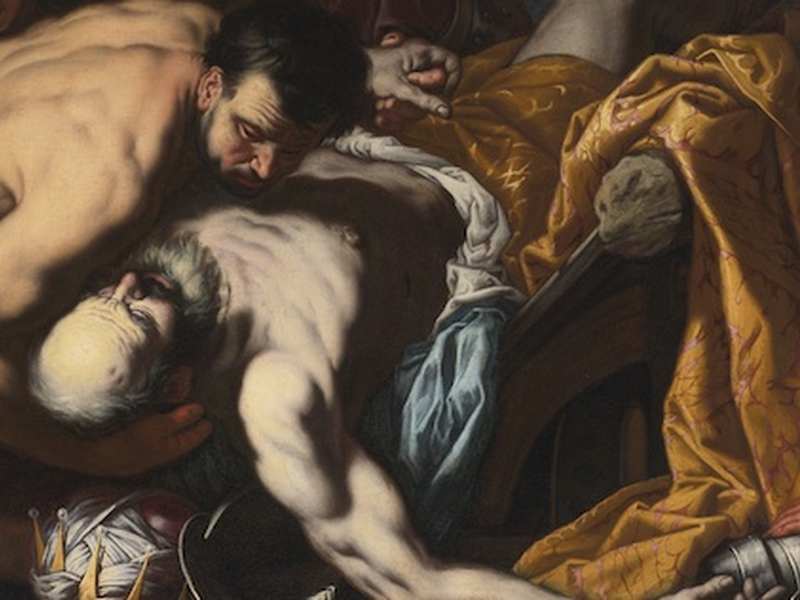
Josiah is an ideal Davidic king in many ways. He not only “did right,” but he “walked in the ways of his father David” and “did not turn aside to the right or to the left” (2 Chronicles 34:2). At the age of 16, he began to seek Yahweh, and…

by Peter LeithartOctober 19, 2017
augustine
Augustine

Augustine and the Music of Time

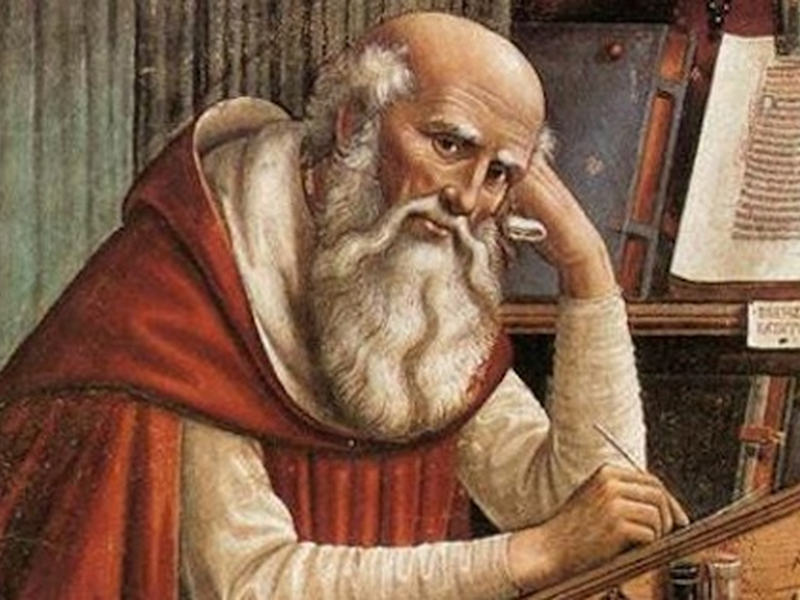
One of the best discussions of Augustine’s views on time comes from Jeremy Begbie’s Theology, Music, and Time (ch. 3). Following Paul Ricoeur, Begbie claims that Augustine’s distentio “is conceived as the three-fold present, and the threefold present as distentio . The distentio consists in the non-coincidence of the mind’s…

by Peter LeithartOctober 17, 2017
img_1043
How to Worship

The Psalter Should be Woven into the Fabric of Worship

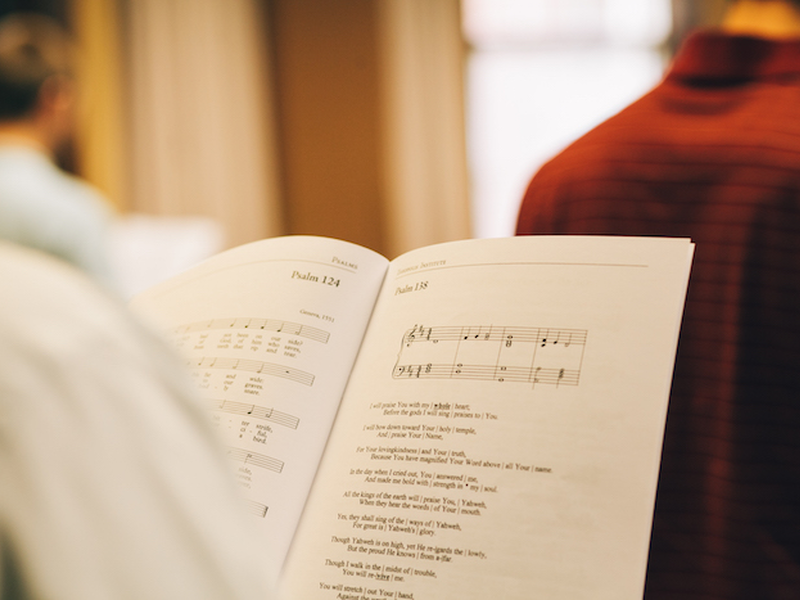
This has always been the position of the Christian Church, and from an historical perspective the present situation in evangelicalism is appalling. The early liturgies of the Church, which are still used in Episcopal and Lutheran worship, are laced with psalm phrases. The early hymns, such as the Te Deum…

by James B. JordanOctober 12, 2017

Showing page 104 of 309

See all
See all
Theology

Say it ain’t so, Nicholas

For reasons that I’ll detail in a subsequent post, I’m a considerable fan of Nicholas of Cusa. I was unhappy to come across this from William Cavanaugh: “The origin of the modern concept of religion can be seen clearly in the thought of two fifteenth-century Christian Platonist thinkers, Nicholas of…

May 20, 2005

Pity the satirist

Michael Budde writes, “Like the Rolling Stones and other major concert acts, the Catholic Church has now taken on corporate sponsorship to underwrite the world tours of its major performer, Pope John Paul II. To finance his 1998 visit to Mexico city, the Archdiocese of Mexico City entered into sponsorship…

May 20, 2005

The Humor of 2 Kings 1

The story of 2 Kings 1 is undoubtedly meant humorously. Ahaziah falls ill and sends messengers off to consult with Baal-zebub, baal of the flies. On the way, his messengers meet a “baal of hair,” Elijah - right title, wrong god. Yahweh will not allow Ahaziah’s men ever to get…

May 19, 2005
Literature

Garber on Richard III

Here are some highlights of Marjorie Garber?s essay on Richard III in Shakespeare After All . 1) Garber suggests that Richard is the ?first fully realized and psychologically conceived character?Ein Shakespeare?s plays. Richard?s character is fully realize because he is complex, protean, chameleon and Machiavellian (cf. 3 Henry VI 3.2.191-193).…

May 17, 2005

Luther and Aquinas

A further note from Haight: One of the criticisms he lodges against Aquinas and scholasticism is that it tended to treat grace and conversion in a mechanistic fashion: “This is a fundamental distortion of the dynamics of grace when it is seen contrasted with a personalist description, and it has…

May 17, 2005

Nature, Supernature, and Grace

Underlying different doctrines of justification, and inseparable from them, are different notions of grace. The historical issues have been ably summarized by Roger Haight in his 1979 book, The Experience and Language of Grace. Haight points out that doctrines of grace have differed partly because the reality of grace is…

May 17, 2005

Showing page 1979 of 2212

Browse by Category

In Medias Res

Your weekly digest for all things Theopolis.

Donate

Theopolis is nearly 100% donor-supported. Consider joining us on our mission.