Theopolis Logo

Writing

Explore our collection of theological essays, biblical studies, and reflections on faith and culture.

See all
31-03-0213
Hermeneutics

Apocalyptic Eyes

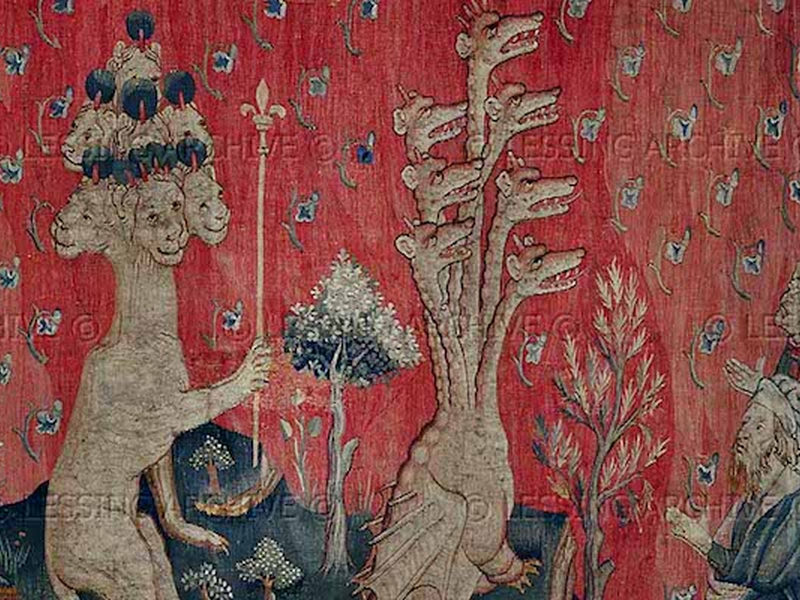
Flying scrolls. Red horses. Beasts coming out of the sea. Winged women. The list goes on. Apocalyptic literature in the Bible is like a cross between science fiction and Marvel comics. And the Bible has a fair bit of this sort of thing. Daniel sees visions in Babylon, Zechariah sees…

by Toby SumpterNovember 4, 2014

bhm-skyline-2
Theopolis News

New Name, New Look

Trinity House Institute has taken a new name, the Theopolis Institute. This striking new name expresses our unique vision and mission and captures the unified purpose behind all our specific programs and activities. We still have Bible, liturgy, and culture in our tagline. We still offer the same courses on…

by TheopolisNovember 4, 2014
istock_000012860926small
Atonement

Not Fearing the Devil

Adam Kotsko offers a socio-political variation on the Christus Victor atonement theory in his 2010 study, The Politics of Redemption: The Social Logic of Salvation . He does this by explaining "the devil" in terms of the Hegelian concept of "objective spirit," Geist . As Kotsko puts it, Geist "refers…

by Peter LeithartOctober 13, 2014
jez-timms-8muutamcwu4-unsplash
Leviticus

The Meaning of Sacrifice

Two factors keep Nahtali Meshel from discussing the meaning of sacrifice until late in his The "Grammar" of Sacrifice . The first has to do with the texts he draws from: "P says little about the meaning of its rituals" (174). The other has to do with the grammatical theory…

by Peter LeithartOctober 8, 2014
jez-timms-8muutamcwu4-unsplash
Leviticus

Praxemics

Chapter 5 of Naphtali Meshel's The "Grammar" of Sacrifice focuses on "praxemics," the physical actions of sacrificial ritual. Praxemes are constituted by six elements: an "atomact," an elementary physical act or gesture; an actor; an object that is acted up; a target for the action and often for the object…

by Peter LeithartOctober 6, 2014
markus-winkler-aid-xyrtlec-unsplash
Leviticus

Jugation and Hierarchy

Two chapters of Naphtali Meshel’s The “Grammar” of Sacrifice cover what he calls “jugation” and “hierarchies.” The first involves the addition of other materials to an animal offering. Jugates include wine, cereal, and oil that are added to the animals (zoemes) that are offered in sacrifice. Some jugates are coordinated…

by Peter LeithartOctober 1, 2014

Showing page 167 of 309

See all
See all
Theology

Say it ain’t so, Nicholas

For reasons that I’ll detail in a subsequent post, I’m a considerable fan of Nicholas of Cusa. I was unhappy to come across this from William Cavanaugh: “The origin of the modern concept of religion can be seen clearly in the thought of two fifteenth-century Christian Platonist thinkers, Nicholas of…

May 20, 2005

Pity the satirist

Michael Budde writes, “Like the Rolling Stones and other major concert acts, the Catholic Church has now taken on corporate sponsorship to underwrite the world tours of its major performer, Pope John Paul II. To finance his 1998 visit to Mexico city, the Archdiocese of Mexico City entered into sponsorship…

May 20, 2005

The Humor of 2 Kings 1

The story of 2 Kings 1 is undoubtedly meant humorously. Ahaziah falls ill and sends messengers off to consult with Baal-zebub, baal of the flies. On the way, his messengers meet a “baal of hair,” Elijah - right title, wrong god. Yahweh will not allow Ahaziah’s men ever to get…

May 19, 2005
Literature

Garber on Richard III

Here are some highlights of Marjorie Garber?s essay on Richard III in Shakespeare After All . 1) Garber suggests that Richard is the ?first fully realized and psychologically conceived character?Ein Shakespeare?s plays. Richard?s character is fully realize because he is complex, protean, chameleon and Machiavellian (cf. 3 Henry VI 3.2.191-193).…

May 17, 2005

Luther and Aquinas

A further note from Haight: One of the criticisms he lodges against Aquinas and scholasticism is that it tended to treat grace and conversion in a mechanistic fashion: “This is a fundamental distortion of the dynamics of grace when it is seen contrasted with a personalist description, and it has…

May 17, 2005

Nature, Supernature, and Grace

Underlying different doctrines of justification, and inseparable from them, are different notions of grace. The historical issues have been ably summarized by Roger Haight in his 1979 book, The Experience and Language of Grace. Haight points out that doctrines of grace have differed partly because the reality of grace is…

May 17, 2005

Showing page 1979 of 2212

Browse by Category

In Medias Res

Your weekly digest for all things Theopolis.

Donate

Theopolis is nearly 100% donor-supported. Consider joining us on our mission.