Theopolis Logo

Writing

Explore our collection of theological essays, biblical studies, and reflections on faith and culture.

See all
31-03-0213
Hermeneutics

Apocalyptic Eyes

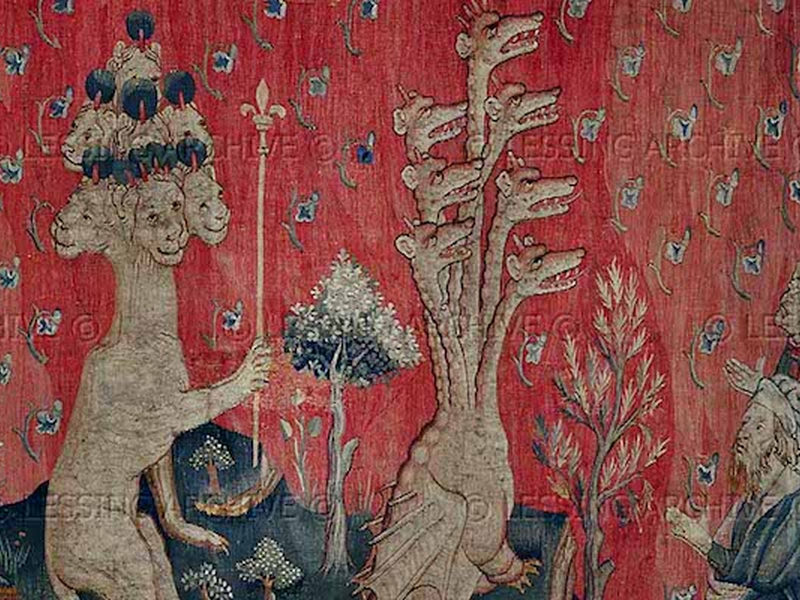
Flying scrolls. Red horses. Beasts coming out of the sea. Winged women. The list goes on. Apocalyptic literature in the Bible is like a cross between science fiction and Marvel comics. And the Bible has a fair bit of this sort of thing. Daniel sees visions in Babylon, Zechariah sees…

by Toby SumpterNovember 4, 2014

bhm-skyline-2
Theopolis News

New Name, New Look

Trinity House Institute has taken a new name, the Theopolis Institute. This striking new name expresses our unique vision and mission and captures the unified purpose behind all our specific programs and activities. We still have Bible, liturgy, and culture in our tagline. We still offer the same courses on…

by TheopolisNovember 4, 2014
istock_000012860926small
Atonement

Not Fearing the Devil

Adam Kotsko offers a socio-political variation on the Christus Victor atonement theory in his 2010 study, The Politics of Redemption: The Social Logic of Salvation . He does this by explaining "the devil" in terms of the Hegelian concept of "objective spirit," Geist . As Kotsko puts it, Geist "refers…

by Peter LeithartOctober 13, 2014
jez-timms-8muutamcwu4-unsplash
Leviticus

The Meaning of Sacrifice

Two factors keep Nahtali Meshel from discussing the meaning of sacrifice until late in his The "Grammar" of Sacrifice . The first has to do with the texts he draws from: "P says little about the meaning of its rituals" (174). The other has to do with the grammatical theory…

by Peter LeithartOctober 8, 2014
jez-timms-8muutamcwu4-unsplash
Leviticus

Praxemics

Chapter 5 of Naphtali Meshel's The "Grammar" of Sacrifice focuses on "praxemics," the physical actions of sacrificial ritual. Praxemes are constituted by six elements: an "atomact," an elementary physical act or gesture; an actor; an object that is acted up; a target for the action and often for the object…

by Peter LeithartOctober 6, 2014
markus-winkler-aid-xyrtlec-unsplash
Leviticus

Jugation and Hierarchy

Two chapters of Naphtali Meshel’s The “Grammar” of Sacrifice cover what he calls “jugation” and “hierarchies.” The first involves the addition of other materials to an animal offering. Jugates include wine, cereal, and oil that are added to the animals (zoemes) that are offered in sacrifice. Some jugates are coordinated…

by Peter LeithartOctober 1, 2014

Showing page 167 of 309

See all
See all

Kolb on Luther and Chemnitz, Revisited

A perceptive Lutheran reader asked whether I was endorsing an antinomian position in my favorable summary of Kolb’s article on Luther and Chemnitz. He pointed out that Kolb’s position relies on an illegitimate separation of God and His Law, and argued that instead the Law should be seen as an…

February 14, 2005

Eucharistic Meditation, First of Lent

?And the ravens brought him bread and meat in the morning, and bread and meat in the evening, and he would drink from the brook.?E In this morning sermon, we saw how the writer of Kings highlights the authority of Elijah and His power. He speaks, and the heavens become…

February 13, 2005

Exhortation, First of Lent

So what? So what if Jeroboam made golden calves and worshiped them at Dan and Bethel? So what if the house of Jeroboam was destroyed by Baasha, and the house of Baasha destroyed by Zimri, and Zimri destroyed by Omri, and the house of Omri destroyed by Jehu? What does…

February 13, 2005

Philosophy and Self-Justification

Alain de Botton notes in his book Status Anxiety that many societies see a direct relationship between reputation and self-image. If others hold me in contempt, then I must either defend myself against their contempt or accept their contemptuous assessment. Philosophy introduces a mediator, reason, which assesses and judges reputation…

February 11, 2005

The Village

I finally watched The Village . Much of it was perfectly silly. The initial explanation of the dead animals littering the village is that a coyote is on the loose, and this theory is put to rest only when it’s decided that coyotes are not big enough to leave big…

February 11, 2005

Chemnitz and Luther

Robert Kolb offers this helpful analysis of the differences between Luther and Chemnitz on justification: “Luther understood justification as the execution of the wages of sin . . . upon sinners and their simultaneous resurrectionto new life in Jesus Christ . . . . Chemnitz did not pursue this aspect…

February 10, 2005

Showing page 2007 of 2212

Browse by Category

In Medias Res

Your weekly digest for all things Theopolis.

Donate

Theopolis is nearly 100% donor-supported. Consider joining us on our mission.