Theopolis Logo

Writing

Explore our collection of theological essays, biblical studies, and reflections on faith and culture.

See all
sixteen-miles-out-al48tflf4e8-unsplash
Food

Gluttony In The Bible (As Opposed To Gluttony In The American Church)

In the Bible, fatness is such a blessing, that it is especially hard to understand why wicked men are permitted to enjoy such a state. It requires a theodicy and faith in God. Thus: “For they have no pangs until death; their bodies are fat and sleek . They are…

by Mark HorneAugust 12, 2013

jeremy-yap-j39x2xx_8cq-unsplash
How to Worship

Biblical Worship (Video with James B. Jordan)

[fve]http://vimeo.com/71901553[/fve]

by Peter LeithartAugust 8, 2013
chris-bair-ndczc5739ck-unsplash
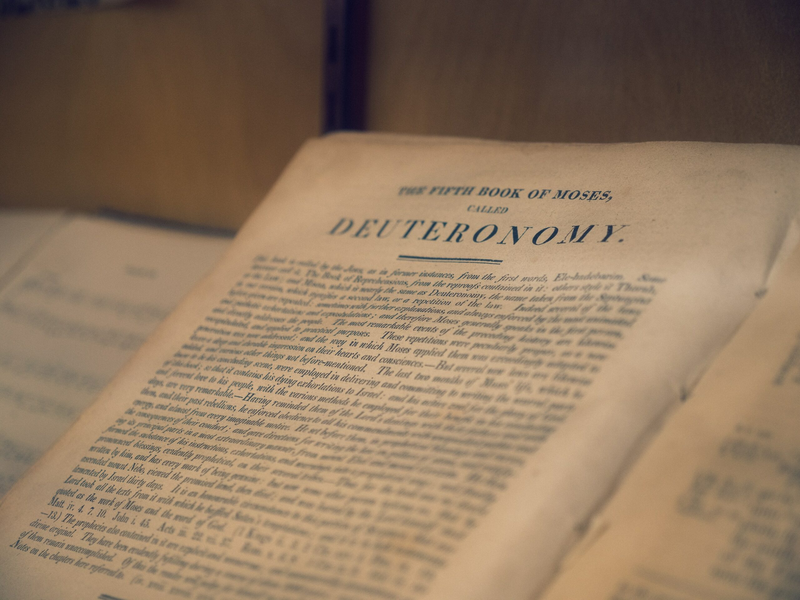
Deuteronomy

Holy Things for Holy People

The allusion to the Exodus story is contained in the first words of Deuteronomy 14:1 — “ye are the sons of Yahweh your God” — as well as in 14:2 in the use of the technical term translated “treasured possession,” “His own possession,” “peculiar people,” “precious people,” and so forth.…

by Ralph Allan SmithAugust 5, 2013
adam-and-eve-in-the-garden-of-eden-wenzel-peter
Deuteronomy

Forbidden Foods

I have argued that Deuteronomy 14:1-21 is an independent literary unit that applies the Third Word to the lives of Israelites from the time of Moses and Joshua. In this short pericope, Moses suggests broad and deep meaning by means of literary allusion to the stories of the creation and…

by Ralph Allan SmithJuly 31, 2013
david-weber-fwuo_zluhnw-unsplash
How to Worship

Pro-Sacramental Reformation

In his recently republished The New Creation , the late, delightful Herbert McCabe defends the priesthood of the plebs as roundly as anyone could want. Citing Hebrews, he claims that "there is an essential difference between the Christian community and the community of the Old Law, or any other religious…

by Peter LeithartJuly 29, 2013
eric-ward-7kqe_8meex8-unsplash
Augustine

Sexual Idolatry

Augustine famously prayed, “Our hearts our restless until they rest in You.” True indeed. Being creatures, we inherently sense our ontological poverty—our innate condition of dependence—and are compelled to find a sense of security. And it is also true—as Augustine’s own narrative painfully illustrates—that one of the things we most…

by Gerald HiestandJuly 24, 2013

Showing page 190 of 309

See all
See all

Kolb on Luther and Chemnitz, Revisited

A perceptive Lutheran reader asked whether I was endorsing an antinomian position in my favorable summary of Kolb’s article on Luther and Chemnitz. He pointed out that Kolb’s position relies on an illegitimate separation of God and His Law, and argued that instead the Law should be seen as an…

February 14, 2005

Eucharistic Meditation, First of Lent

?And the ravens brought him bread and meat in the morning, and bread and meat in the evening, and he would drink from the brook.?E In this morning sermon, we saw how the writer of Kings highlights the authority of Elijah and His power. He speaks, and the heavens become…

February 13, 2005

Exhortation, First of Lent

So what? So what if Jeroboam made golden calves and worshiped them at Dan and Bethel? So what if the house of Jeroboam was destroyed by Baasha, and the house of Baasha destroyed by Zimri, and Zimri destroyed by Omri, and the house of Omri destroyed by Jehu? What does…

February 13, 2005

Philosophy and Self-Justification

Alain de Botton notes in his book Status Anxiety that many societies see a direct relationship between reputation and self-image. If others hold me in contempt, then I must either defend myself against their contempt or accept their contemptuous assessment. Philosophy introduces a mediator, reason, which assesses and judges reputation…

February 11, 2005

The Village

I finally watched The Village . Much of it was perfectly silly. The initial explanation of the dead animals littering the village is that a coyote is on the loose, and this theory is put to rest only when it’s decided that coyotes are not big enough to leave big…

February 11, 2005

Chemnitz and Luther

Robert Kolb offers this helpful analysis of the differences between Luther and Chemnitz on justification: “Luther understood justification as the execution of the wages of sin . . . upon sinners and their simultaneous resurrectionto new life in Jesus Christ . . . . Chemnitz did not pursue this aspect…

February 10, 2005

Showing page 2007 of 2212

Browse by Category

In Medias Res

Your weekly digest for all things Theopolis.

Donate

Theopolis is nearly 100% donor-supported. Consider joining us on our mission.