Theopolis Logo

Writing

Explore our collection of theological essays, biblical studies, and reflections on faith and culture.

See all
tanner-mardis-xuxghzhibn4-unsplash-1-2
Biblical Studies

Tweets-turned-Notes on the Bible’s Chronology

Summary In what follows, I will consider the “year-stamps” employed in Scripture, i.e., statements of the form, “Such-and-such an event took place in the Xth year of Y.” In the process, I will suggest some ways in which the Biblical narrative might relate to events in the extra-Biblical world, though…

by James BejonJuly 16, 2019
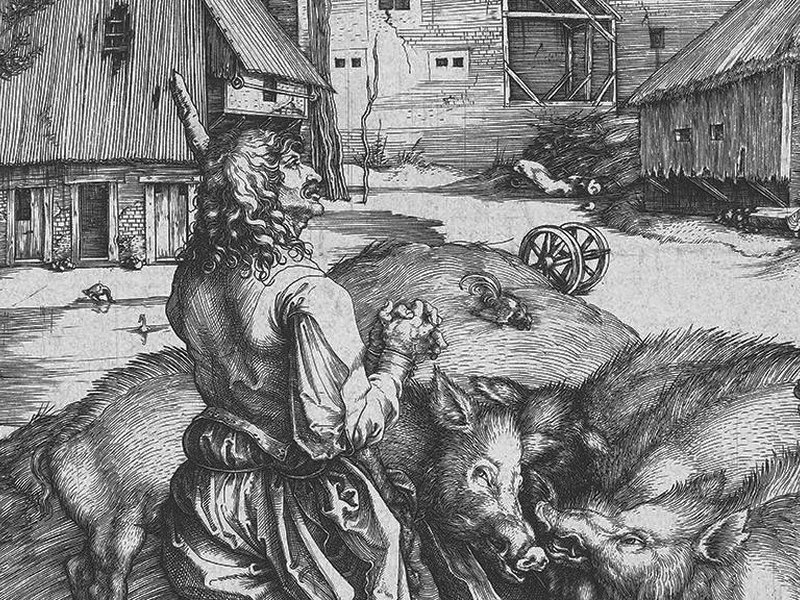
durer-prodigal-son-2
Luke

Perspectives on the Prodigal, (Part 2)

In the first essay on the parable of the Prodigal Son, I suggested that the problems commentators and others encounter in interpreting Jesus three-part parable are not accidental. These are not just problems in our ignorance of cultural background. They are intentional features of the stories —stories designed to poke…

by Ralph Allan SmithJuly 11, 2019
durer-prodigal-son-2
Luke

Perspectives on the Prodigal, (Part 1)

The story of the Prodigal Son is perhaps the most well-known story in the Bible. As others have observed, it may also be one of the most misunderstood. In two short essays, I will point out features of this story that are commonly neglected, aspects of Jesus’ parable that might…

by Ralph Allan SmithJuly 9, 2019
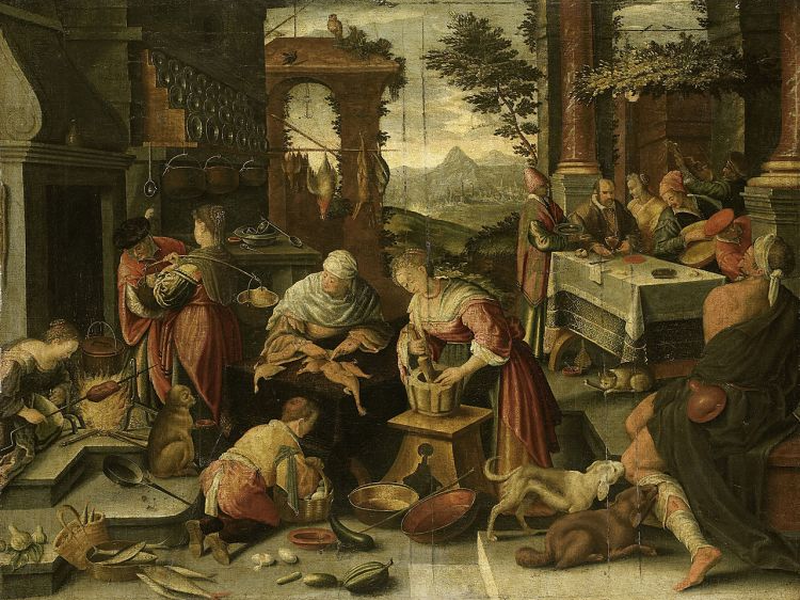
de-rijke-man-en-de-arme-lazarus-by-jacopo-da-ponte-16th-century
Luke

Lazarus and the Rich Man

The parable of Lazarus and the nameless rich man is not an independent story. It is part of a long context that begins in Luke 15:1, where Jesus is eating with tax collectors and sinners and the scribes and Pharisees grumble. In response to their hardheartedness, Jesus tells a three-part…

by Ralph Allan SmithJuly 4, 2019
aaron-burden-uynrnfdkjwg-unsplash
Luke

Everybody has Dropsy - Luke 14:1-24

The Bible is written so that even when a reader cannot pick up on what might be deeper or more detailed aspects of a text, there is virtually always a message to be heard. In the ancient world, where the “reader” of Scripture would likely be a church official facing…

by Ralph Allan SmithJuly 2, 2019
communion
Biblical Theology

Fruit Trees and Grain Plants

The distinction between garden (or vineyard) and field begins in Genesis 2. This relates to the ordering of the formless world. Plants of the field are contrasted with the garden planted by God in Genesis 2:5&8. Later on, under the Old Covenant the Israelites will be required to keep their…

by James B. JordanJune 27, 2019

Showing page 77 of 309

See all
See all

Reformers and Fathers on Justification

Chemnitz has some interesting comments on how the Reformers handled the patristic usage of ?justification,?Ewhich did not match their own usage. He admits that the ?fathers mostly take the word ?justify?Efor the renewal,?Ewhich is not the Reformation definition of ?justify,?Ebut he commends the fathers for those places ?where they according…

December 20, 2004

Chemnitz on Justification and Renewal

Chemnitz cites the views of the German Roman Catholic Johann Gropper (1503-59). According to Chemnitz, he ?argues at great length that Christ by his obedience did not merit only the remission of sins but also the Spirit of renewal; and that God remits sins to no one without at the…

December 20, 2004

Eucharistic Meditation, Fourth Advent

John 6:56: ?He who eats My flesh and drinks My blood abides in Me, and I in him?E This morning we have examined the Bible?s teaching on the mutual indwelling of the Persons of the Trinity. The Persons are distinct from each other, and not reducible to each other; the…

December 19, 2004

Exhortation, Fourth Advent

God created our bodies; He will redeem our bodies and raise them from the dead; and in between He calls us to ?present the members of our bodies as instruments of righteousness?Eand to ?offer your bodies as living sacrifices.?EOur bodies are gifts from God, and we should offer them for…

December 19, 2004

Trinity, Worship, and Dialogue

INTRODUCTION We?ve been looking at Christian worship in the light of Scriptural patterns of sacrifice. This gives us an overall order or sequence of worship. In this session, I want to examine two main issues: First, the Trinitarian basis of worship, and second, the dialogic structure of worship. These are…

December 19, 2004

Escher and the Trinity

Thinking about perichoresis or about Gregory Nazianzen’s famous “No sooner do I conceive of the one than I am illumined by the splendour of the three; no sooner do I distinguish them than I am carried back to the one” always makes me think of Escher. I find now that…

December 18, 2004

Showing page 2025 of 2212

Browse by Category

In Medias Res

Your weekly digest for all things Theopolis.

Donate

Theopolis is nearly 100% donor-supported. Consider joining us on our mission.