Theopolis Logo

Writing

Explore our collection of theological essays, biblical studies, and reflections on faith and culture.

See all
31-03-0213
Hermeneutics

Apocalyptic Eyes

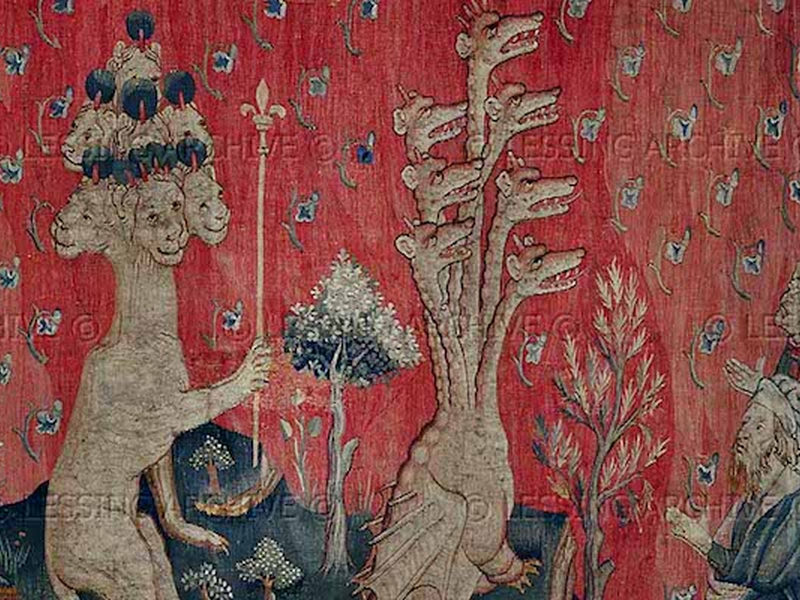
Flying scrolls. Red horses. Beasts coming out of the sea. Winged women. The list goes on. Apocalyptic literature in the Bible is like a cross between science fiction and Marvel comics. And the Bible has a fair bit of this sort of thing. Daniel sees visions in Babylon, Zechariah sees…

by Toby SumpterNovember 4, 2014

bhm-skyline-2
Theopolis News

New Name, New Look

Trinity House Institute has taken a new name, the Theopolis Institute. This striking new name expresses our unique vision and mission and captures the unified purpose behind all our specific programs and activities. We still have Bible, liturgy, and culture in our tagline. We still offer the same courses on…

by TheopolisNovember 4, 2014
istock_000012860926small
Atonement

Not Fearing the Devil

Adam Kotsko offers a socio-political variation on the Christus Victor atonement theory in his 2010 study, The Politics of Redemption: The Social Logic of Salvation . He does this by explaining "the devil" in terms of the Hegelian concept of "objective spirit," Geist . As Kotsko puts it, Geist "refers…

by Peter LeithartOctober 13, 2014
jez-timms-8muutamcwu4-unsplash
Leviticus

The Meaning of Sacrifice

Two factors keep Nahtali Meshel from discussing the meaning of sacrifice until late in his The "Grammar" of Sacrifice . The first has to do with the texts he draws from: "P says little about the meaning of its rituals" (174). The other has to do with the grammatical theory…

by Peter LeithartOctober 8, 2014
jez-timms-8muutamcwu4-unsplash
Leviticus

Praxemics

Chapter 5 of Naphtali Meshel's The "Grammar" of Sacrifice focuses on "praxemics," the physical actions of sacrificial ritual. Praxemes are constituted by six elements: an "atomact," an elementary physical act or gesture; an actor; an object that is acted up; a target for the action and often for the object…

by Peter LeithartOctober 6, 2014
markus-winkler-aid-xyrtlec-unsplash
Leviticus

Jugation and Hierarchy

Two chapters of Naphtali Meshel’s The “Grammar” of Sacrifice cover what he calls “jugation” and “hierarchies.” The first involves the addition of other materials to an animal offering. Jugates include wine, cereal, and oil that are added to the animals (zoemes) that are offered in sacrifice. Some jugates are coordinated…

by Peter LeithartOctober 1, 2014

Showing page 167 of 309

See all
See all

Sermon Outline, August 22

Solomon?s Kingdom Established, 1 Kings 2:1-46 INTRODUCTION 1 Kings 2 consists of two large scenes. First, David gives his final instructions to Solomon (vv. 1-12); these verses are bracketed by the word ?days?E(vv. 1, 11). Second, Solomon carries out David?s instructions, enabling him to establish his kingdom (vv. 12-46); these…

August 17, 2004
Literature

Hawthorne the Creepy

Wilfred McClay reviews two recent biographies of Nathaniel Hawthorne in the August 23 Weekly Standard , and argues for a rehabilitation of Hawthorne’s reputation. He gives a superb short summary of Hawthorne’s characteristic tone in a brief discussion of the 1837 short story collection, Twice-Told Tales : “One could plausibly…

August 17, 2004
History

England and Enlightenment

Paul Rahe has a fascinating article in the Summer 2004 issue of the Wilson Quarterly , in which he discusses the assessments of 18th-century world order that were offered by Voltaire and Montesquieu. Along the way, he suggests a connection between French interest in the English constitution and the development…

August 16, 2004

Eucharistic Meditation, August 15

1 Kings 1:25 This morning?s sermon text contrasts two rival princes, both vying for the throne of David. Adonijah attempts to lift himself up, and ends up abased; Solomon does nothing, relying on the intercession of his mother, and yet he inherits the kingdom. Part of the contrast is a…

August 15, 2004
Biblical Studies

Exhortation, August 15

Slavery is back in the local news, and it?s a good time once again to reflect on how we should deal with this subject. First and foremost, we must examine what the Scriptures say about slavery, since the Bible is our ultimate authority of faith and practice. A central theme…

August 15, 2004

Imputation

In most Reformation theology, imputation is a distinct act from justification. God Christ’s righteousness to us, and in a distinct act declares that we are righteous because Christ’s righteousness clothes and covers us. Is this what Paul means by LOGIZOMAI (“reckon, impute”)? I don’t mean to resolve that question in…

August 15, 2004

Showing page 2063 of 2212

Browse by Category

In Medias Res

Your weekly digest for all things Theopolis.

Donate

Theopolis is nearly 100% donor-supported. Consider joining us on our mission.