Theopolis Logo

Writing

Explore our collection of theological essays, biblical studies, and reflections on faith and culture.

See all
31-03-0213
Hermeneutics

Apocalyptic Eyes

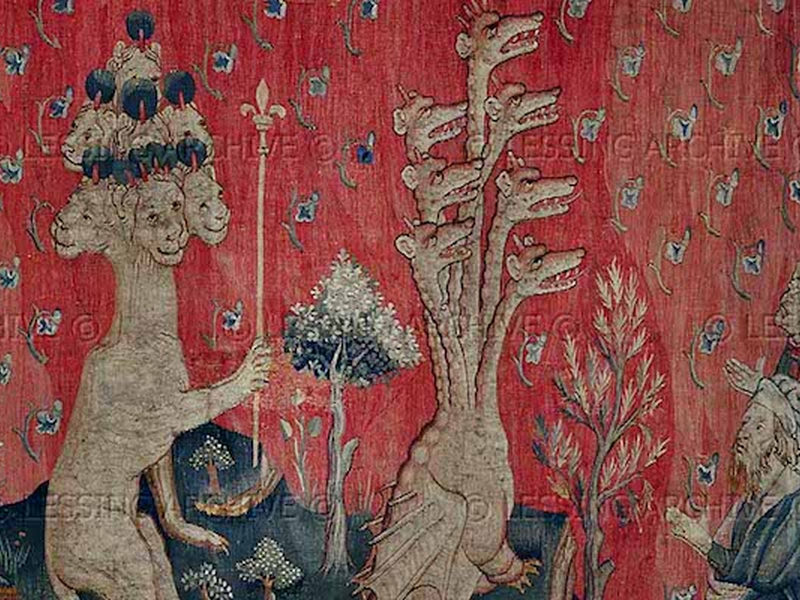
Flying scrolls. Red horses. Beasts coming out of the sea. Winged women. The list goes on. Apocalyptic literature in the Bible is like a cross between science fiction and Marvel comics. And the Bible has a fair bit of this sort of thing. Daniel sees visions in Babylon, Zechariah sees…

by Toby SumpterNovember 4, 2014

bhm-skyline-2
Theopolis News

New Name, New Look

Trinity House Institute has taken a new name, the Theopolis Institute. This striking new name expresses our unique vision and mission and captures the unified purpose behind all our specific programs and activities. We still have Bible, liturgy, and culture in our tagline. We still offer the same courses on…

by TheopolisNovember 4, 2014
istock_000012860926small
Atonement

Not Fearing the Devil

Adam Kotsko offers a socio-political variation on the Christus Victor atonement theory in his 2010 study, The Politics of Redemption: The Social Logic of Salvation . He does this by explaining "the devil" in terms of the Hegelian concept of "objective spirit," Geist . As Kotsko puts it, Geist "refers…

by Peter LeithartOctober 13, 2014
jez-timms-8muutamcwu4-unsplash
Leviticus

The Meaning of Sacrifice

Two factors keep Nahtali Meshel from discussing the meaning of sacrifice until late in his The "Grammar" of Sacrifice . The first has to do with the texts he draws from: "P says little about the meaning of its rituals" (174). The other has to do with the grammatical theory…

by Peter LeithartOctober 8, 2014
jez-timms-8muutamcwu4-unsplash
Leviticus

Praxemics

Chapter 5 of Naphtali Meshel's The "Grammar" of Sacrifice focuses on "praxemics," the physical actions of sacrificial ritual. Praxemes are constituted by six elements: an "atomact," an elementary physical act or gesture; an actor; an object that is acted up; a target for the action and often for the object…

by Peter LeithartOctober 6, 2014
markus-winkler-aid-xyrtlec-unsplash
Leviticus

Jugation and Hierarchy

Two chapters of Naphtali Meshel’s The “Grammar” of Sacrifice cover what he calls “jugation” and “hierarchies.” The first involves the addition of other materials to an animal offering. Jugates include wine, cereal, and oil that are added to the animals (zoemes) that are offered in sacrifice. Some jugates are coordinated…

by Peter LeithartOctober 1, 2014

Showing page 167 of 309

See all
See all

Ward on Covenant of Works

Early in Ward’s book, he surveys mid sixteenth-century treatments of the effects of Adam’s sin, mainly to determine whether writers of that period conceived of God’s relationship with Adam as a covenantal one. His evidence suggests several important conclusions: 1) The early Protestant confessions do not describe Adam’s relationship to…

June 23, 2004
Theology

Kline on Covenant of Works

In his very useful study, God & Adam: Reformed Theology and the Creation Covenant , Rowland S. Ward has this to say about Meredith Kline’s views on the un-gracious character of the covenant of works: “Contrary to his position in 1968, Kline does not wish now to admit any concept…

June 22, 2004
Theology

More Bad Taste

I should clarify my final, hurried comments on Brown’s discussion of sin and bad taste. I suggested at the end of the last post that Brown’s initial mapping of the problem contributes to an unsatisfying conclusion regarding moral and aesthetic judgment. Brown argues that taste is community-specific, and thus subject…

June 22, 2004
Theology

Sin and Bad Taste

One of the challenges of a Christian aesthetics is sorting through the connections and distinctions between holiness and good taste on the one hand, and sin and bad taste on the other. In his 1989 book, Religious Aesthetics , Frank Burch Brown offers some thoughtful reflections on this question. Here…

June 22, 2004
Theology

Don Richardson and Contextualization

Don Richardson’s Peace Child is a classic of modern mission writing. In that book, Richardson tells of his experience among the Sawi people of New Guinea, and how he used their traditional custom of exchanging a “peace child” between warring tribes to explain the gospel to them. In his 1981…

June 22, 2004

True and False Arks

When the men of Babel organize to build a tower reaching to heaven, they decide to use “tar for mortar” (Gen 11:3; NASB). The Hebrew phrase repeats two different forms of the same root word (CHMR): The word for “tar” is CHEMAR and the word for “mortar” is CHOMER. They…

June 22, 2004

Showing page 2080 of 2212

Browse by Category

In Medias Res

Your weekly digest for all things Theopolis.

Donate

Theopolis is nearly 100% donor-supported. Consider joining us on our mission.